
Grass to Desert Conversion Timeline: What Happens and When
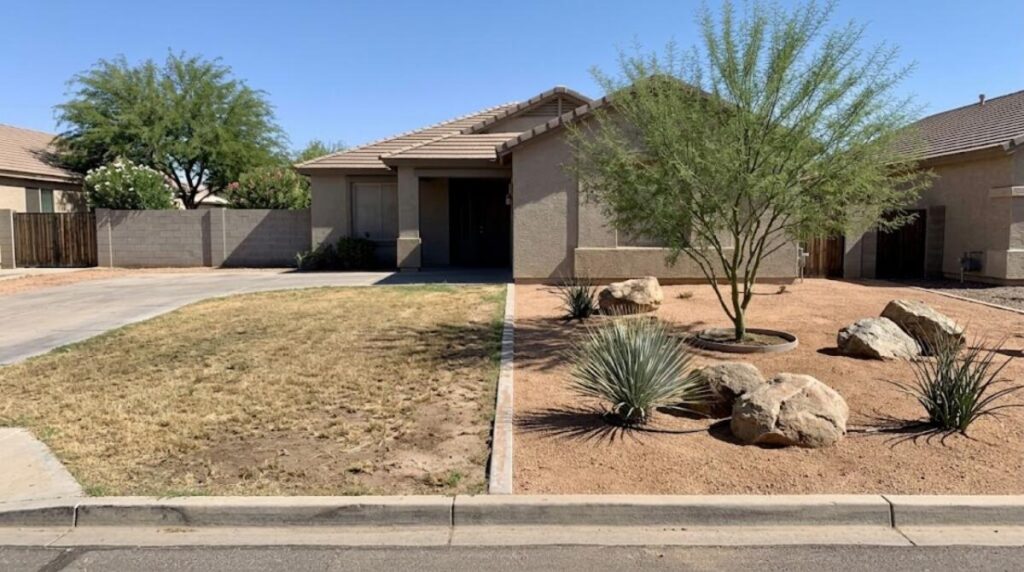
A grass to desert conversion in the Phoenix Valley follows the seasons more than the calendar. Bermuda grass dies best while it is actively growing in summer, and new desert plants establish best when they go in during fall, so the smoothest projects line up approvals in spring, kill the grass in summer and plant in fall. Here is what happens at each stage and what you do as the homeowner along the way.
Stage 1: Plan, Measure and Photograph the Lawn
Every conversion starts with a look at the yard as it is today. Before anything changes, we like to know how big the lawn is, where the sprinkler valves sit, which trees and shrubs stay, and how water moves across the yard in a storm.
- Measure the grass. Rebate programs and estimates both start with square footage.
- Take photos while the lawn is green. Many city programs want pictures of the existing live grass before approval. Phoenix, for example, asks for two photos from different angles.
- Decide what stays. Mature shade trees that were watered by the lawn sprinklers will need their own water plan once the grass is gone.
This is also the stage to think about how the yard will be used. A front yard that only needs curb appeal is planned differently from a backyard where kids and dogs play, and that changes the plant list, the rock and the drip layout.
Stage 2: Get Rebate and HOA Approval Before You Touch the Grass
Rebates. If your city offers a grass removal rebate, the application usually comes before any work. The City of Phoenix, for example, issues a Notice to Proceed and says not to start work until it has been issued (see the City of Phoenix grass incentives page). Phoenix also gives you six months from the Notice to Proceed to finish the project, so apply when you are close to ready, not a year ahead.
Programs change, and funding can pause or run out. Confirm your city’s program is open, read the current rules, and wait for written approval where your city requires it. Our Arizona grass removal rebate guide links each city’s program.
HOA. If you live in an HOA, most associations want to see a landscape plan before work starts. A simple sketch with plant names, rock type and color, and any boulders or dry riverbeds is usually what a design committee reviews. Submitting while you wait on the rebate keeps the two approvals running side by side instead of one after the other. Our HOA front yard landscaping page covers what to include.
Stage 3: Kill the Bermuda Grass in Summer
This is the step that sets the calendar. Bermuda grass has to be green and growing for the herbicide to work. The Arizona Municipal Water Users Association (AMWUA) says the best time to kill bermuda is when it is growing vigorously, from June to September, and University of Arizona Cooperative Extension says glyphosate works when grass is actively growing, green and has adequate soil moisture.
- Keep watering first. UA Extension recommends watering the lawn normally for about two weeks before spraying. Chandler’s guidance says to water daily the week before and skip mowing so there is more leaf to absorb the product.
- Give it time. UA Extension says the effects of glyphosate usually show in 7 to 14 days.
- Treat the survivors. Water Use It Wisely suggests waiting a week to 14 days, watering again to wake up any surviving sprouts, then treating those.
- Do not just turn off the water. Both Chandler and Water Use It Wisely warn that letting a lawn go dry is not a good way to kill it. Dormant bermuda tends to come back with the first good monsoon rain.
Always read and follow the herbicide label.
Stage 4: Remove Turf and Deal With the Sprinklers
Once the grass is dead, the turf comes out. UA Extension suggests scalping or power raking the dead grass and then digging out about two inches of soil below the surrounding hardscape, so rock sits level with sidewalks and driveways instead of spilling over them. Chandler suggests 2 to 4 inches next to hardscaped areas.
Before any digging, Arizona 811 should mark underground utilities. AMWUA advises contacting Arizona 811 at least two full business days before you dig.
The old spray system has to be capped, converted or replaced. UA Extension notes that when you convert to drip, every sprinkler on the same valve has to change, because spray heads and drip emitters cannot share a zone. Our drip irrigation page covers how a new system is laid out.
Stage 5: Install, Roughly in This Order
AMWUA’s installation checklist lays out a sensible order, and it is close to how we think about a conversion:
- Prepare the site and grade. Shape the yard so water drains away from the house and set boulders while the equipment is there.
- Hardscape. Paths, borders and any patio work.
- Mark plant locations. Spacing for mature size, not planting-day size.
- Irrigation. Drip lines and emitters to each plant.
- Plants. Set at the marked spots, with drip ready for each one.
- Rock last. AMWUA says mulch goes down after the irrigation and plants are in.
Stage 6: Plant in Fall When You Can
Fall, from late September to early December, is the best time to plant in the low desert, according to AMWUA and Water Use It Wisely. Warm soil drives root growth and plants get months to settle in before summer. Spring is the second choice and the better time for frost-tender plants. That is why a summer grass kill fits so well: the yard is ready right as the best planting season opens.
Stage 7: The First 8 Weeks and the First Year
After planting, the job shifts to watering. Water Use It Wisely’s schedule for new desert-adapted plants calls for watering every 1 to 2 days for the first two weeks in summer (every 3 to 4 days the rest of the year), then gradually stretching the interval until, by week 8, you are watering about once a week in summer. After week 8, move drip emitters out to the edge of the root ball. Shrubs take about a year to establish and trees about three years.
If your city pays a rebate, this is also when you send in the finished photos. Phoenix, for example, asks for at least two photos of the completed work and a copy of the Notice to Proceed. For a season-by-season watering plan, see watering new desert plants by season.
Frequently Asked Questions
Can I kill my bermuda grass in winter?
Not well. Bermuda goes dormant and brown in cool weather, and glyphosate only works on grass that is green and actively growing. AMWUA puts the best window at June to September, and UA Extension says late spring through fall while temperatures are still above 80°F.
Do I have to wait for rebate approval before removing grass?
In many Valley cities, yes. Phoenix says not to start until the Notice to Proceed is issued, and other cities have their own pre-approval steps. Check your city’s current program before you spray or dig.
What happens to my trees that were watered by the lawn?
They still need deep, regular water once the sprinklers are gone. During design we look at giving mature trees their own drip line so they do not lose their water source when the lawn comes out.
Can I plant in summer if the grass is already gone?
Heat-loving desert species can go in from July through September if you plant early in the morning and follow the new-plant watering schedule closely. Avoid planting in June’s dry heat, and hold tender or non-desert plants for fall or spring.
Plan Your Grass to Desert Conversion
If you are thinking about replacing a lawn, we’ll walk the yard with you, measure, and give you a written estimate that follows the order above. Request a free estimate, and read more about how we approach a grass to desert conversion.
More from the Arizona blog
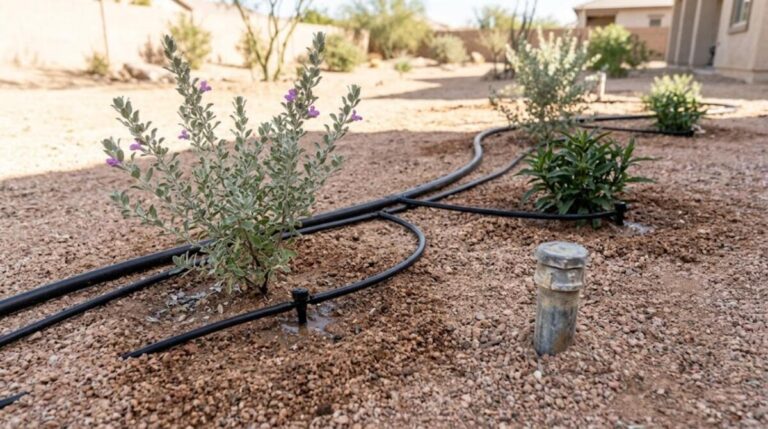
Turning Lawn Sprinklers Into Drip: Options for Phoenix Yards
When a Phoenix Valley lawn comes out, the sprinkler system under it does not have to go to waste, but it cannot stay the…
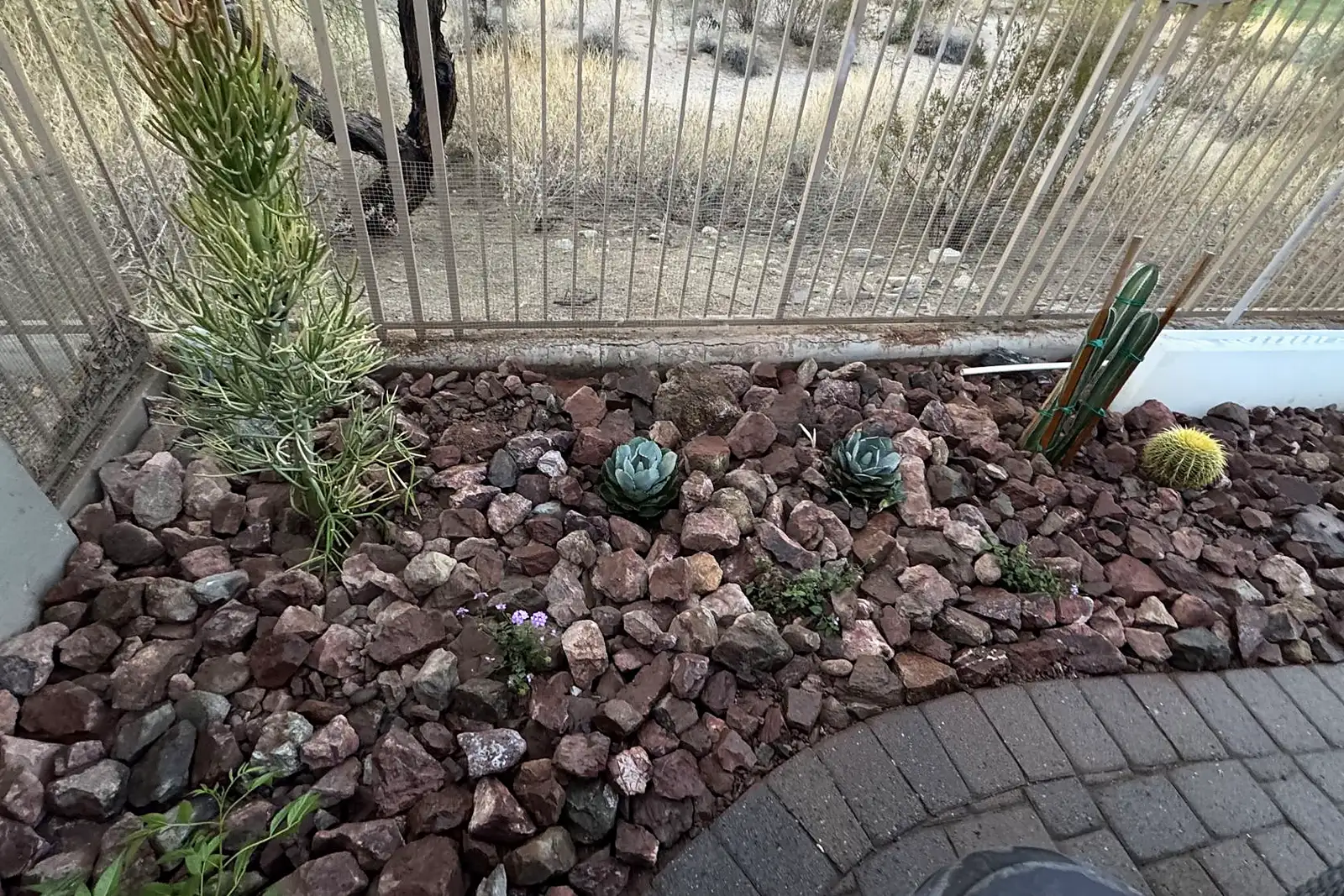
Xeriscape Mistakes to Avoid in the Phoenix Valley
A good xeriscape saves water and looks great for years. These common Phoenix Valley mistakes can undo both, and most are easy to avoid…
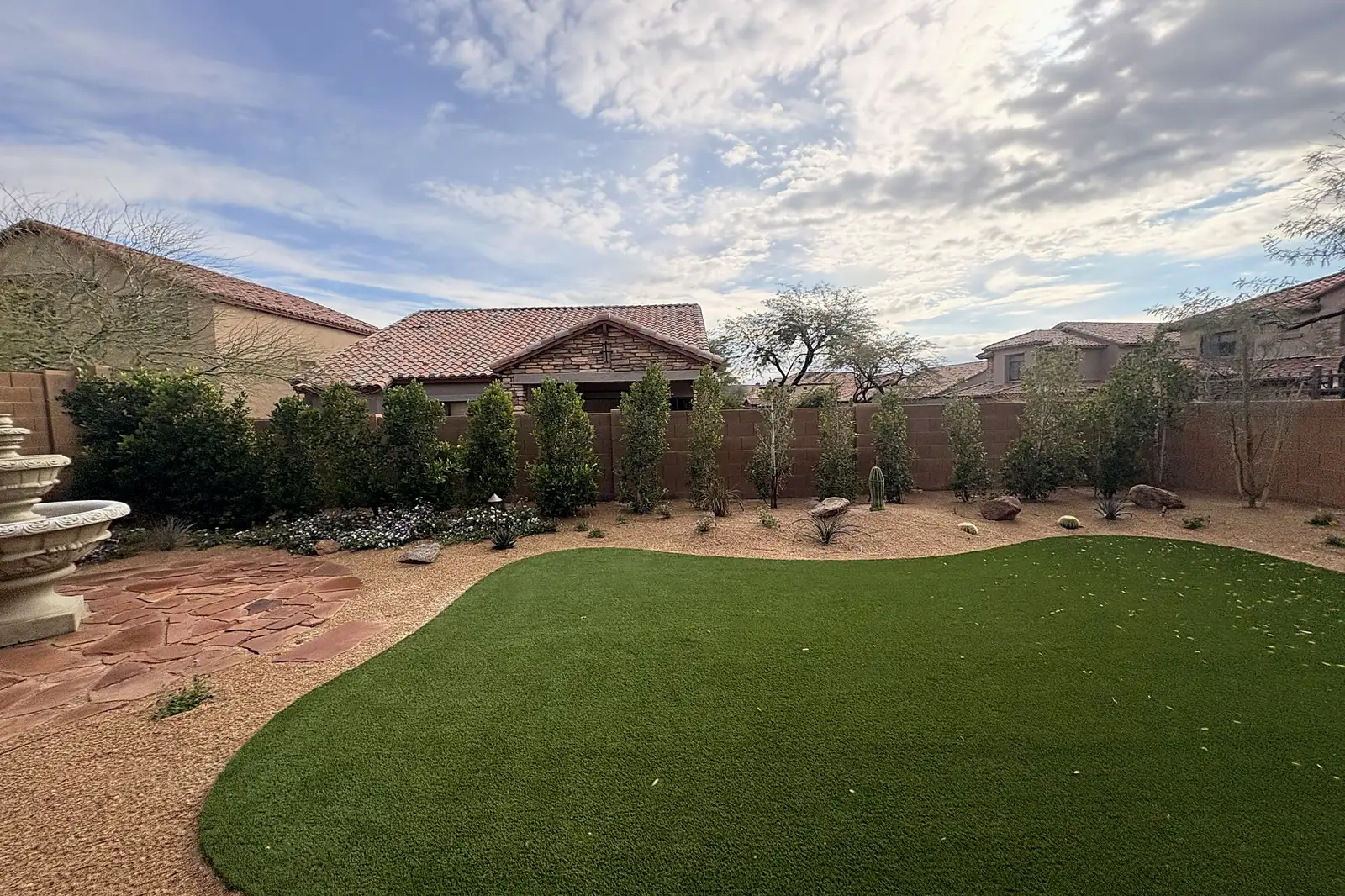
Privacy Hedges for Arizona Yards: Comparing the Top Choices
Want more privacy without a taller wall? Compare the most popular privacy screen plants for the Phoenix Valley, including growth rate, spacing, sun and…