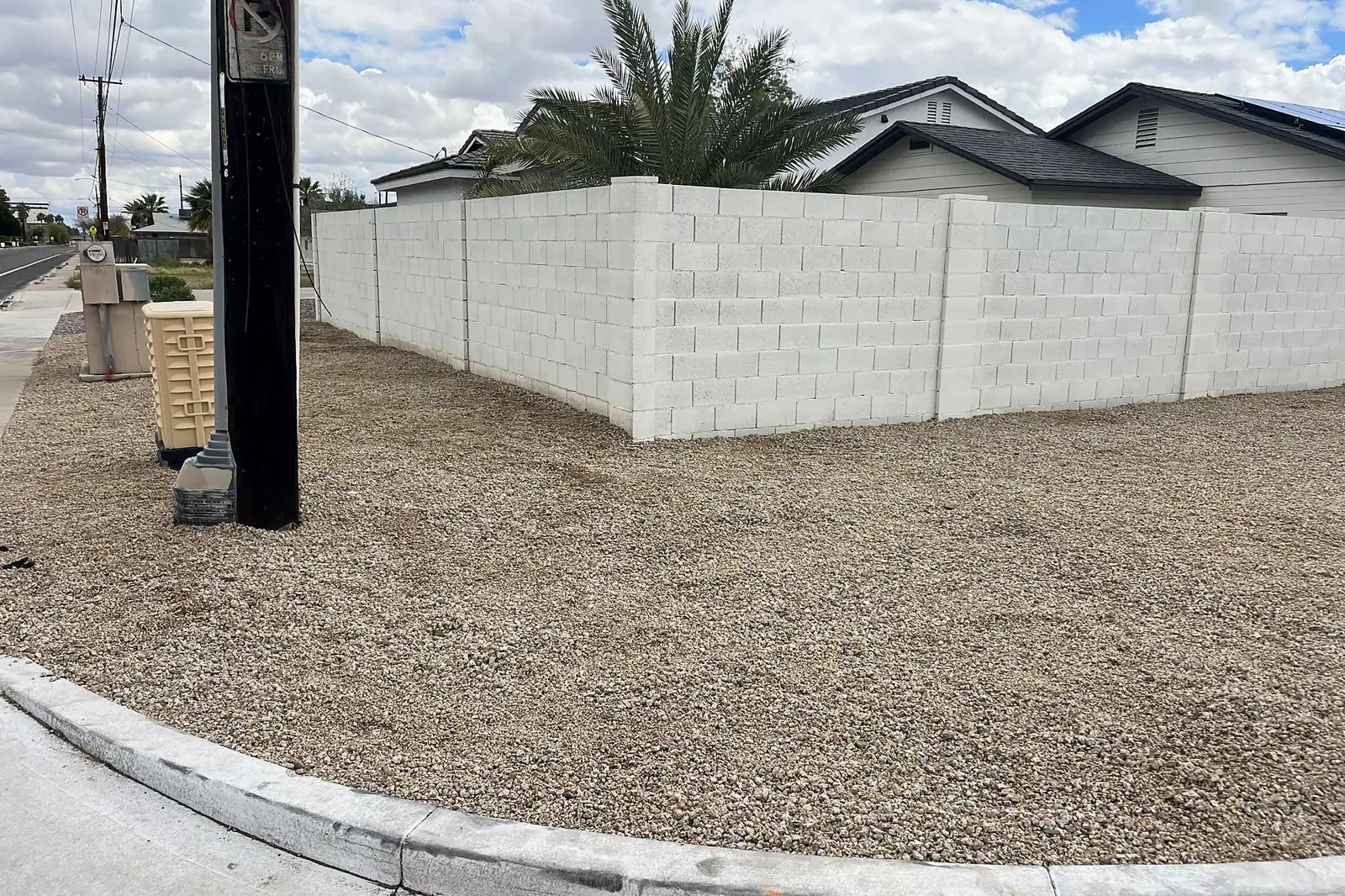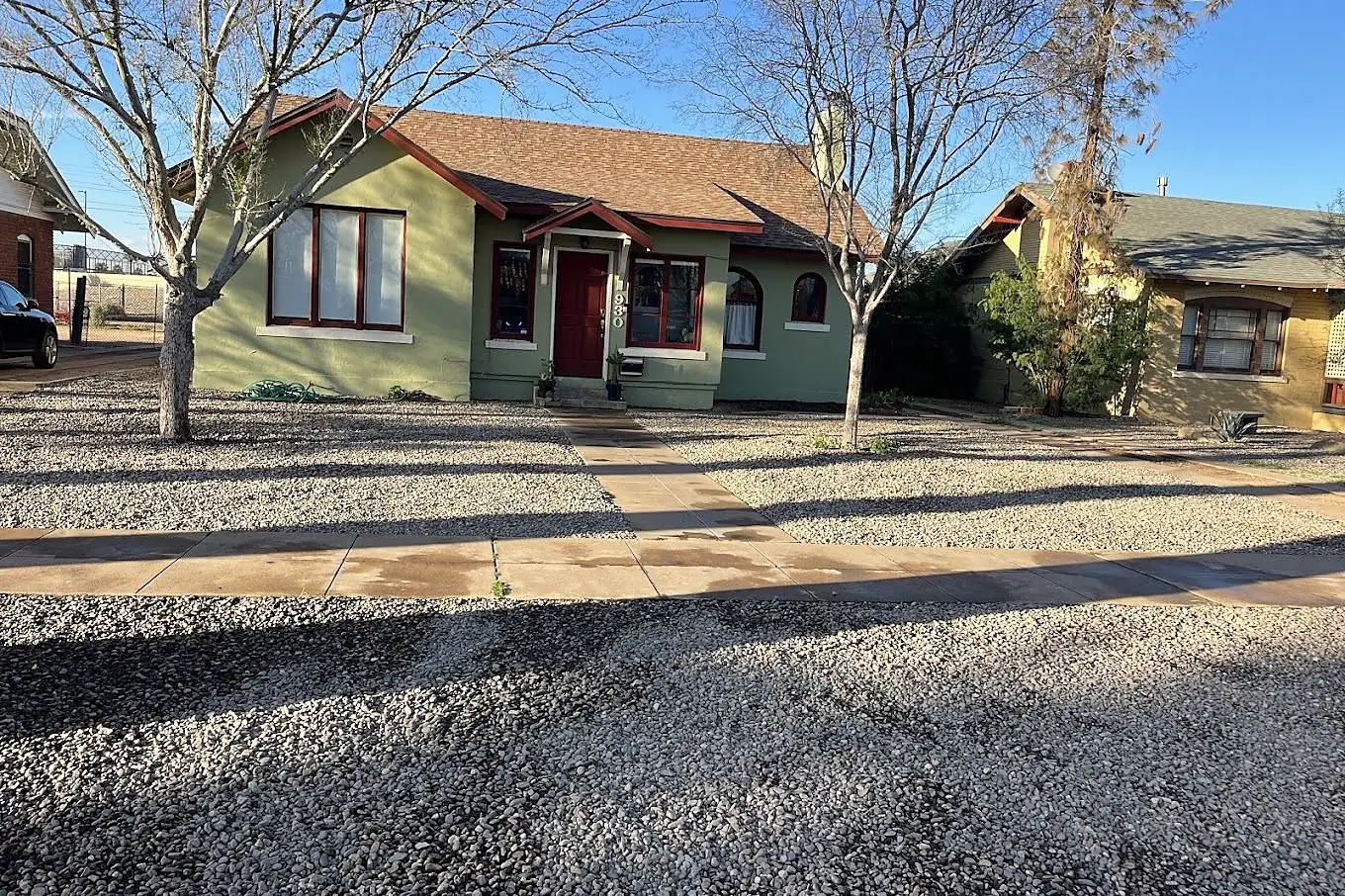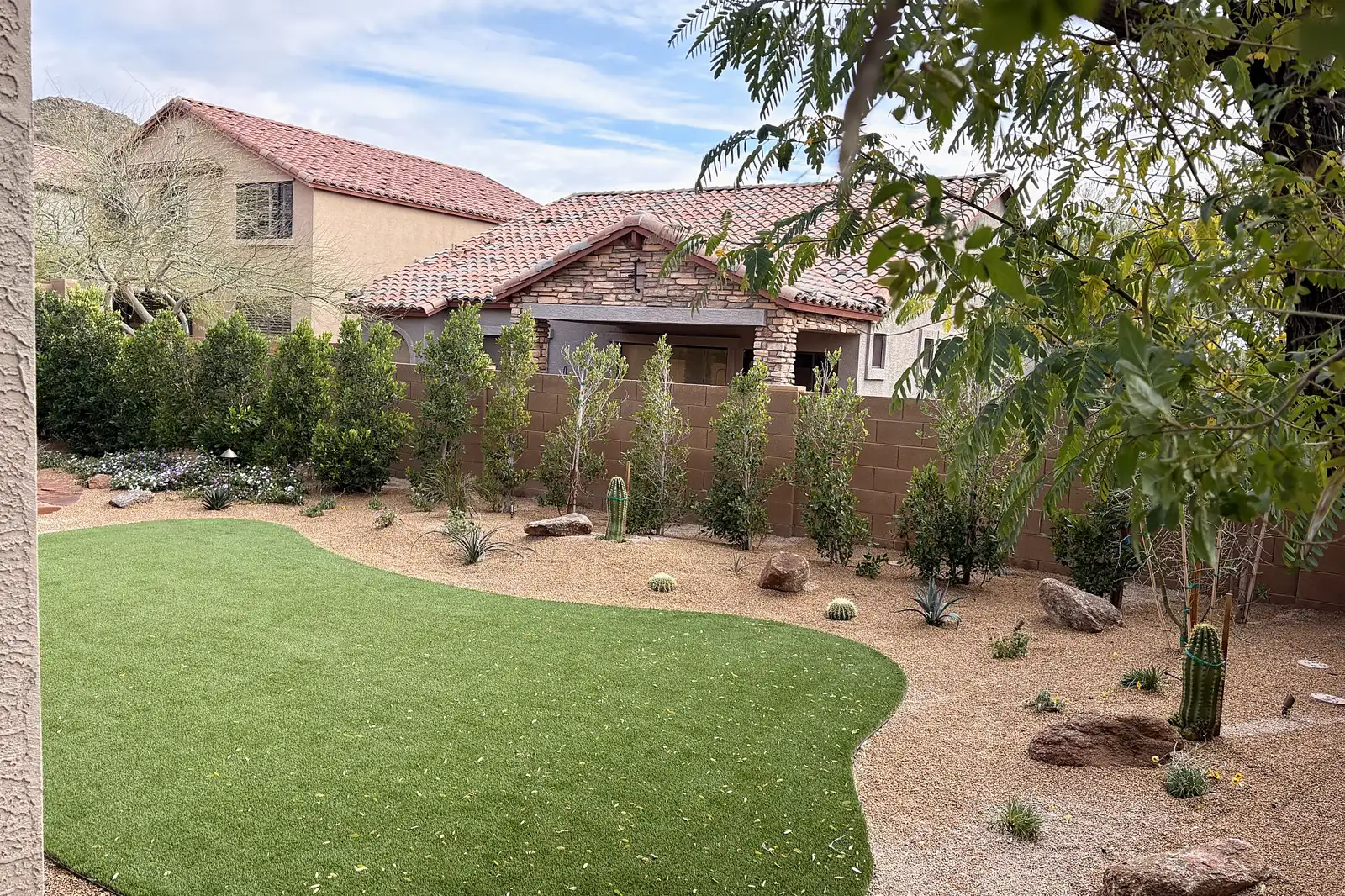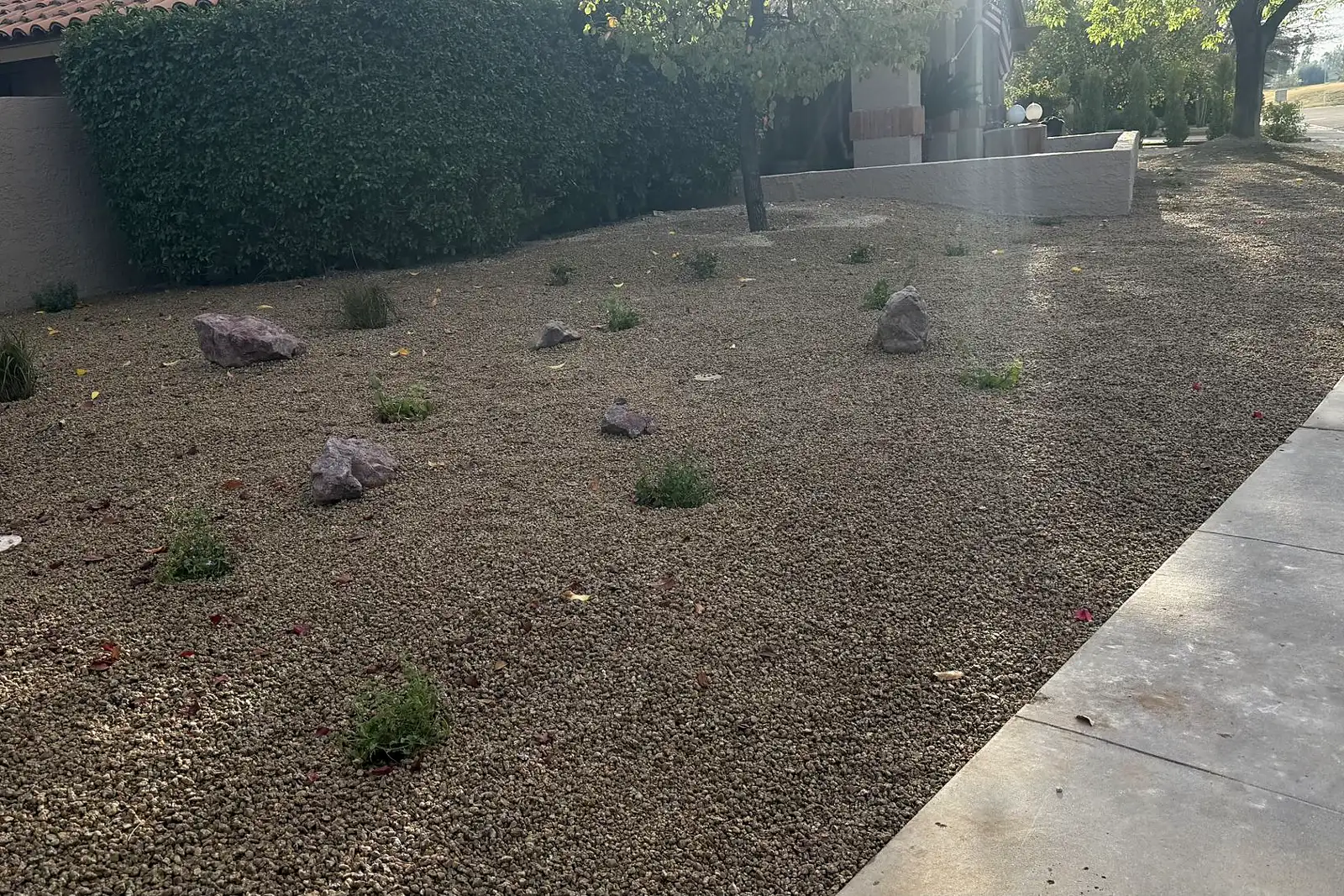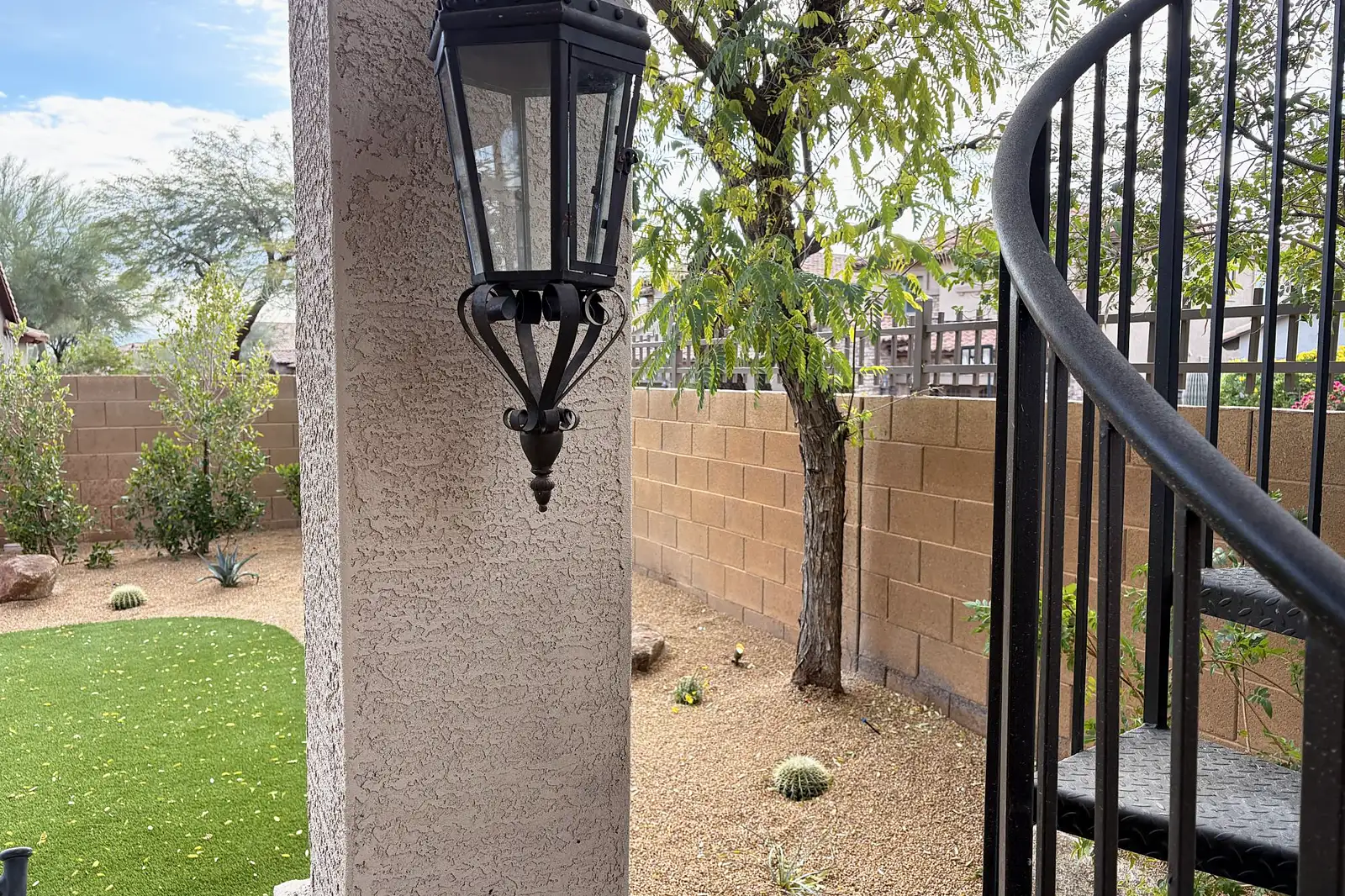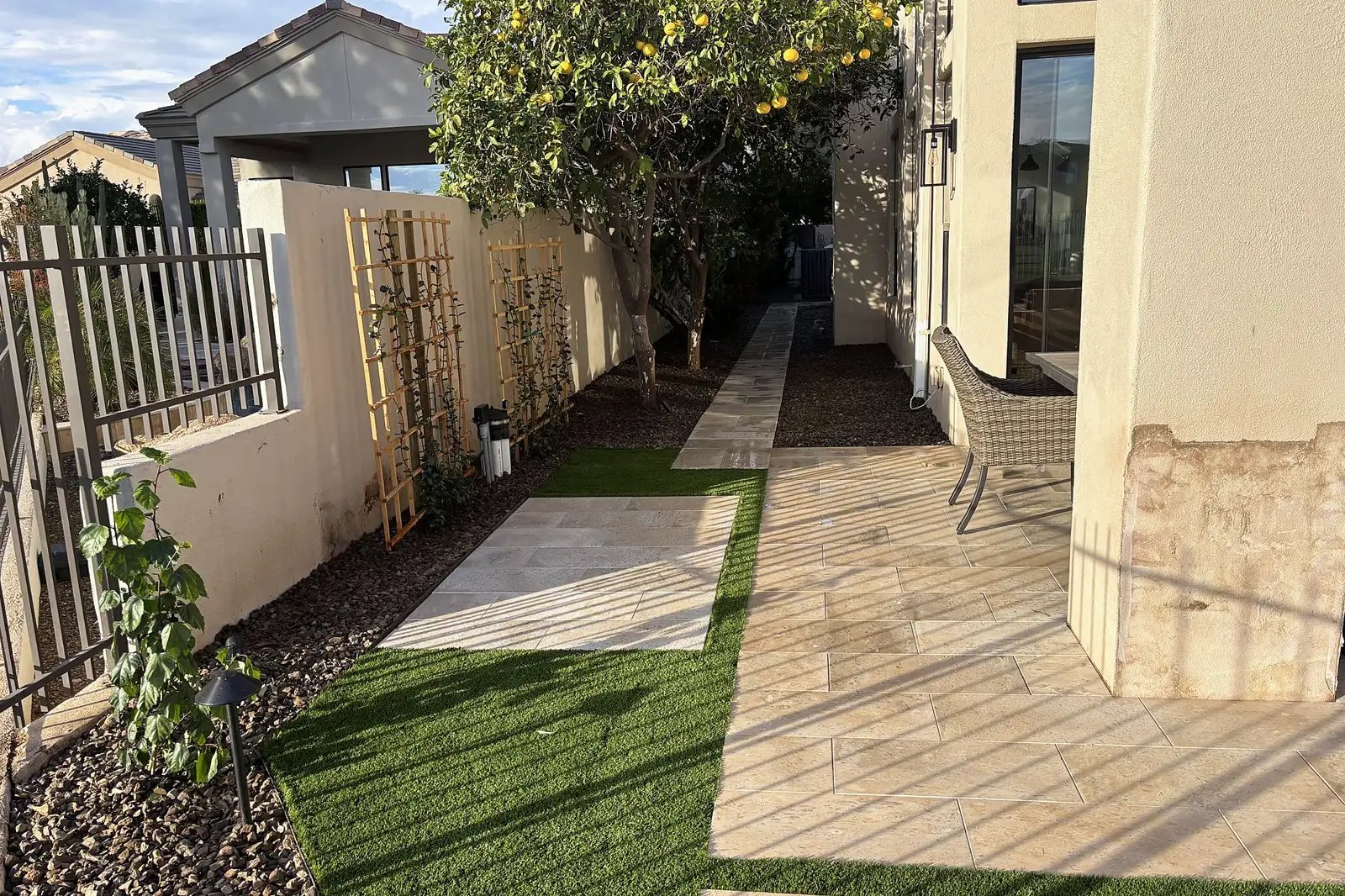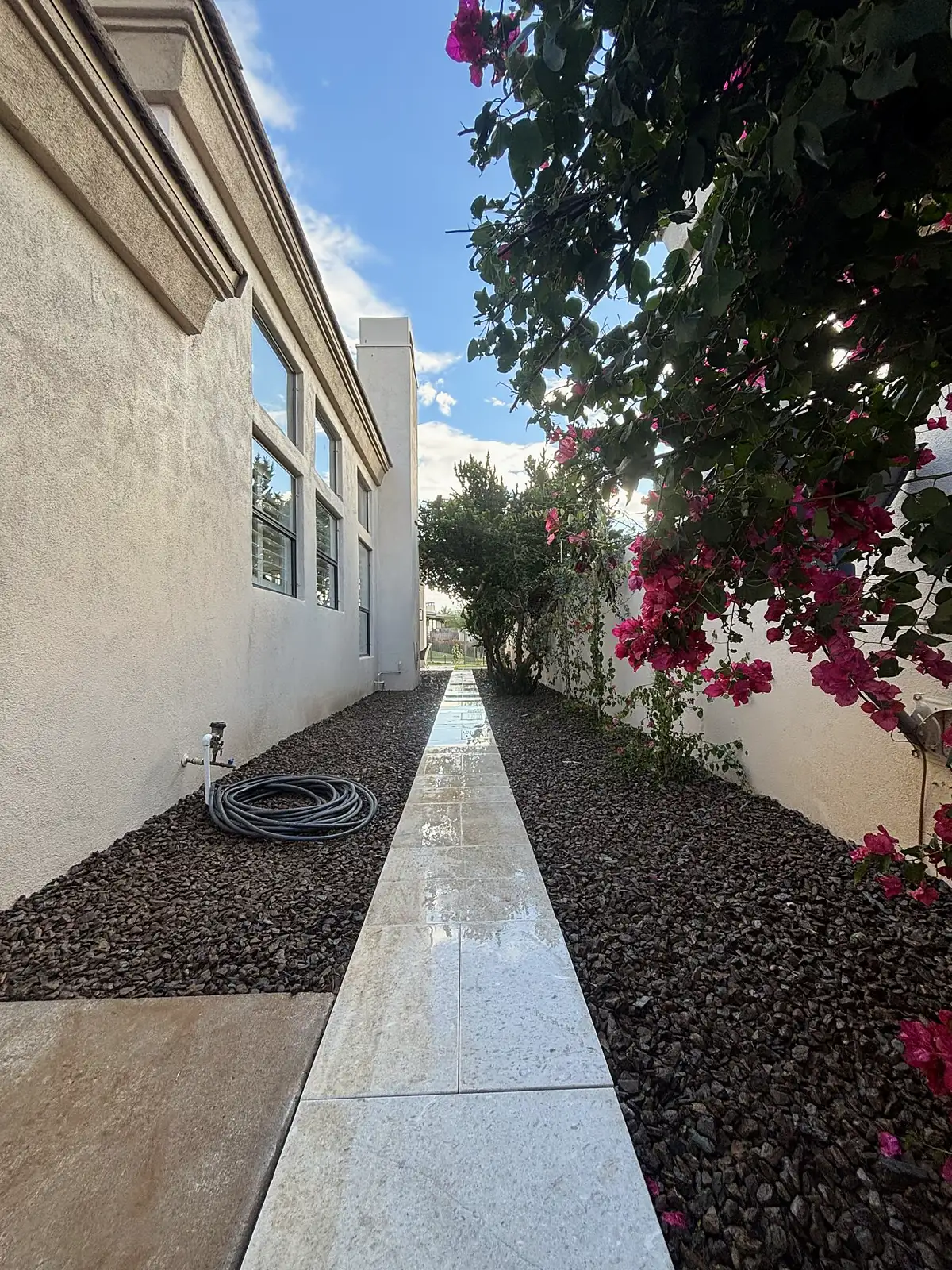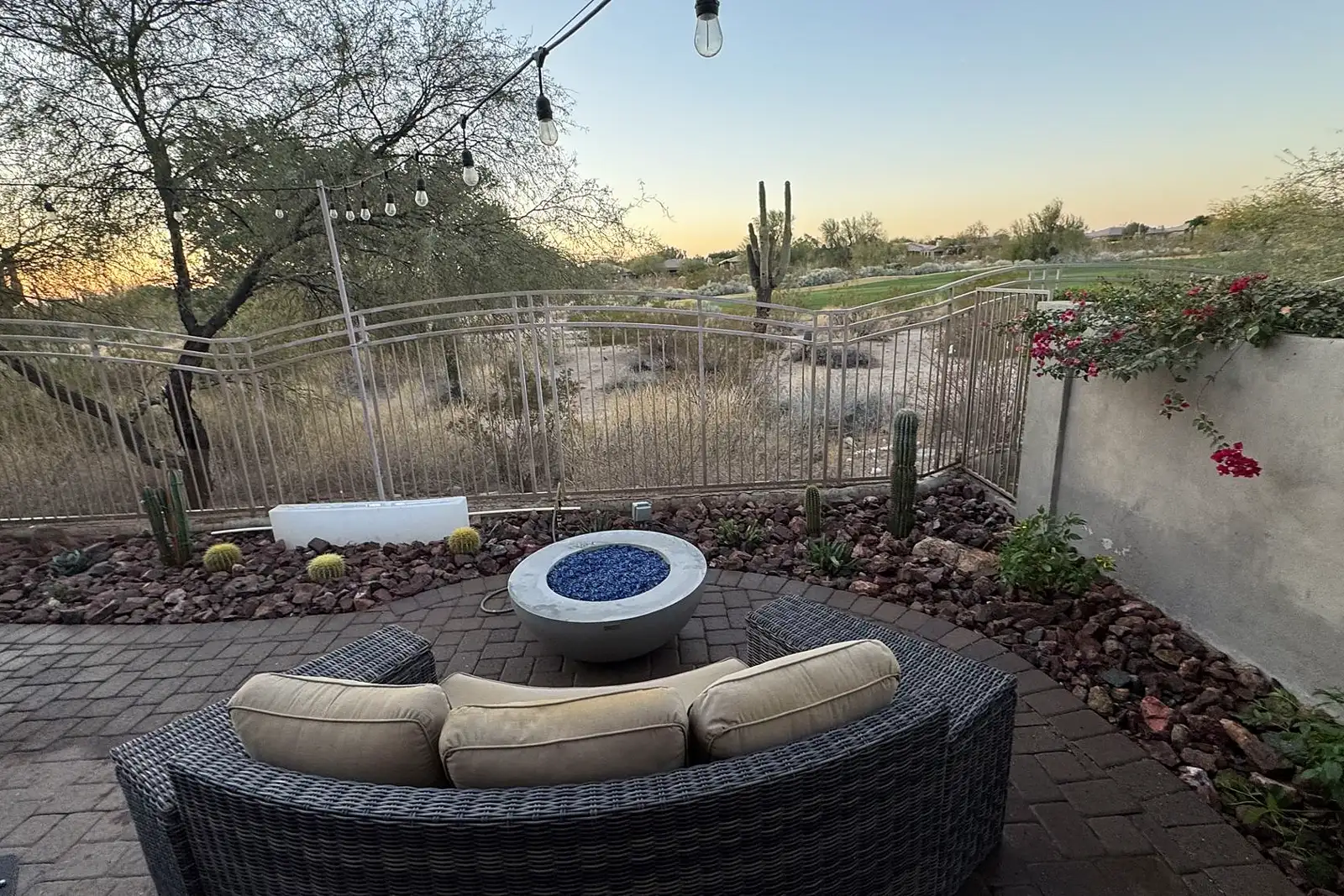
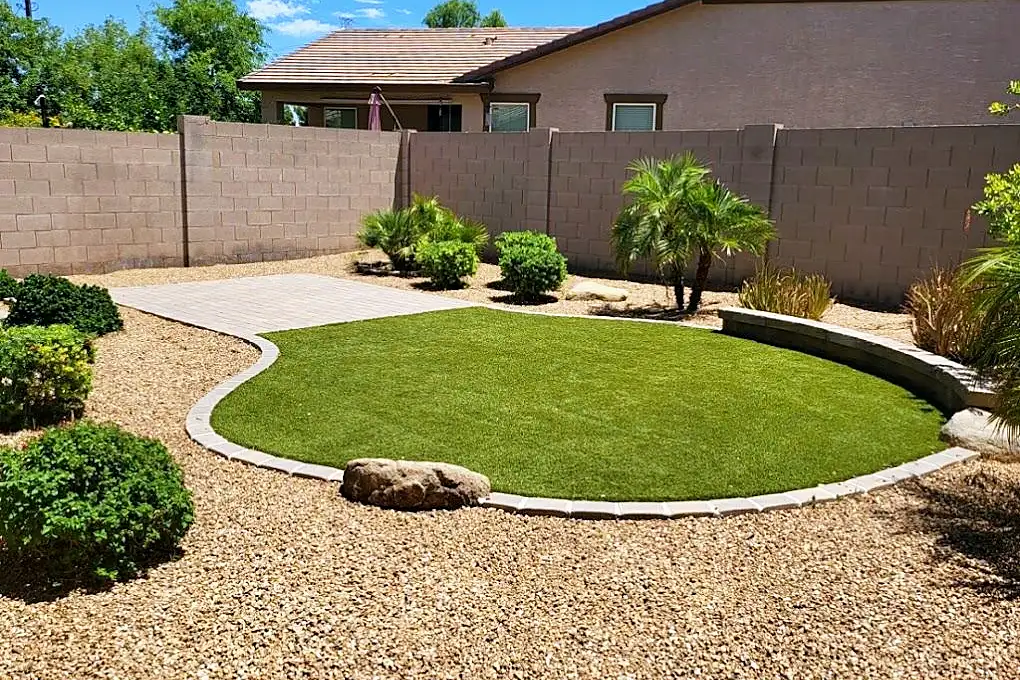
Why Valley homeowners are giving up the lawn
Bermuda grass goes brown and dormant every winter unless it is overseeded, overseeded ryegrass needs frequent water through spring, and summer turf can ask for water nearly every day once afternoons climb past 105 degrees. Add mowing, edging, fertilizing and a weekly crew, and many homeowners decide the lawn is not earning its keep.
A well-built desert landscape gives you color, shade and texture for a fraction of the water. It also holds its look year round instead of cycling between green and straw.
Check for a grass removal rebate before you start
Several Valley cities and water providers have offered rebates for replacing grass with low-water landscaping. Programs change, funding runs out, and the rules differ from one city to the next, so check your city's or water provider's current program before anything is removed. Some programs ask for an application and photos of the existing lawn before work begins, and some set requirements for how much of the converted area must be covered by plants. Tearing out the lawn first and asking later is the most common way homeowners miss out.
How a grass to desert conversion works
1. Kill the grass completely
Bermuda is the biggest obstacle in any Phoenix conversion. It spreads by underground rhizomes and surface runners, and it will push up through rock and even through cheap fabric if it is not fully dead. The most reliable window for killing it is late spring through summer, while it is actively growing. Plan on more than one round, with water in between to wake up any surviving runners. Grass that looks brown in January is dormant, not dead.
2. Remove the sod and deal with the old sprinklers
Once the grass is dead, the sod layer comes out so the finished grade sits at the right height against sidewalks, curbs and the driveway. Spray heads for the old lawn zone need to be capped or converted so they are not watering bare rock. We talk through the options for your existing system during the consultation.
3. Grade for drainage
Removing a lawn is the best chance you will get to fix drainage. Soil should slope away from the foundation, and monsoon runoff from roofs and downspouts needs somewhere to go. A dry riverbed lined with riprap carries storm water across the yard and looks like a natural wash the rest of the year. Low mounds add height and give cactus and succulents the sharp drainage they prefer.
4. Lay premium weed fabric
Quality landscape fabric under the rock slows weeds and keeps rock from working down into the soil. Thin fabric tears and lets bermuda back through, which is why our installs use premium fabric.
5. Plant, then cover with rock
Plants go in through openings cut in the fabric, each with its own watering basin. Landscape rock goes over the top at a consistent depth, and boulders are set partly buried so they look like they belong there instead of sitting on the surface.
6. Water efficiently
New desert plants still need regular water while they establish, and drip emitters sized to each plant beat any spray system. Our guide to drip irrigation in Arizona covers zones and seasonal timer changes.
Choosing plants for a converted lawn
A common mistake is replacing a lawn with a sea of rock and three lonely shrubs. Rock reflects heat, and a bare yard can feel hotter than the lawn it replaced. Aim for enough plant coverage that the space feels cool and alive, built in layers:
- Shade trees such as palo verde, mesquite or desert willow to shade rock, walls and windows. See desert tree planting.
- Flowering shrubs like Texas sage, ruellia, cassia and red bird of paradise for color through the heat.
- Accent plants such as agave, hesperaloe, aloe and golden barrel cactus for structure. See cactus and agave planting.
- Groundcovers like trailing lantana, verbena and trailing indigo bush to soften rock edges.
Natives and desert-adapted plants handle caliche, alkaline soil and 115 degree afternoons far better than plants from wetter climates. If your conversion is part of a rebate, confirm whether the program requires a minimum amount of plant coverage.
Timing your conversion
For most Phoenix yards the ideal sequence is to kill the bermuda during the warm months, then plant in fall. Fall is the prime planting season in the low desert: the soil is still warm so roots grow quickly, and air temperatures are mild enough that new plants are not fighting to survive. Spring is the second best window. Cactus and agave tolerate warm-season planting better than most plants, but non-native trees and shrubs are best kept out of the ground in peak summer.
How Three Timbers handles it
Xeriscape design and installation are back on our schedule now. Every project starts with a consultation where we walk the property and look at sun exposure, drainage and how you use the space. Next comes an MCAD design so you can see the plan before anything is torn out. Then our crew installs it: native plants, premium weed fabric, landscape rock, dry riverbeds, boulders and mounds, along with guidance on optimizing your irrigation to cut water use.
Prefer to handle the groundwork yourself? Order desert plants online and add professional planting at checkout. Either way we stand behind a 100% satisfaction guarantee. If you're not absolutely satisfied with our service, simply let us know, and we will work tirelessly to make it right.
Ready to lose the lawn?
Browse desert perennials and natives and Arizona shade trees at threetimbersshop.com, with free Valley-wide delivery on orders over $150. For a full grass to desert conversion, call (612) 214-1955 to request a consultation and quote for design and installation.
Frequently Asked Questions
Is there a rebate for removing grass in Phoenix area cities?
Several Valley cities and water providers have offered grass removal rebates, but programs, amounts and rules change. Check your city's or water provider's current program before you start, since some require approval before any grass is removed.
What is the best time of year to convert a lawn to desert landscaping?
Kill bermuda grass while it is actively growing in late spring and summer, then plant in fall, which is the prime planting season in the low desert. Spring is the next best planting window.
Will bermuda grass come back through the rock?
It can if it is not fully dead before the fabric and rock go down. Multiple treatments, removing the sod and using premium weed fabric are the best defense, along with pulling any stray runners early.
Do desert plants need irrigation after the lawn is gone?
Yes, especially during the first year or two while roots establish. Drip emitters sized to each plant deliver that water efficiently, and watering can be reduced as plants mature.
Can I buy the plants and have Three Timbers plant them?
Yes. Order plants at threetimbersshop.com and add installation at checkout. Our delivery team drops the plants off one day and the planting crew plants them the next day.
Recent Valley xeriscapes