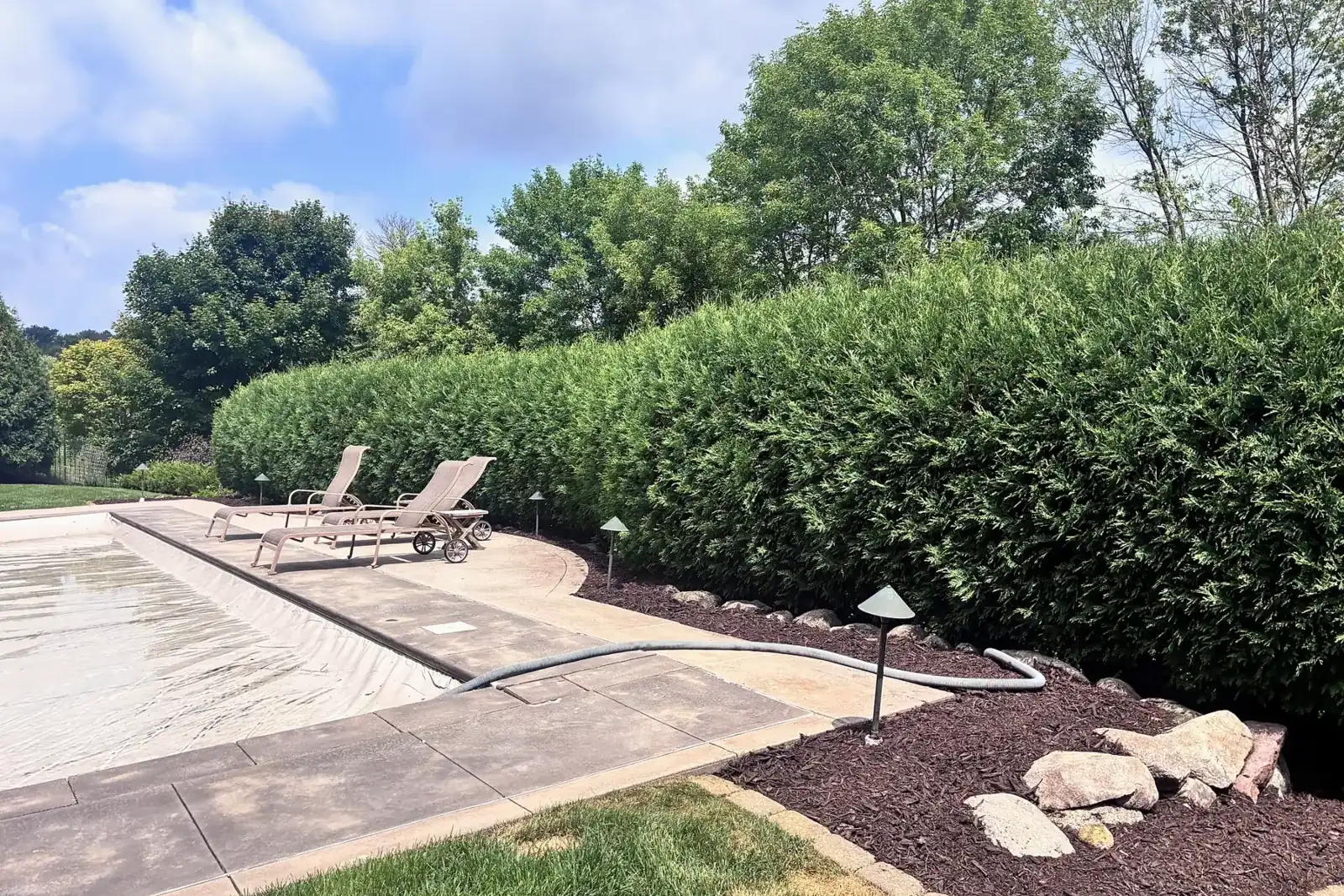
What You Need to Know About Landscape Lighting
Lighting Design
Great lighting starts with a plan, not a trip to the hardware store. We visit your property at dusk to evaluate existing conditions, discuss which features you want to highlight, and identify safety needs along walkways and stairs. Our design considers light angles, fixture placement, beam spread, and color temperature to create depth and drama without hot spots or dark gaps. You will see a lighting plan before installation so you know exactly where every fixture goes and what it illuminates.
Fixtures and Equipment
We install commercial-grade LED fixtures in solid brass, copper, and powder-coated aluminum housings that resist corrosion and hold up to Minnesota salt, ice, and UV exposure. LED technology means low energy consumption, minimal heat, and bulb life measured in decades rather than seasons. Transformers are sized with capacity for future expansion. All wiring is direct-burial rated and protected at connection points. We use warm white (2700K) LEDs as our standard--the color temperature that makes stone, wood, and foliage look their best at night.
Pricing
Landscape lighting costs depend on the number of fixtures, fixture quality, total wire runs, transformer capacity, and any trenching required. A focused accent package for a front entry and foundation starts at a moderate investment. Full-property lighting plans with path lights, uplights, downlights, hardscape lights, and smart controls are a larger investment that transforms the entire property. We provide itemized estimates showing fixture counts, locations, transformer sizing, and labor so you can make informed decisions.
Installation
We install lighting systems with minimal disruption to your existing landscape. Low-voltage wire is trenched 6 to 8 inches deep or tucked along hardscape edges. Fixtures are positioned precisely according to the lighting plan--uplights aimed at focal trees, path lights spaced for even coverage, and wall wash fixtures mounted to illuminate architectural features. All connections use waterproof wire nuts or hub systems for reliability. The transformer is mounted in an accessible location with a photocell and timer for automatic operation. We fine-tune every fixture angle at night to get the light exactly right before calling the project complete.
Designed for Impact, Built for Minnesota
We design lighting that makes people stop and look. But we also build systems that survive Minnesota winters without corroding, shorting out, or needing constant maintenance. Our fixtures are commercial grade, our connections are waterproof, and our wire is buried deep enough to stay protected. We aim every fixture by hand at night, adjusting angles until the light falls exactly where it should. The result is a lighting system that looks professional, runs efficiently, and lasts for years with minimal upkeep.
Lighting Techniques We Use
Uplighting and Accent Lighting
Ground-mounted fixtures aimed upward to highlight trees, architectural columns, stone walls, and other vertical features. Uplighting creates dramatic shadows and depth. We use narrow and wide beam spreads depending on the feature being lit--a tight beam for a tree trunk, a wider wash for a stone wall face.
Path and Step Lighting
Low-profile fixtures along walkways, driveways, and stairs for safe navigation after dark. Path lights are spaced to provide even, glare-free illumination without creating a runway effect. Step lights are recessed into risers or mounted on adjacent walls to define elevation changes and prevent trips.
Hardscape and Wall Wash Lighting
Under-cap lights built into seat walls and retaining walls, recessed paver lights in patio surfaces, and wall-mounted fixtures that wash light across stone or stucco. Hardscape lighting adds ambiance to outdoor living spaces and highlights the texture of masonry and stone work. These fixtures integrate directly with hardscape features during or after construction.
Downlighting and Moonlighting
Fixtures mounted high in trees or on structures that cast soft, natural-looking light downward--mimicking moonlight filtering through branches. Moonlighting creates gentle, ambient illumination over patios, seating areas, and garden beds. It is the most subtle and natural lighting technique and works beautifully in wooded lots and lakefront properties.