Start with how you use the space
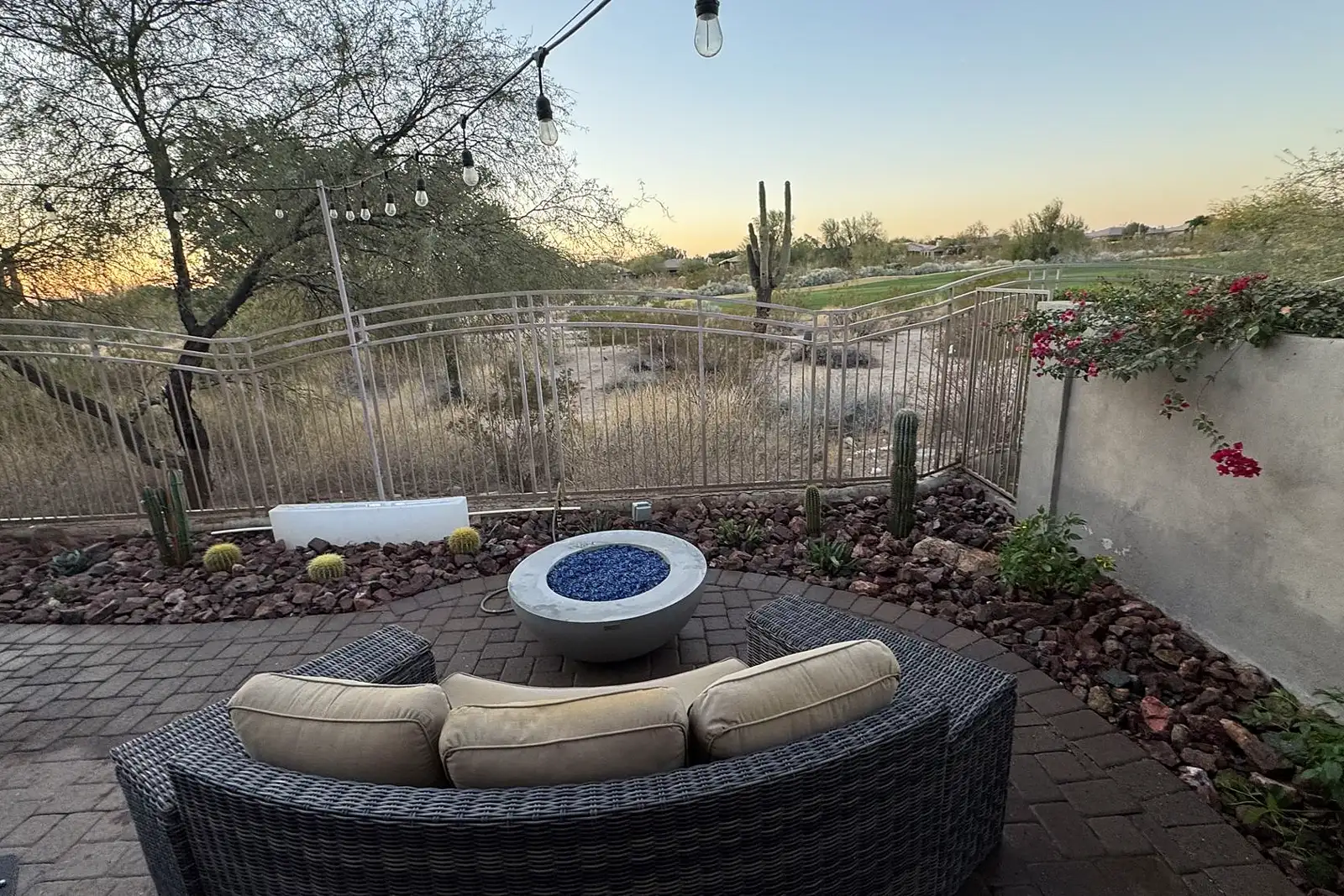
Before choosing a single plant, think about what happens in your backyard. Do you swim most evenings from May through October? Do kids or dogs need open room to run? Is there a patio where you want to sit in the shade in late afternoon? Do you want to block a view of a neighbor's second story? The answers drive where trees go, where rock and open areas go, and which plants belong near people.
Shade comes first
In Phoenix, shade is the single biggest factor in whether a backyard gets used in summer. The most valuable spots for trees are usually on the west and south sides, where they block the harshest afternoon sun from the patio, the house and the rock surfaces that otherwise radiate heat into the evening.
- Place trees so the mature canopy will shade the patio during late afternoon, not just at noon.
- Keep trees far enough from the house, block walls and pool shell that roots and limbs have room.
- Consider deciduous trees like desert willow where you want winter sun to reach a window or patio.
Fast growers such as palo verde and some mesquites give shade within a few seasons. Slower trees like ironwood and Texas ebony take longer but are long-lived and tough. Our desert tree planting page covers sizes and first-summer care, and you can browse fast-growing trees to get shade sooner.
Landscaping around a pool
Pool areas need more thought than any other part of the yard. A few rules of thumb:
- Manage litter. Palo verdes, mesquites and acacias drop flowers, leaves and pods. They make excellent shade trees, but place them where the litter falls on rock, not into the water or skimmer.
- Keep spines away from bare feet. Agaves, prickly pear and other spiny plants belong well back from the pool deck. Spineless accents such as hesperaloe work better close to where people walk barefoot.
- Watch the roots. Aggressive-rooted trees and shrubs, including Indian laurel ficus, should be kept away from the pool shell, decking and plumbing.
- Expect splash and reflected heat. Pool decks reflect a lot of heat. Tough, heat-loving plants handle it best.
Desert-hardy palms are a classic poolside choice for a resort feel with little leaf litter in the water. See desert-hardy palms.
Privacy and screening
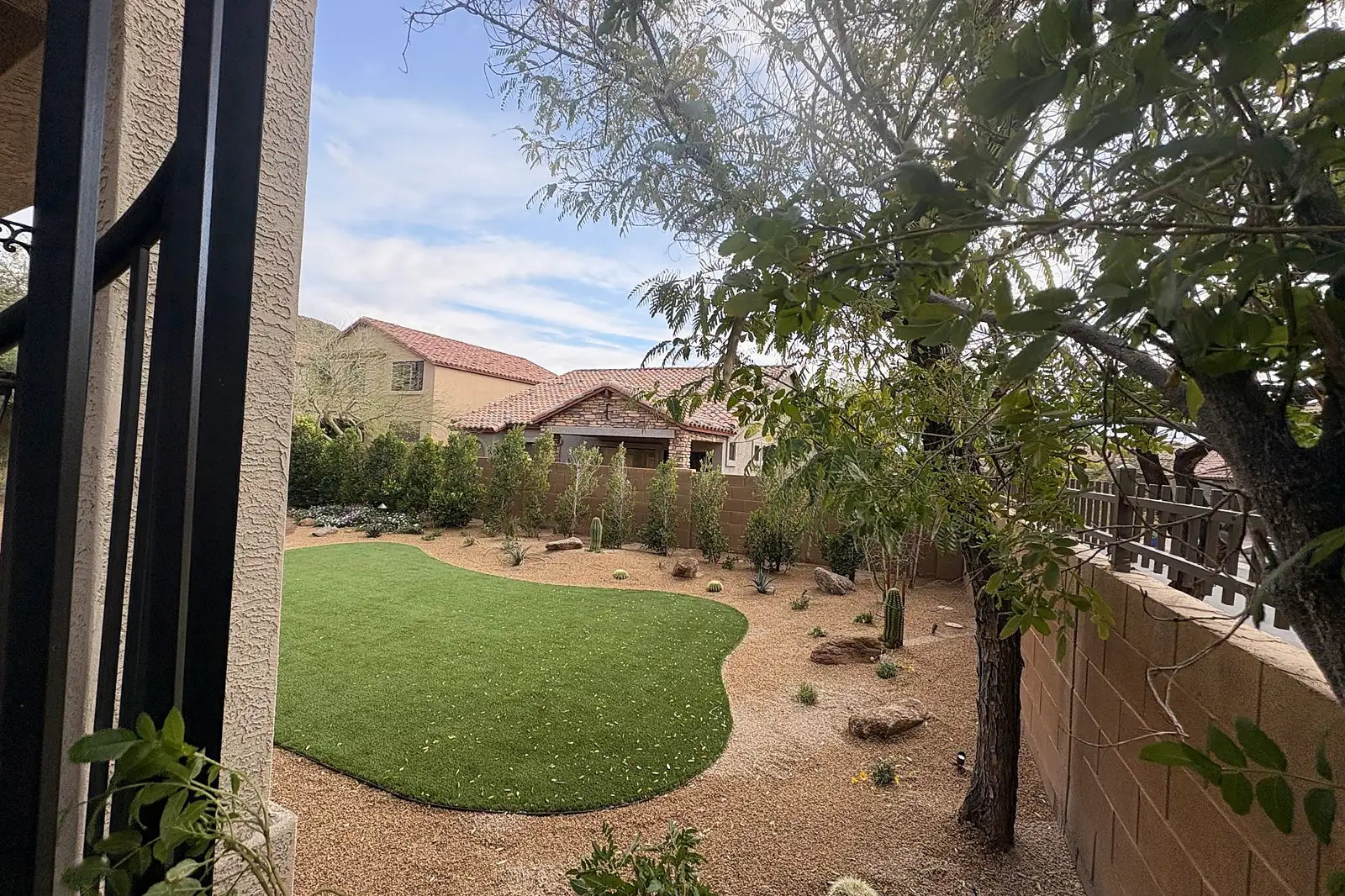
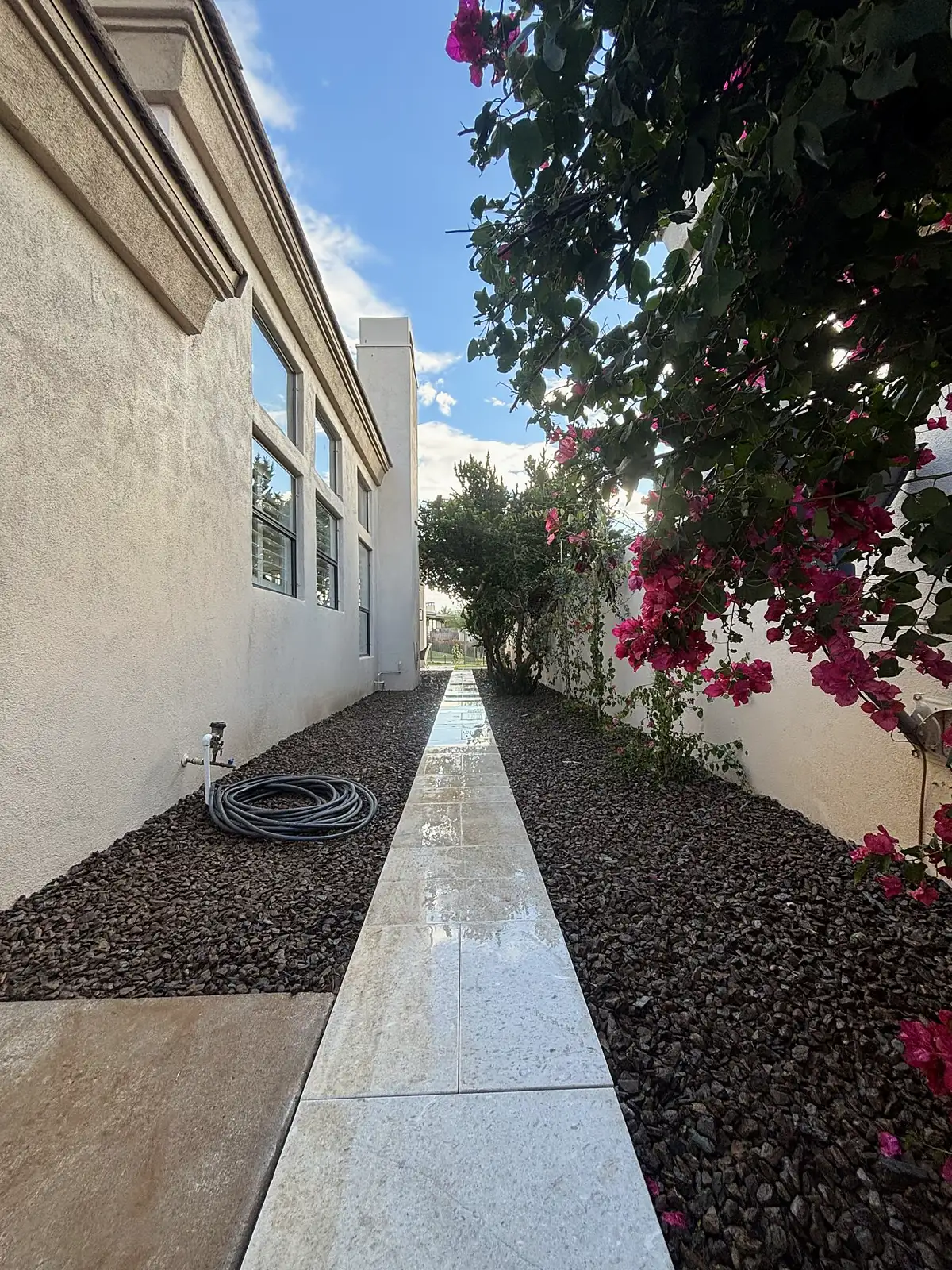
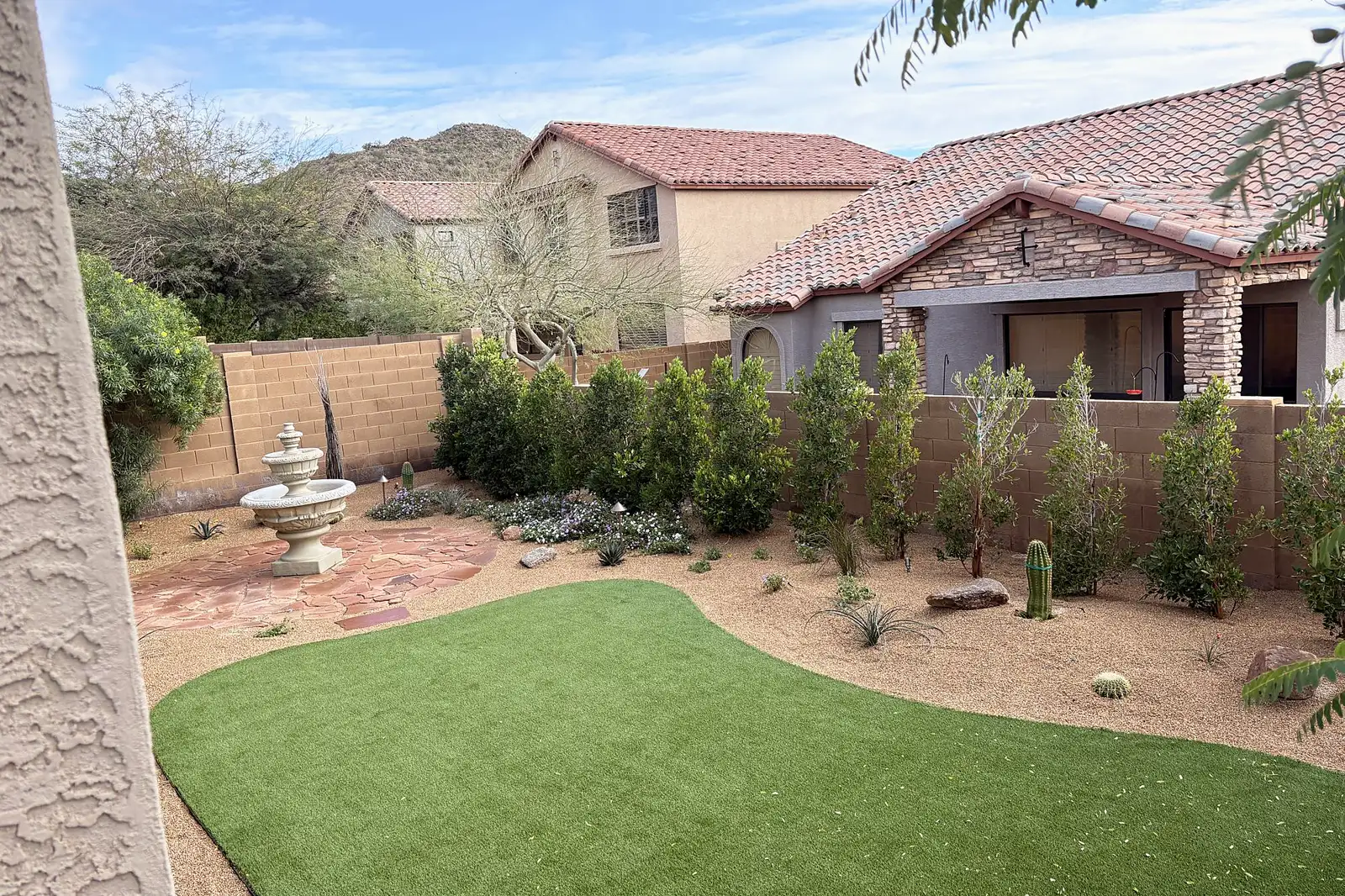
Most Valley backyards are bordered by block walls around six feet tall, which do not stop views from a neighbor's upstairs window. Evergreen trees and tall shrubs planted along the wall fill that gap. Bougainvillea espaliers trained flat against a wall add color without eating up yard space. For species, spacing and HOA considerations, see our page on privacy hedges in Arizona or browse evergreen privacy plants.
Kids, pets and safe plant choices
If children or pets use the yard, keep spiny plants out of play zones and along the edges instead. Oleander is a common Valley screening shrub, but all parts of the plant are toxic if eaten, so many families leave it out of backyards where small children or dogs spend time. Open areas of smaller rock or decomposed granite give kids and dogs room to play.
Citrus in the backyard
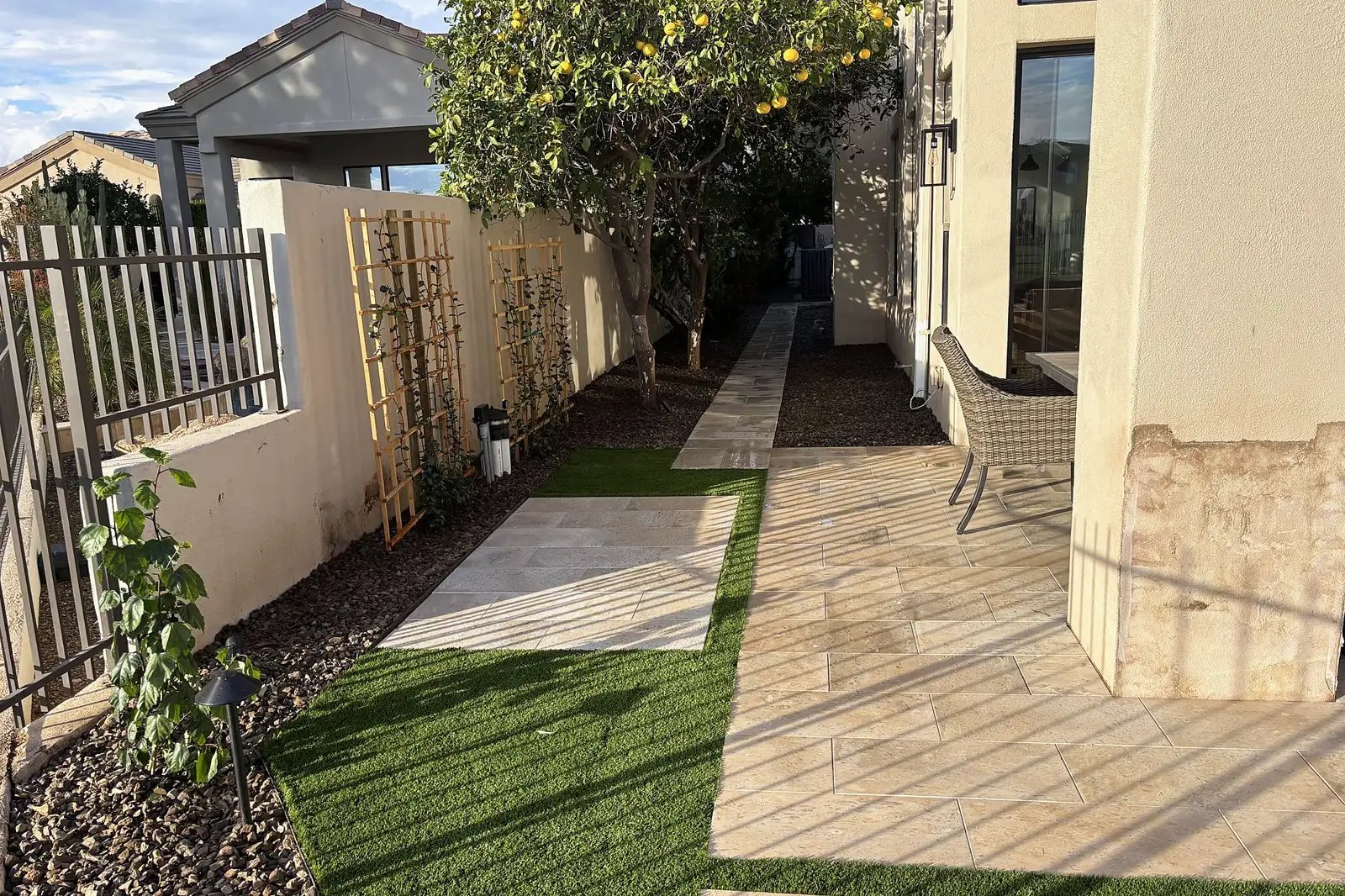
Many Phoenix homeowners want a lemon, orange or grapefruit tree out back. Citrus needs more water than desert natives, so it is best placed on its own watering zone. Young citrus trunks are prone to sunburn; leave the lower foliage on and protect exposed trunks. Citrus can be damaged by hard frost when young, so a spot near a south or west-facing wall offers some protection. Browse citrus trees.
Drainage and monsoon storms
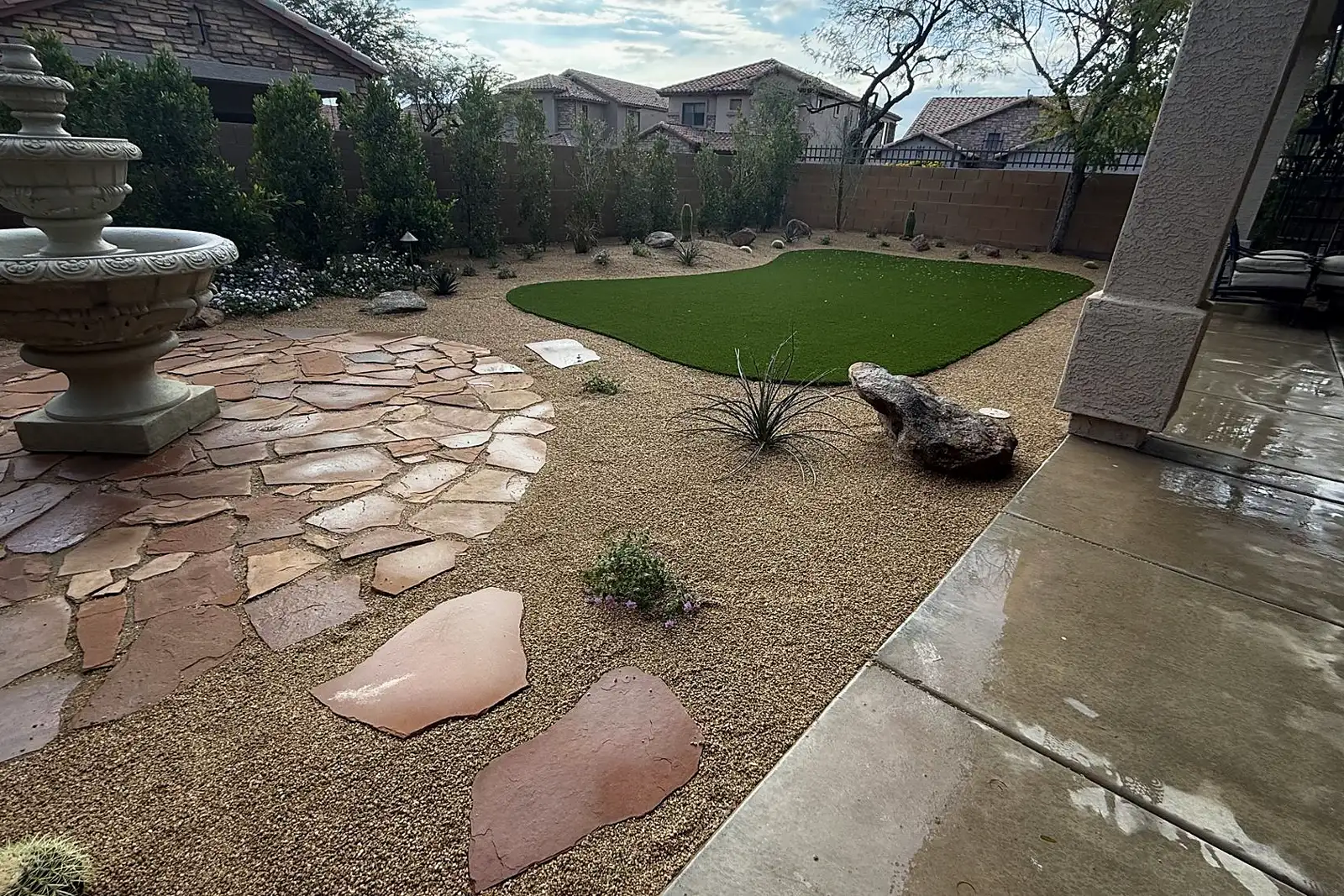
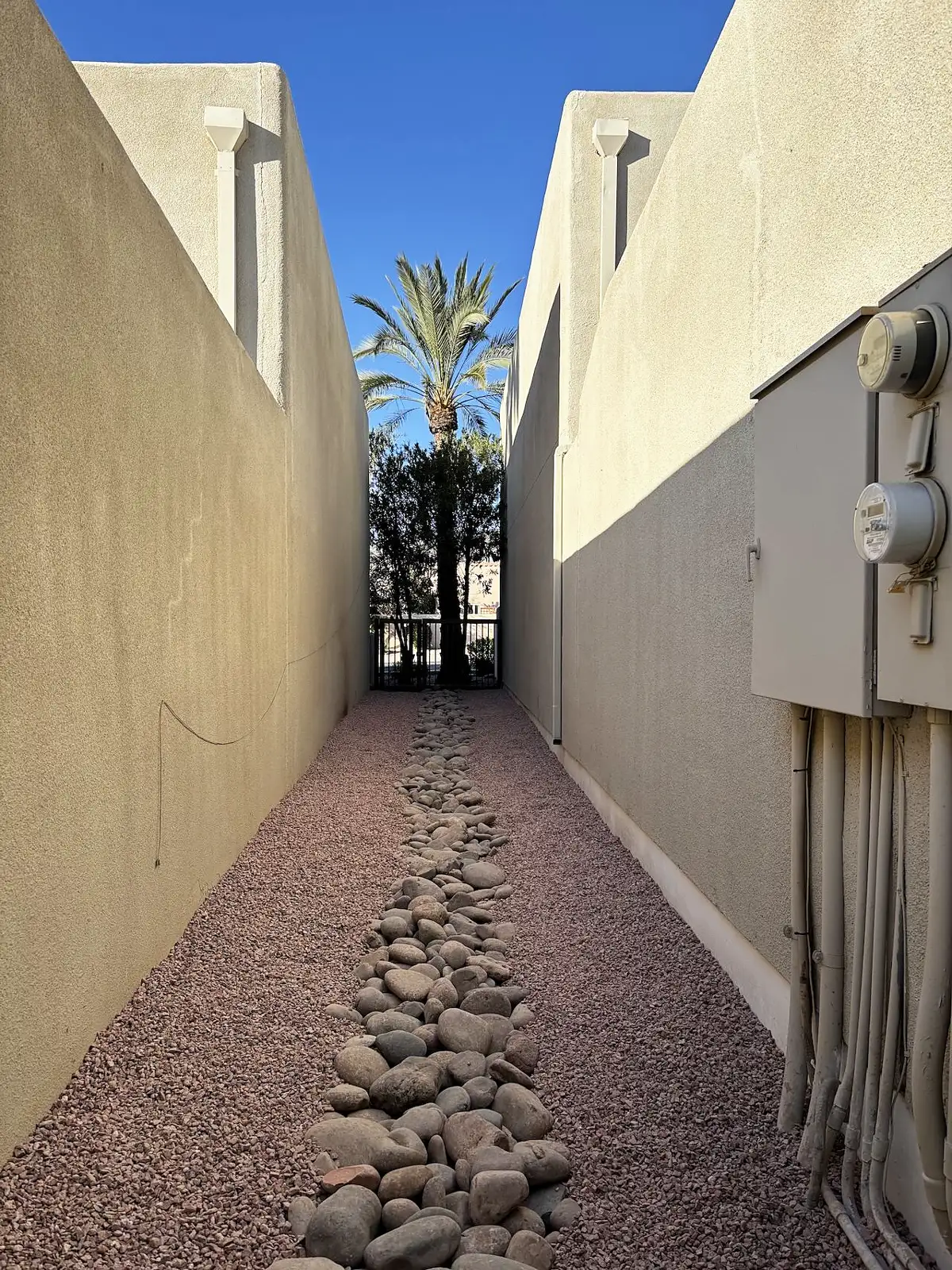
Backyards often collect runoff from the roof and the neighbors' yards. A dry riverbed of riprap can carry that water to where it is useful, such as tree basins, or away from the house. Mounds lift cactus and succulents above wet spots so their roots do not sit in water after a storm.
How we build backyard xeriscapes
Xeriscape design and installation are back on our schedule now. Every project begins with a consultation walk of your property. We then create an MCAD design showing trees, shrubs, accents, rock, boulders, mounds and dry riverbeds. Our crew handles the installation with native plants, premium weed fabric and landscape rock, and we give guidance on optimizing your irrigation to cut water use. All of it is backed by our 100% satisfaction guarantee: If you're not absolutely satisfied with our service, simply let us know, and we will work tirelessly to make it right.
Plan your backyard
Shop trees, shrubs and accent plants at threetimbersshop.com, where you can add planting at checkout and get free Valley-wide delivery on orders over $150. For a complete backyard design and installation, call (612) 214-1955 to request a quote.
Frequently Asked Questions
What are the best shade trees for a Phoenix backyard?
Palo verde, mesquite, desert willow, sweet acacia, ironwood and Texas ebony are proven performers. The right choice depends on how fast you want shade, how much litter you can accept and how much room you have.
Which plants should I avoid near a pool?
Avoid spiny plants near the deck, heavy-litter trees directly over the water and aggressive-rooted plants such as Indian laurel ficus near the pool shell and plumbing.
How do I add privacy above a six-foot block wall?
Plant evergreen trees or tall shrubs along the wall to screen views from second-story windows. Hopseed, Indian laurel ficus and oleander are common choices, each with tradeoffs.
Can I grow citrus in a desert backyard?
Yes. Give citrus its own watering zone since it needs more water than natives, protect young trunks from sunburn and choose a spot with some frost protection.
When can Three Timbers install my backyard?
Xeriscape design and installation are back on our schedule now. Call (612) 214-1955 to set up a consultation.
Recent Valley xeriscapes