
Turning Lawn Sprinklers Into Drip: Options for Phoenix Yards
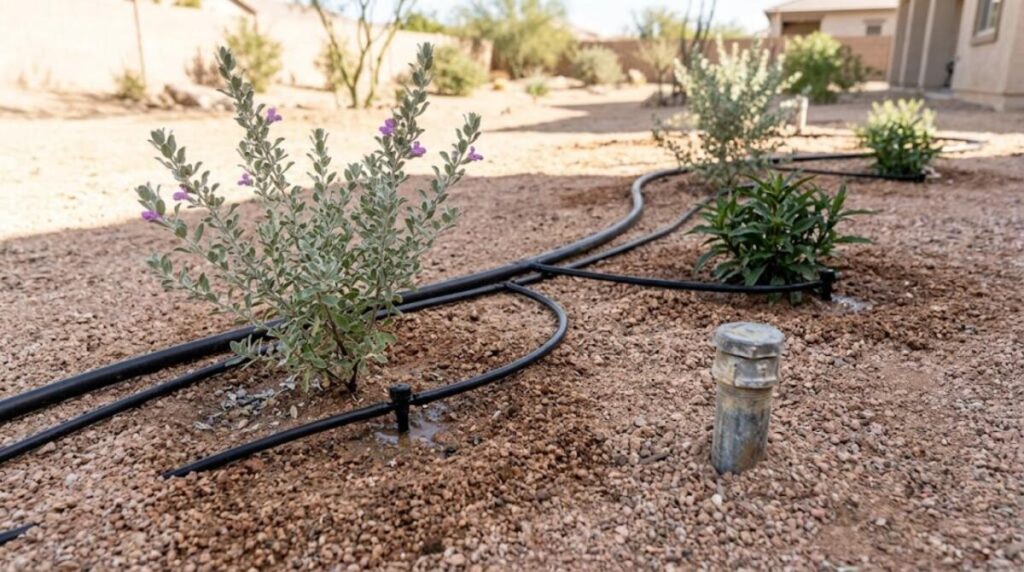
When a Phoenix Valley lawn comes out, the sprinkler system under it does not have to go to waste, but it cannot stay the way it is. You have three basic options: cap the heads you no longer need, retrofit a spray zone to drip at the heads, or run new drip lines from the valve. Most conversions use a mix of all three, and the right choice depends on where the old pipes run compared with where the new plants will go.
Why Lawn Sprinklers Do Not Belong in a Desert Yard
Spray heads are built to wet a whole lawn evenly. In a xeriscape, most of the ground is rock, and only the root zone of each plant needs water. A spray head left in a rock bed waters rock, wets weed seeds between plants and puts water on walls and walkways.
Drip irrigation does the opposite. It delivers slow water right where the roots are, which is why it suits desert plantings. University of Arizona Cooperative Extension’s guide, The Basics of Drip Irrigation for Landscaping, describes it as a low-pressure system, running at about 20 psi, and notes that drip and sprinklers apply water at different rates and operate under different pressure.
Start by Mapping What You Already Have
Before deciding anything, walk the system and write down what each valve does. A typical lawn setup includes:
- A backflow preventer. UA Extension notes it keeps irrigation water from flowing back into the drinking water supply and is required by local codes. It stays in place.
- Valves and a controller. Each valve runs one zone. Note which zones serve the lawn, which serve beds, and whether any shrubs or trees were tied into a lawn zone.
- Underground pipe to each head. These lines were laid out to cover grass, not to reach future plants.
Run each zone once and watch it. Broken heads, weak spray and wet spots in odd places tell you a lot about the condition of the pipe underground.
Option 1: Cap the Heads You Do Not Need
In most grass to desert conversions, a lot of heads simply go away. Capping is the cleanest way to retire them. Orange County’s water-smart conversion guide suggests capping each unused head, and where a cap will not fit the sprinkler, removing the whole sprinkler and putting a PVC cap on the riser underground.
Capping below grade matters in a rock yard. A head left at the surface gets kicked, buried or broken, and a cracked riser under rock can leak for weeks before anyone notices.
Option 2: Retrofit a Spray Zone at the Heads
If some of the old heads sit close to where new plants will go, you can convert those heads to feed drip tubing. Retrofit kits replace the spray body’s insides and give you an outlet for drip line. Some kits include their own pressure regulator and filter; the one described in Orange County’s guide includes a 30 psi regulator and a 200 mesh filter.
Retrofitting works best when:
- The existing pipe is in good shape.
- Plants can be placed within a short run of the old heads.
- The whole zone is being converted at once.
That last point is not optional. UA Extension says that when converting to drip, every sprinkler on the same zone and the same valve has to be changed. UA explains that the two apply water at different rates and run at different pressures, so they need separate valves.
Option 3: Run New Drip From the Valve
When the old pipe is in poor shape or the new plants are nowhere near the old heads, the better answer is often to leave the lawn laterals in the ground, cap them, and start fresh at the valve. Water Use It Wisely notes that you can retrofit an existing system or install a new one, and that an old system may be better abandoned.
A new drip zone at the valve usually includes:
- A filter. UA Extension says even small particles can plug emitter openings.
- A pressure regulator. This drops household pressure to the low pressure drip is designed for.
- Supply line routed to the plants. Tubing goes where the design puts plants, not where the lawn used to be.
- Emitters sized to each plant. Trees get more water than shrubs, and shrubs more than groundcovers.
Our drip irrigation page covers emitters, zones and seasonal timer changes for new systems.
Give Trees Their Own Water
Mature trees that sat in the lawn have been drinking from the sprinklers for years. Once the grass is gone, they still need deep water. Water Use It Wisely’s guidelines call for watering established desert-adapted trees to a depth of 24 to 36 inches, much deeper than shrubs or groundcovers.
UA Extension recommends grouping trees, shrubs and groundcovers on separate valves. When the valve count allows, we put trees on their own zone so they can run long and less often without overwatering everything else. As trees grow, emitters should move out to the edge of the canopy, where UA Extension says the roots take up water. Our watering rules for trees page has the details.
Keep the New System Working
Drip is low maintenance, not no maintenance. UA Extension recommends keeping filters clean, flushing the system periodically and checking emitters and lines monthly. In a converted yard, also watch for:
- Leaks at old capped risers.
- Emitters that end up buried under rock or pulled loose.
- Plants that look dry on one side of the yard, which can point to a clog or a break in that line.
Frequently Asked Questions
Can I leave the old sprinkler heads under the rock and just stop using them?
You can turn off a zone, but uncapped heads and risers can be broken or leak over time, and an active zone that still has spray heads will water the rock. Capping unused heads below grade is the cleaner fix.
Do I need a new controller for drip?
Not necessarily. The controller just opens valves, and it does not care whether a valve feeds spray or drip. What changes is the program: drip zones put out water slowly, so they run longer and less often than a lawn zone.
Can one valve run both spray heads and drip?
No. UA Extension says every sprinkler on a zone has to change when you convert it to drip. Mixing them means one part of the zone is always getting the wrong amount of water.
Is it cheaper to retrofit or start new from the valve?
It depends on the pipe’s condition and how far the new plants sit from the old heads. A retrofit saves trenching when the layout lines up. When it does not, running new line from the valve often avoids chasing leaks in old pipe later. For what drives the price of a full conversion, see our xeriscape cost guide.
Get Your Irrigation Converted the Right Way
If you are removing grass and are not sure what to do with the sprinklers, we’ll walk the system with you, check each zone, and give you a written estimate for capping, retrofitting or new drip. Request a free estimate, and see how we set up drip irrigation in Arizona yards.
More from the Arizona blog
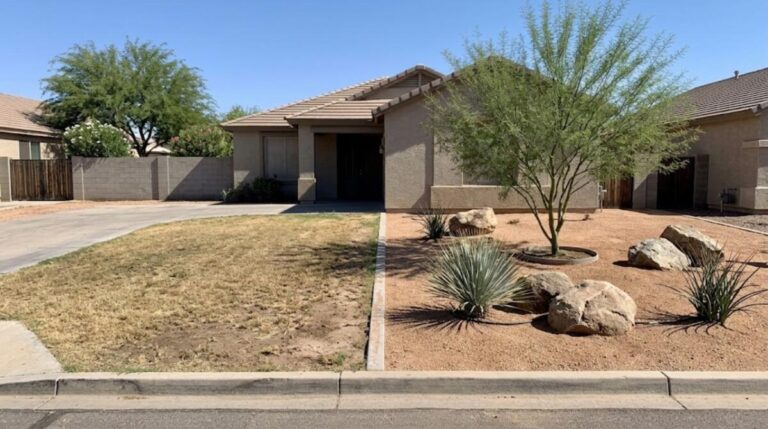
Grass to Desert Conversion Timeline: What Happens and When
A grass to desert conversion in the Phoenix Valley follows the seasons more than the calendar. Bermuda grass dies best while it is actively…
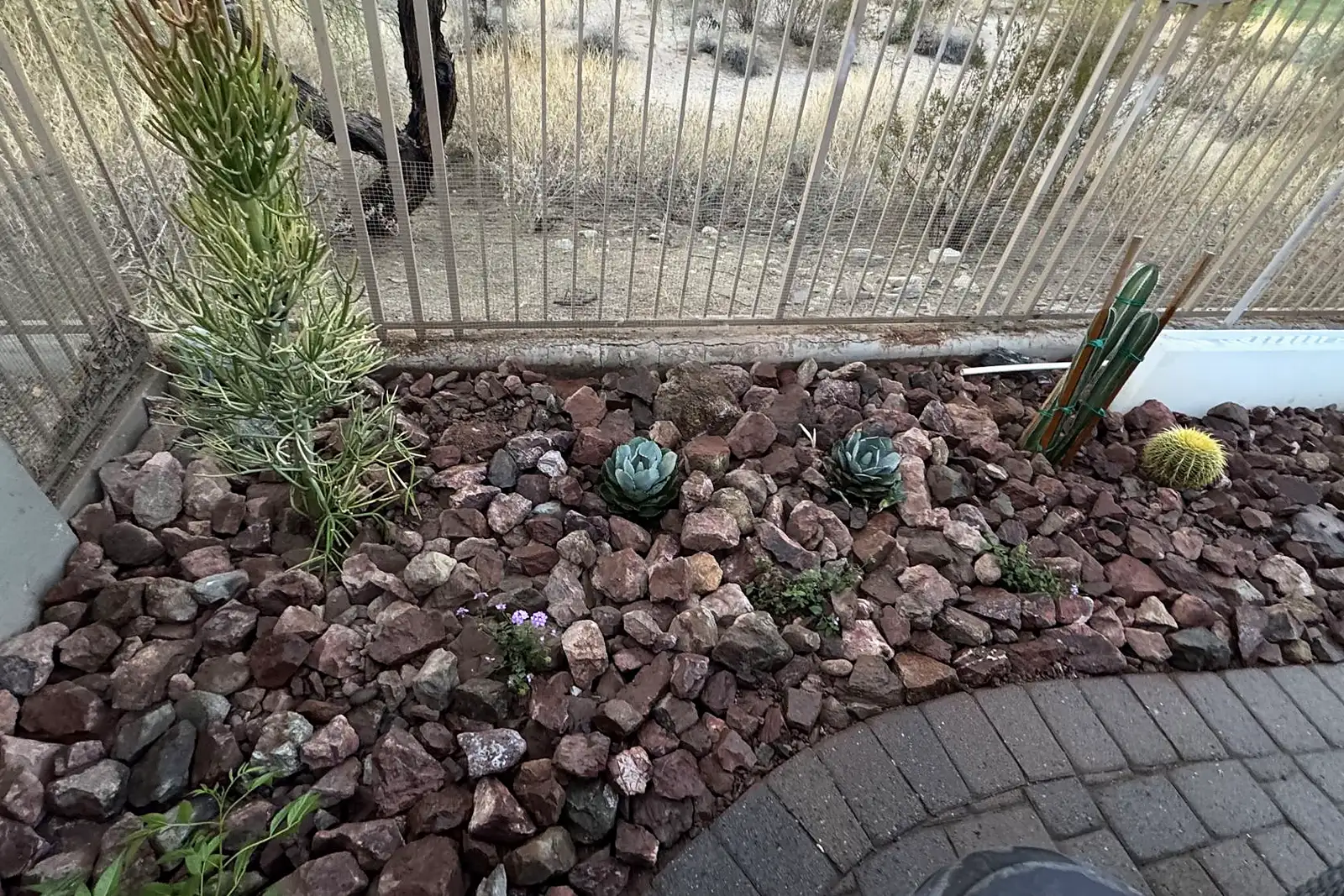
Xeriscape Mistakes to Avoid in the Phoenix Valley
A good xeriscape saves water and looks great for years. These common Phoenix Valley mistakes can undo both, and most are easy to avoid…
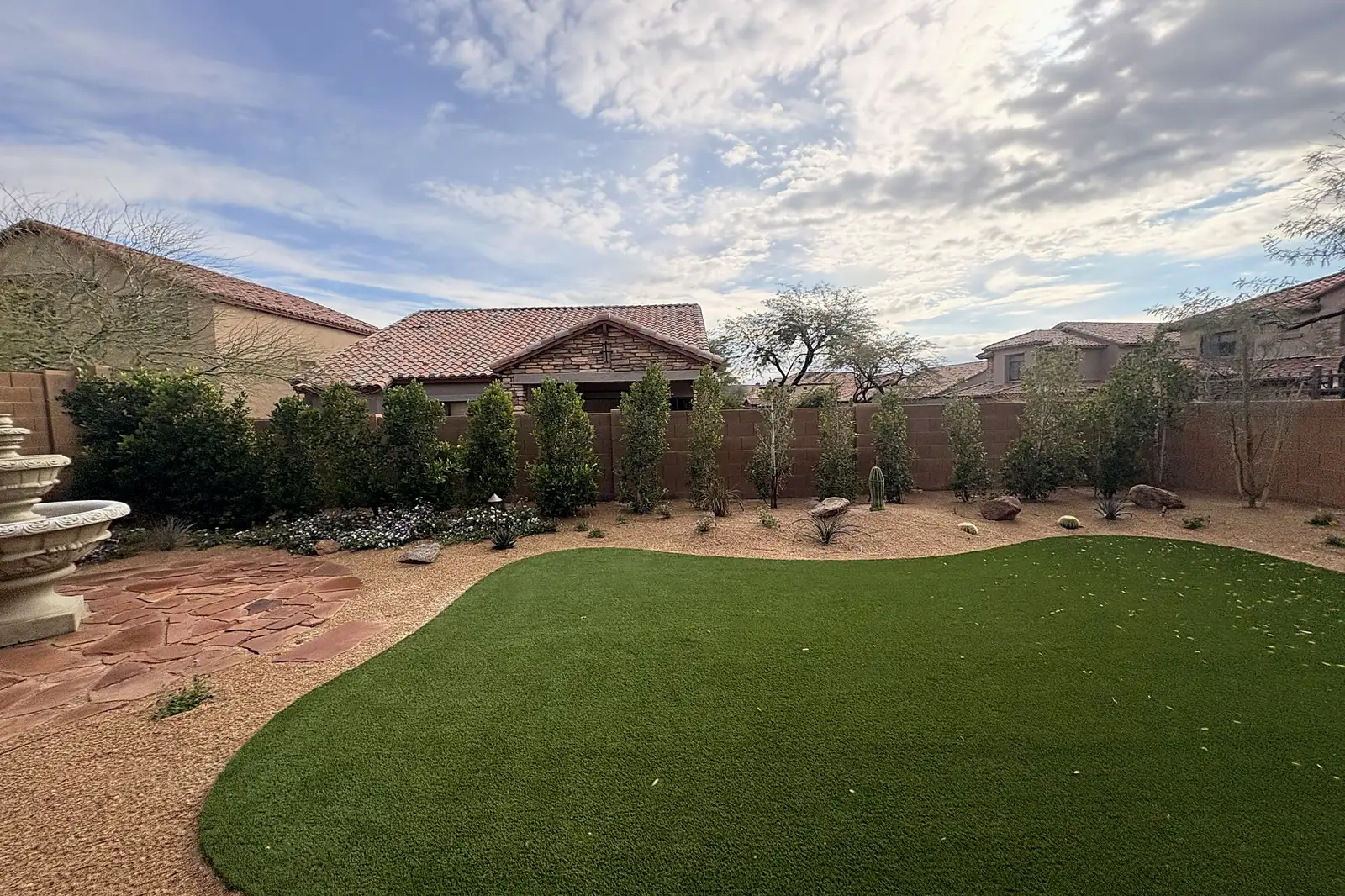
Privacy Hedges for Arizona Yards: Comparing the Top Choices
Want more privacy without a taller wall? Compare the most popular privacy screen plants for the Phoenix Valley, including growth rate, spacing, sun and…