DIY or Hire a Pro? Splitting Up a Phoenix Xeriscape Project
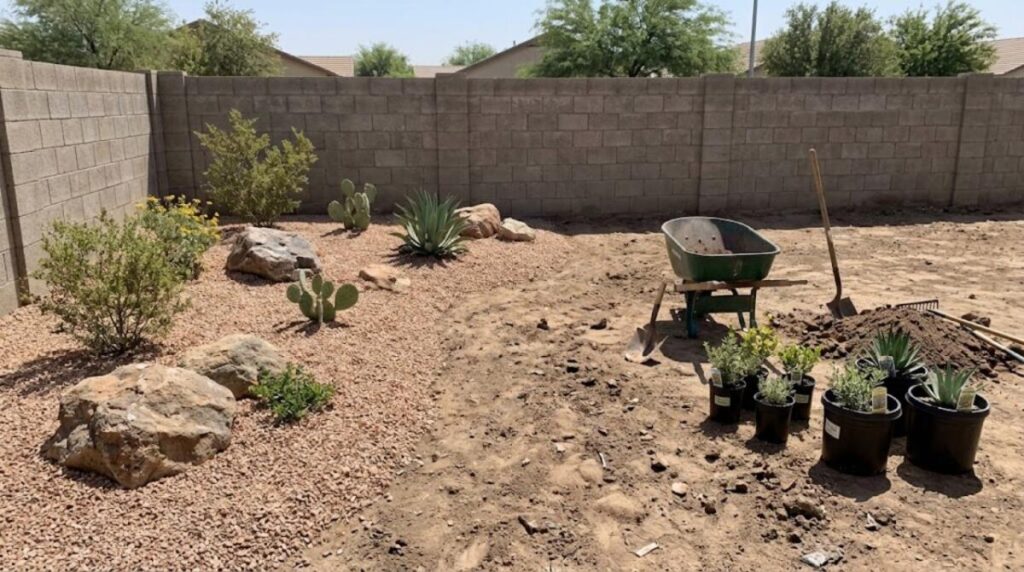
You do not have to choose between doing a whole xeriscape yourself and handing off every last task. Most Phoenix Valley homeowners can handle planting small shrubs, topping up rock and adjusting the drip timer. The heavy, hard-to-undo parts, like removing grass, grading for drainage, digging through caliche, moving tons of rock and building the drip system, usually go better with a crew. Here is how to split the work in a way that saves effort without creating problems you pay for later.
The Question to Ask About Every Task
For each part of the job, ask two things: how hard is it to do in Phoenix heat, and how hard is it to fix if it goes wrong? Planting a 5 gallon shrub in the wrong spot is a Saturday morning fix. Grading a yard so water runs toward the house, or burying drip line that leaks under a ton of rock, is not.
The tasks that are both heavy and hard to redo are the ones worth handing off. The tasks that are light and easy to adjust are great for a homeowner.
Jobs Homeowners Usually Handle Well
- Planting 1 and 5 gallon plants. Small shrubs, groundcovers and accents are manageable with a shovel. University of Arizona Cooperative Extension recommends a hole no deeper than the root ball and up to 3 to 5 times as wide.
- Topping up rock. Adding a few bags or a small load to thin spots is easy once the base layer and fabric are in.
- Adjusting the timer. Watering needs change with the seasons, and changing a controller schedule takes minutes. Our first-year watering guide walks through it.
- Moving emitters as plants grow. Water Use It Wisely recommends moving drip emitters out to the edge of the root ball after the first 8 weeks, and UA Extension says to keep moving them toward the edge of the canopy as plants grow.
- Pulling the first weeds. Catching weeds while they are small keeps a new yard clean.
If you are planting yourself, you can find desert plants at our plant shop, threetimbersshop.com.
Grass Removal: Part DIY, Part Crew
Killing bermuda grass is something many homeowners do themselves. It takes timing more than muscle. AMWUA says the best time to kill bermuda is while it is growing vigorously, from June to September, and UA Extension says glyphosate works on grass that is actively growing, green and well watered. Always follow the label.
Getting the dead turf out is a different job. Once the grass is dead, UA Extension’s turf conversion guide calls for scalping it or renting a power rake, then lowering the soil about two inches below nearby walks and patios so gravel does not spill onto them. Across a whole front yard, that is a lot of soil to dig and haul in the heat. This is often the first task homeowners decide to hand off.
Grading and Drainage
A desert yard has to move monsoon water away from the house. That means shaping the soil before anything else goes in. AMWUA’s planning guide recommends finishing all grading at once before installing the landscape, and placing boulders while the same equipment is on site.
Grading mistakes hide under rock until the first big storm, when water pools against the foundation or washes rock onto the sidewalk. Because it is hard to see and hard to redo, grading is one of the best places to bring in a crew. If runoff is a concern, a dry riverbed is one way to carry water through the yard. Our backyard xeriscape page shows how those fit into a design.
Caliche and Tree Holes
Many Valley yards have caliche, which UA Extension describes as soil cemented together by lime. Layers range from a few inches to several feet thick and can be so solid that roots cannot get through.
- Dig through it. UA Extension says a planting hole should go completely through the caliche layer so water drains, or, if that is not practical, include a smaller drainage hole through it.
- Test the drainage. Partly fill the hole with water. UA says if the level drops 4 inches or more in four hours, drainage should be adequate.
A few small holes in caliche are a hard afternoon. Several tree holes, or a whole yard of shrubs over a thick layer, is where a crew with the right tools saves days of work.
Moving Rock, Boulders and Big Trees
A full yard of landscape rock arrives by the truckload, and it all has to be moved by wheelbarrow or machine and spread evenly over fabric. AMWUA’s installation guide suggests renting equipment like a trencher or front-end loader for big jobs and reminds DIYers to rest often.
Boulders and large box trees are a step beyond that. They are heavy, awkward to place and easy to set at the wrong height. UA Extension advises setting trees and shrubs a few inches above grade to allow for settling, which is hard to get right with a tree you cannot lift. Our desert tree planting page covers how larger trees go in.
The Drip System
Drip is the backbone of a desert yard, and most of it ends up buried. UA Extension describes the basic parts as a backflow preventer, which local codes require, a filter and a pressure regulator, with plants grouped on separate valves by water need.
Homeowners can add an emitter or move a line. Building the system from the valve, sizing zones so trees get deep water and shrubs do not drown, and converting old sprinkler zones is where a crew is worth it. Our drip irrigation page covers the basics.
Before any digging, for drip, trees or grading, AMWUA advises contacting Arizona 811 at least two full business days ahead to have underground utilities marked.
Frequently Asked Questions
Can I hire a crew for the heavy work and plant the rest myself?
Yes, and it is a common split. A crew handles removal, grading, drip, rock and trees, and you add smaller plants over time. Ask for drip lines and emitters to be planned for the plants you will add, so they have water when they go in.
What is the hardest part of a DIY xeriscape in Phoenix?
For most people it is the physical work: digging out turf, getting through caliche and moving rock, often in heat. Those are also the steps that are hardest to redo if they are rushed.
Is it worth doing the grass kill myself?
It can be, if you time it for summer while the bermuda is actively growing and follow the label. The removal, haul-off and grading that come after are where help pays off.
When is the best time to plant if I do it myself?
Fall, from late September to early December, is the best planting season in the low desert according to AMWUA and Water Use It Wisely. Spring is the second choice.
Get Help With the Heavy Lifting
Whether you want the whole yard done or just the hard parts, we’ll walk the yard with you, talk through what you want to handle yourself, and give you a written estimate for the rest. Request a free estimate, and see what goes into xeriscape design and installation.
More from the Arizona blog
What a Good Landscape Quote Should List, Line by Line
A good landscape quote tells you exactly what you are buying: how much rock and what kind, how many plants and what size, how…
Turning Lawn Sprinklers Into Drip: Options for Phoenix Yards
When a Phoenix Valley lawn comes out, the sprinkler system under it does not have to go to waste, but it cannot stay the…
Grass to Desert Conversion Timeline: What Happens and When
A grass to desert conversion in the Phoenix Valley follows the seasons more than the calendar. Bermuda grass dies best while it is actively…