
What a Good Landscape Quote Should List, Line by Line
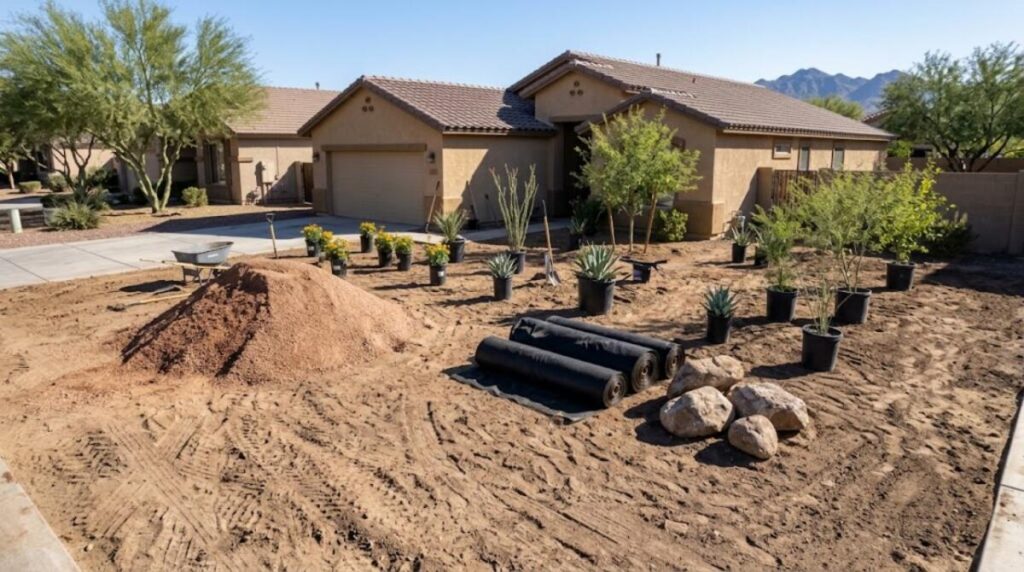
A good landscape quote tells you exactly what you are buying: how much rock and what kind, how many plants and what size, how the drip system is built, and what happens to the old grass. If two Phoenix Valley bids for the same yard are far apart, the gap is usually hiding in one of those lines. Use this checklist to read each bid the same way and compare them fairly.
Scope, Removal and Site Prep
The first lines of a quote should describe the job area and what comes out before anything goes in.
- Areas and square footage. Front yard, backyard, side yards, parkway. Two bids measured differently are not comparable.
- Grass removal method. Is the bermuda being killed first and then removed, or just scraped? Bermuda that is not killed while actively growing tends to come back.
- Excavation depth. City of Chandler guidance suggests digging out 2 to 4 inches next to hardscape so rock sits level with sidewalks and drives. Ask whether that is included.
- Haul-off. Who removes the sod, soil, old plants and debris, and is disposal included?
- Grading and drainage. Is the yard being shaped so water moves away from the house? This line is easy to leave out and hard to fix later.
Rock and Weed Fabric
Rock is often the biggest material line, and it is where bids most often differ without saying so.
- Type, size and color. The quote should name the product, not just say “decorative rock.”
- Depth or tonnage. Ask for the planned depth in inches or the total tons. A thinner layer is one of the easiest ways for a bid to come in lower, and thin rock lets fabric show and weeds through.
- Fabric. Is weed fabric included, and what kind? It should be a permeable fabric. Chandler’s guidance says plastic should not be used under gravel, since it keeps water and air from the soil.
- Coverage area. Rock everywhere, or only in beds? Does it include areas around existing trees?
Plants: Species, Sizes and Counts
“Desert plants, installed” is not a plant list. A clear quote lists each plant by name with a container size and a count, for example five 5 gallon shrubs and one 24 inch box tree.
- Container size. A 15 gallon and a 5 gallon of the same plant look very different on day one. Make sure both bids use the same sizes before comparing.
- Counts. Fewer plants spaced for mature size can be the right design, but you should know which approach each bid takes.
- Tree planting details. Staking, hole preparation and how the tree will be watered.
- Existing plants. Which plants stay, which are removed, and whether any are being relocated.
Drip Irrigation
Drip is the part of the job you stop seeing once the rock goes down, which is why it should be spelled out.
- New system or retrofit. Is the bid converting existing sprinkler zones or running new drip from the valve? University of Arizona Cooperative Extension notes that every sprinkler on a valve has to change when a zone goes to drip.
- Zones and valves. How many zones, and are trees on their own? UA Extension recommends separating trees, shrubs and groundcovers by water need.
- Emitters per plant. Trees need more emitters than shrubs. Ask how many each plant gets.
- Filter and pressure regulator. UA Extension lists both as basic drip components.
- Controller. Is the existing timer staying, being reprogrammed, or replaced?
- Old heads. Are unused sprinklers capped below grade?
Our drip irrigation page explains how a desert drip system is laid out.
Boulders, Dry Riverbeds and Borders
Extras are where bids can vary the most, because one contractor might include features another leaves for later.
- Boulders. How many and roughly what size.
- Dry riverbeds. Length, rock size and whether they are built to carry water or just for looks.
- Edging and borders. Material and length.
- Lighting, hardscape or turf. Listed separately so you can see what each piece adds.
Payments, Changes and the Contractor’s License
The Arizona Registrar of Contractors (ROC) gives homeowners a short list of things to check before hiring. Its Before You Hire a Contractor page recommends:
- A written contract that includes all services to be provided and a detailed description of every aspect of the project.
- The contractor’s license number in the contract, and a check of the license record using the ROC’s contractor search.
- Payments that do not get ahead of the work. The ROC notes that special-order materials, permits and fees may need to be paid in advance.
- Signed change orders. Any change must be signed by both parties.
The ROC also says that permits are the responsibility of the property owner, so ask any bidder whether your project needs one and who will pull it. If the quote mentions a guarantee or warranty, get the terms in writing: what is covered, for how long, and what you need to do to keep coverage.
How to Compare Two Bids Side by Side
Lay the bids next to each other and fill in the same lines for each: square footage, removal, rock depth or tons, fabric, plant sizes and counts, drip zones and emitters, extras, payment schedule and license number. Anything one bid lists and the other leaves blank is a question to ask. When the lines match, the price comparison means something. For more on why the lowest number is not always the best value, see our post on why the cheapest landscaping quote isn’t always the best, and for what drives the price of a desert yard, see our xeriscape cost guide.
Frequently Asked Questions
Why are two quotes for the same yard so different?
Usually because they are not quoting the same job. Rock depth, plant sizes, plant counts, drip design and whether removal and haul-off are included can all differ between bids. Line them up item by item to find the gap.
Should a landscape quote include the contractor’s license number?
The Arizona Registrar of Contractors recommends that the contract include the contractor’s license number, and you can look up any license on the ROC’s contractor search before you sign.
Is it a red flag if a quote has very few line items?
Not always, but a short quote makes it hard to know what you are getting. Ask the contractor to list rock, plants, drip and removal separately so you can compare it with other bids.
Should I pay a large deposit up front?
The ROC advises not letting payments get ahead of the work. Some costs, like special-order materials or permits, may be paid in advance, so ask what any deposit covers.
Get a Quote You Can Actually Compare
When we quote a desert landscape, we’ll walk the yard, measure, and give you a written estimate that lists the rock, plants, drip and removal so you can see what is included. Request a free estimate, and learn more about our xeriscape design and installation.
More from the Arizona blog
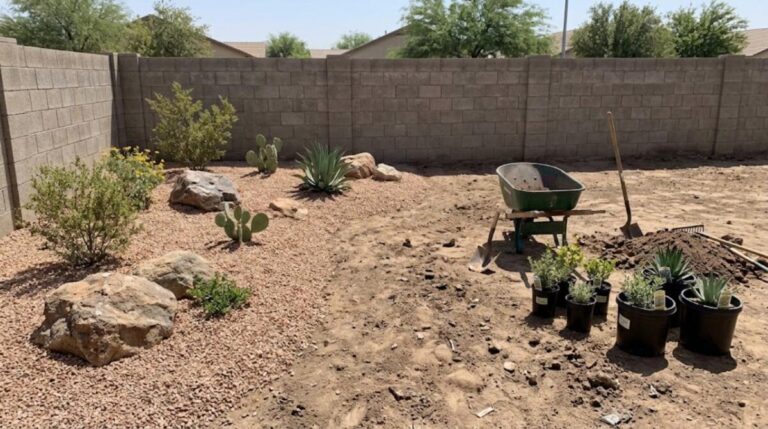
DIY or Hire a Pro? Splitting Up a Phoenix Xeriscape Project
You do not have to choose between doing a whole xeriscape yourself and handing off every last task. Most Phoenix Valley homeowners can handle…
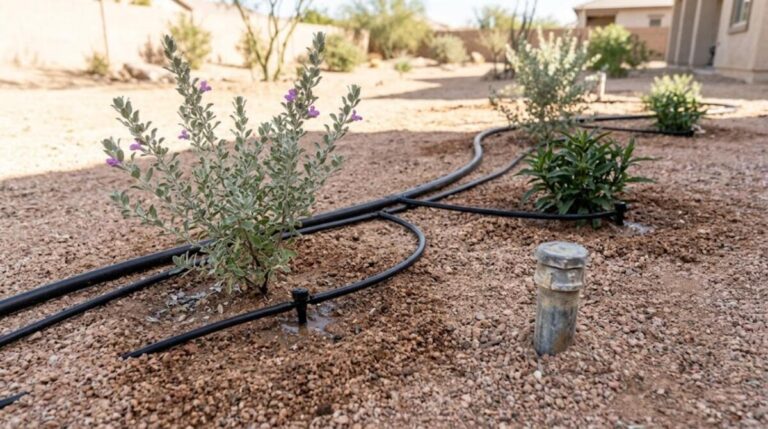
Turning Lawn Sprinklers Into Drip: Options for Phoenix Yards
When a Phoenix Valley lawn comes out, the sprinkler system under it does not have to go to waste, but it cannot stay the…
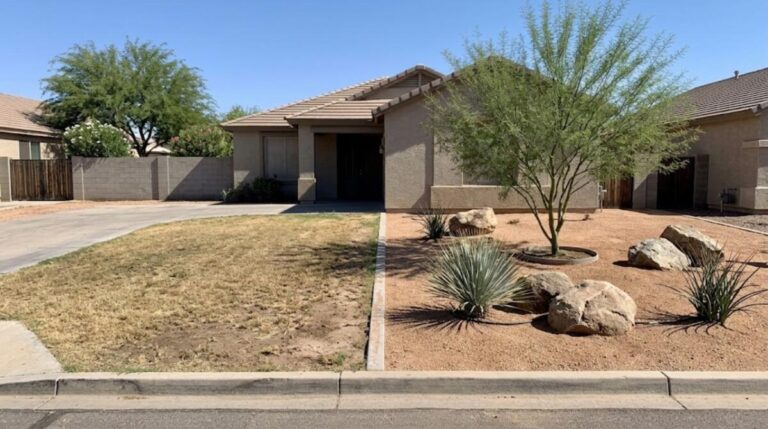
Grass to Desert Conversion Timeline: What Happens and When
A grass to desert conversion in the Phoenix Valley follows the seasons more than the calendar. Bermuda grass dies best while it is actively…