What You Need to Know About Shoreline Restoration
Assessment and Permitting
Shoreline work requires permits from the Minnesota DNR and often from your local watershed district. We start with a site assessment that documents current erosion patterns, bank height and slope, wave exposure, ice heave history, and existing vegetation. This information feeds the permit application and determines which stabilization approach will work best for your specific shoreline. We handle the permitting paperwork and coordinate with regulatory agencies so you do not have to navigate the process alone.
Materials and Plants
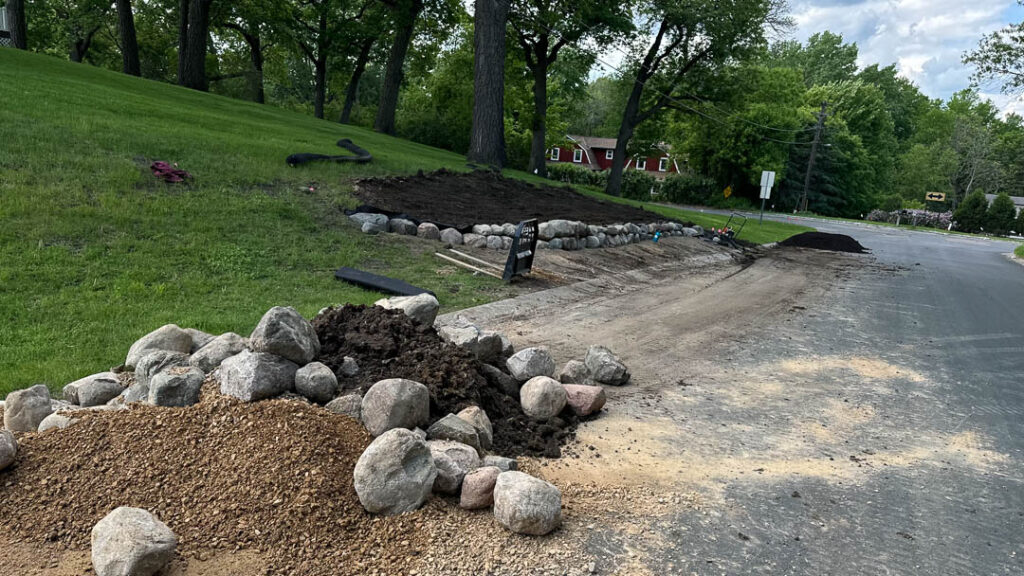
Shoreline restoration uses a combination of hard and soft materials depending on conditions. Boulders and rip-rap armor high-energy shorelines against wave action and ice push. Coir (coconut fiber) logs and biodegradable erosion blankets stabilize banks while native vegetation establishes. We plant Minnesota native species--blue flag iris, sedges, switchgrass, red osier dogwood, and willows--that root deeply to hold soil and filter runoff. All plant selections are DNR-approved for shoreline buffer zones.
Pricing
Shoreline restoration costs vary with the length of shoreline, severity of erosion, accessibility for equipment, and the approach used. Boulder rip-rap stabilization costs more than bioengineered solutions using coir logs and plantings, but may be required for high-energy shorelines with significant wave exposure. We provide detailed estimates that include materials, native plants, equipment access, labor, and permit fees. Many watershed districts offer cost-share programs that can offset a portion of restoration expenses.
Installation
Shoreline restoration work is typically scheduled for late spring through early fall when water levels and conditions allow access. For boulder installations, we use compact excavators to place armor stone along the toe of the bank, then grade and stabilize the slope above. Coir logs are staked at the waterline to trap sediment and create a planting shelf. Native plantings go in at proper spacing and depth, with temporary erosion blankets protecting bare soil until vegetation establishes. We minimize disturbance to existing stable areas and work within all permit conditions. Most shoreline plantings are fully established within two growing seasons.