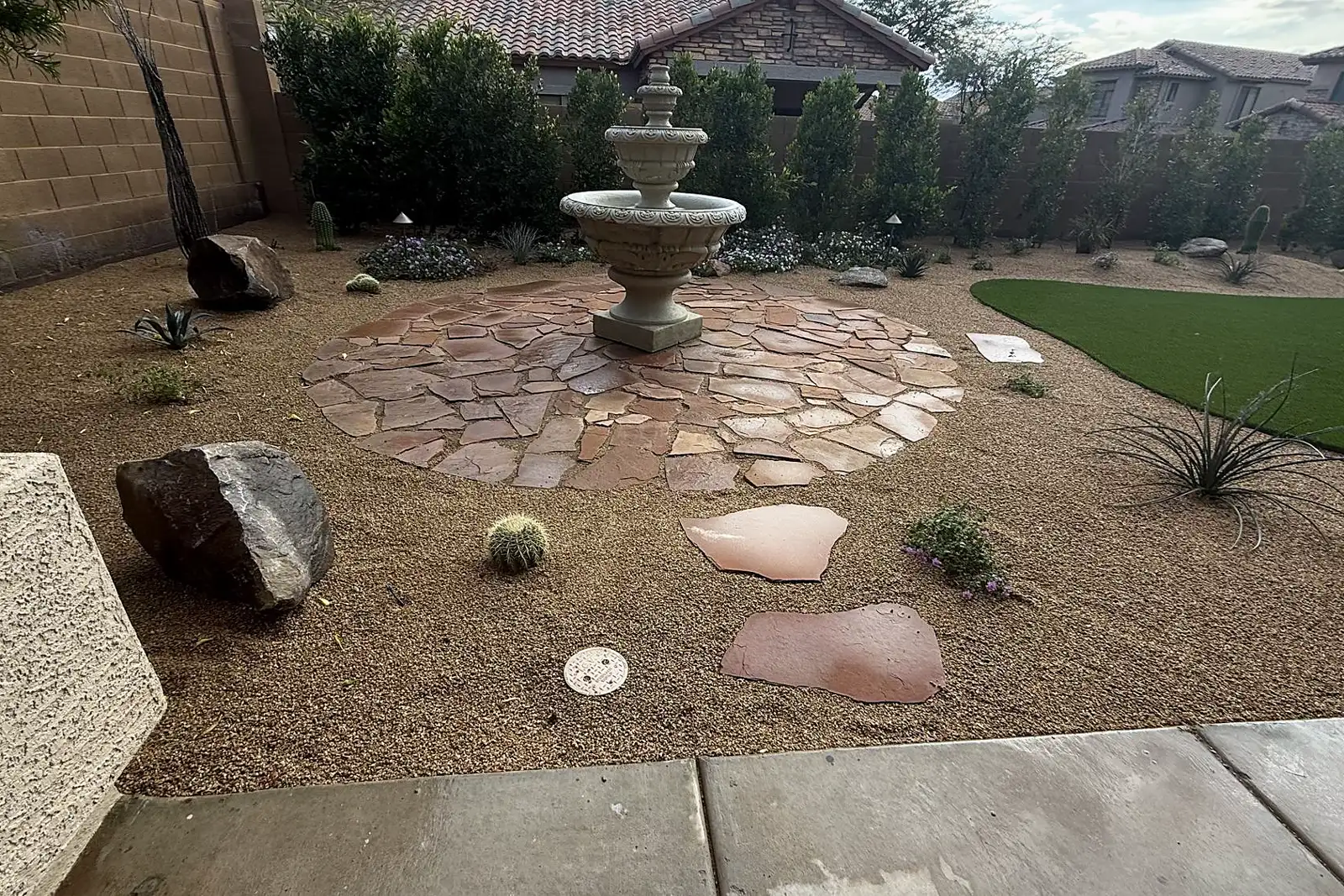
New yards on old farmland
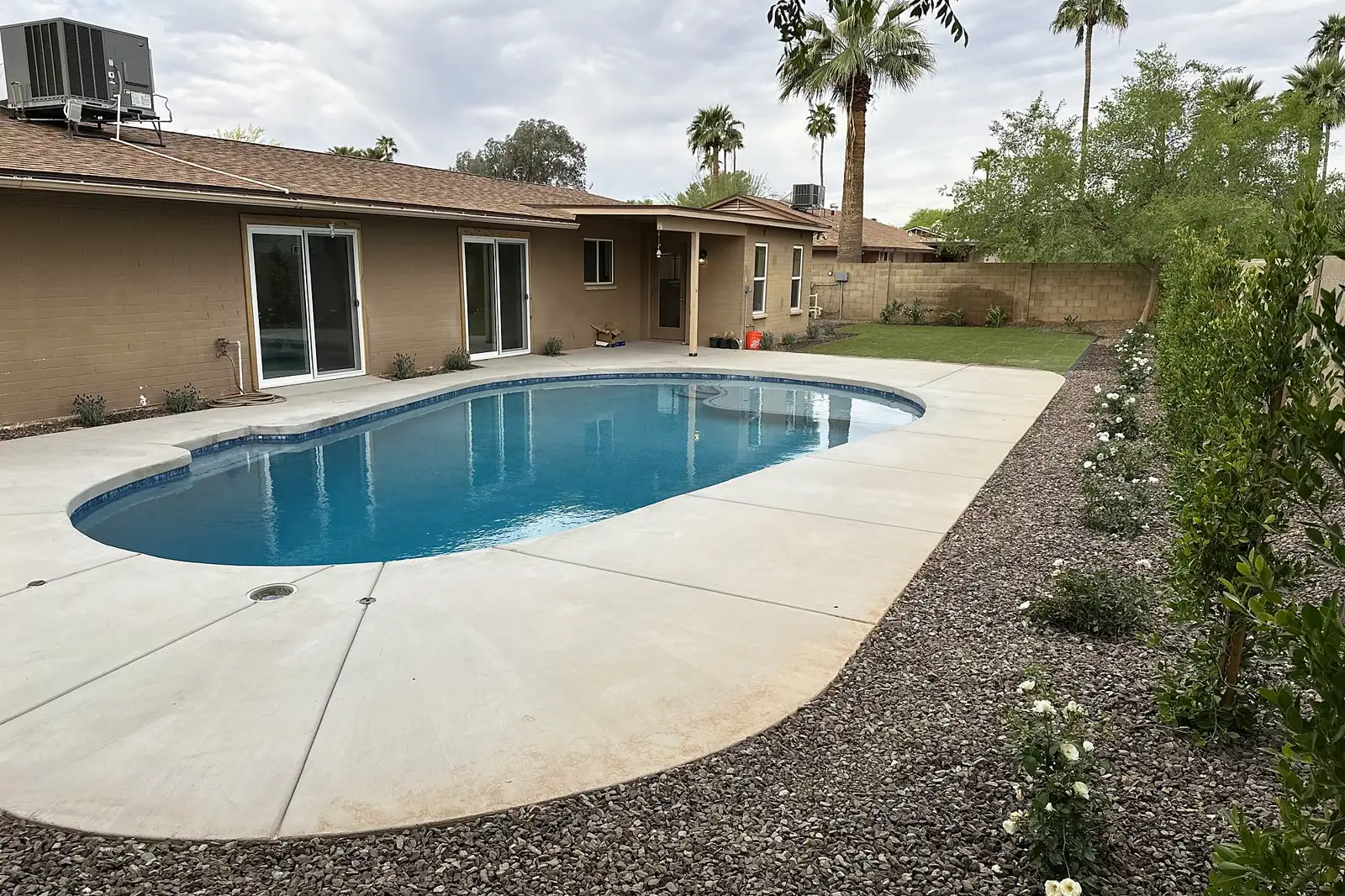
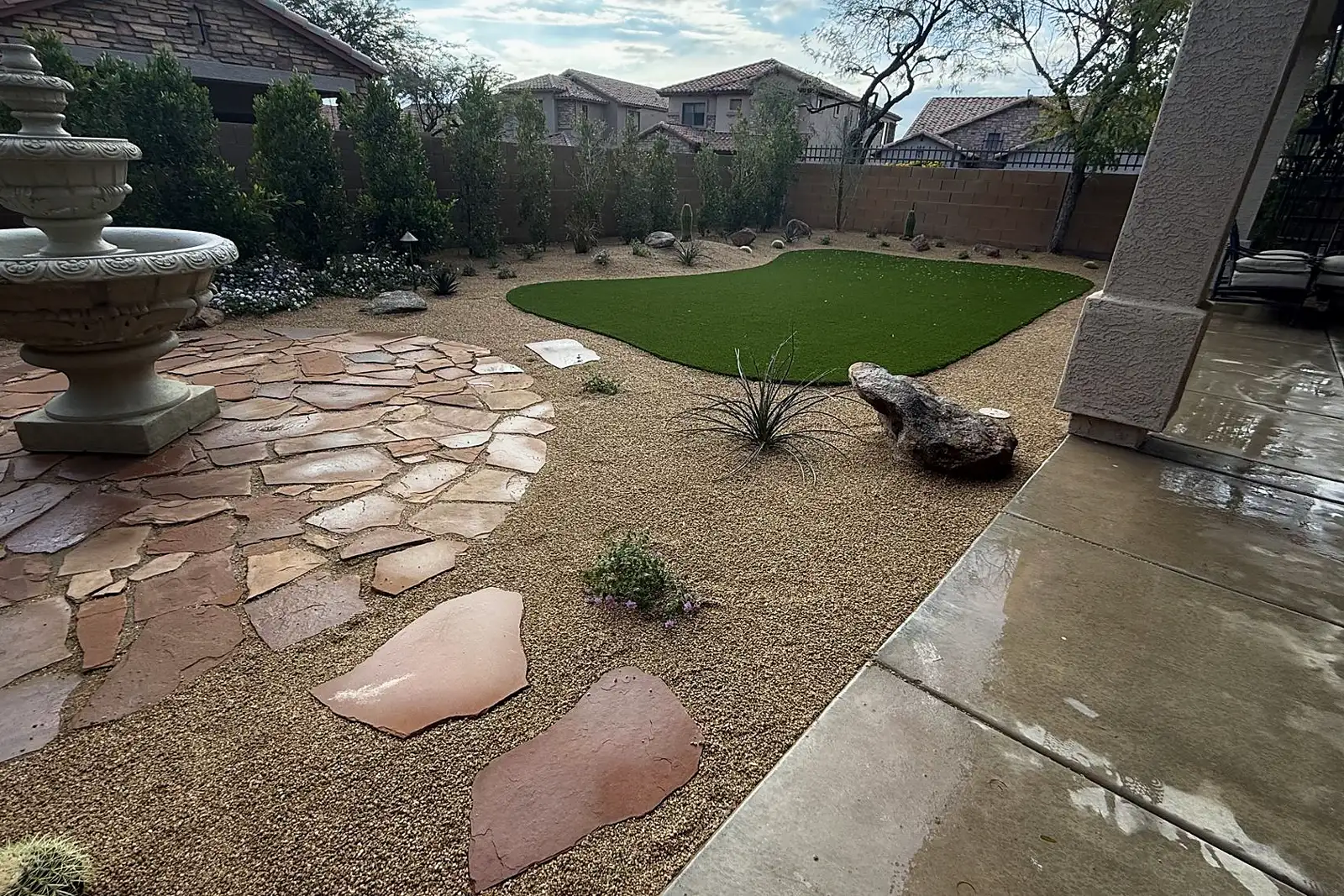
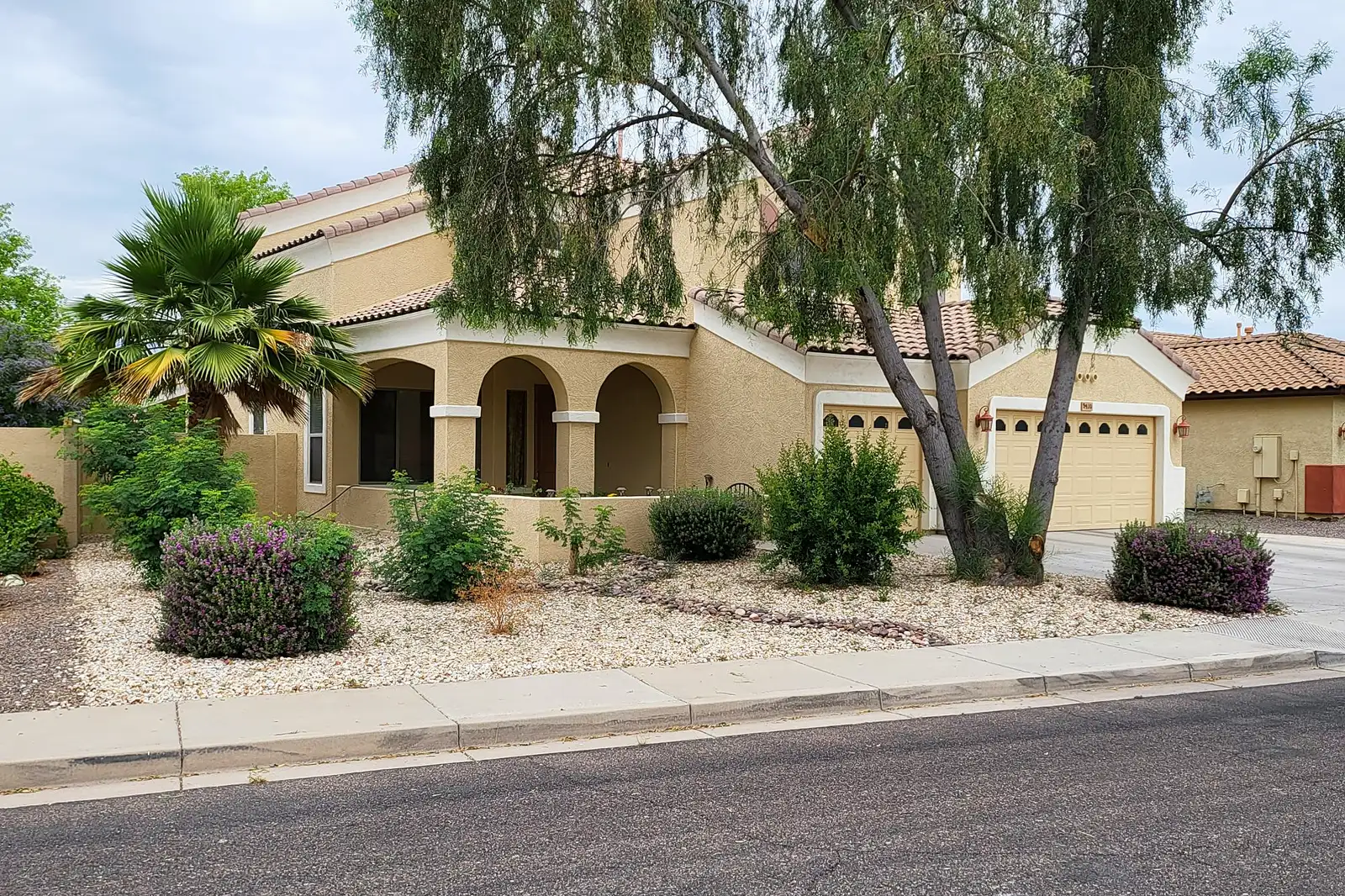
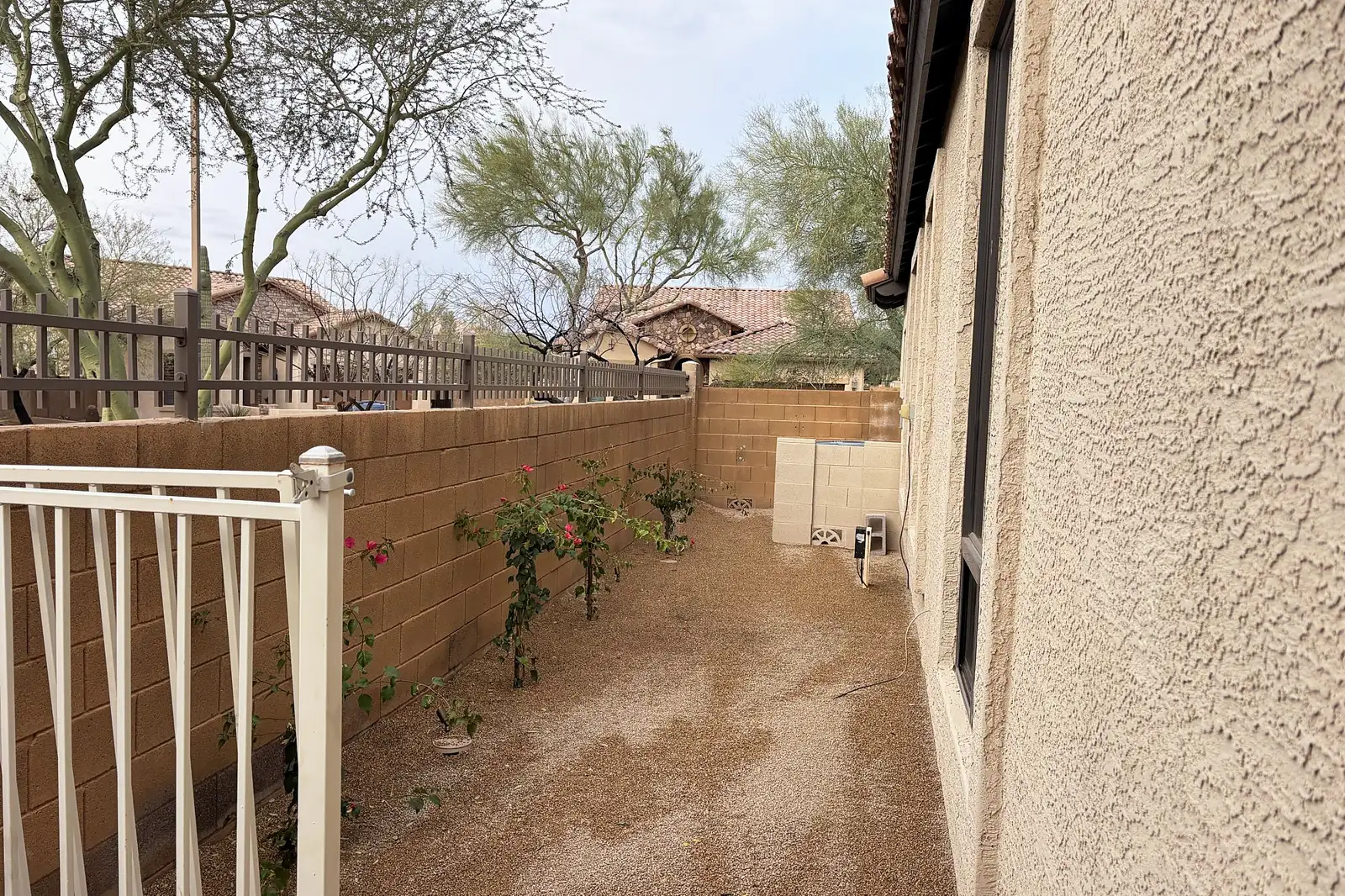
Queen Creek still shows its agricultural roots, with places like Schnepf Farms and the Queen Creek Olive Mill drawing visitors, but most of the town is now newer master-planned neighborhoods. To the south, San Tan Mountain Regional Park preserves a block of rugged desert hills. Most Queen Creek homes are in HOA communities, and many come with a front yard package and an empty backyard.
Local conditions and what grows well
Former farmland often means deeper, workable soil, though construction compaction and caliche are still common. Wide-open lots have little shade and take the full force of summer sun and monsoon wind. Plants that do well in Queen Creek include:
- Shade for new backyards: Desert Museum palo verde, mesquite and sweet acacia.
- Privacy along the back wall: Hop bush, Texas mountain laurel and Texas ranger.
- Easy color: Baja fairy duster, red bird of paradise, lantana and yellow bells (Tecoma).
- Accents: Agaves, red yucca, golden barrel and totem pole cactus.
With a blank backyard, it pays to plant trees first, since they take the longest to mature and will shape where everything else goes. Our desert tree planting page covers sizing and placement, and our privacy hedges guide helps with screening neighbors on smaller new lots.
Plan with your HOA in mind
Most Queen Creek neighborhoods have an HOA with design guidelines for front yards, and some review backyard changes visible from the street or from common areas. Check the approved plant list and submit for approval if needed before ordering. Fall is the best time to plant here, giving roots the whole cool season to establish, and cactus and agaves settle in quickly during warm spring weather. Planting in phases is fine too: trees this season, shrubs and accents the next.
Water and rebates in Queen Creek
Queen Creek's Residential Turf Conversion Incentive ($2 per square foot or 75% of cost, up to $5,000) is closed to new applications. Check the Town page for a reopening before removing grass.
Planting notes for Queen Creek
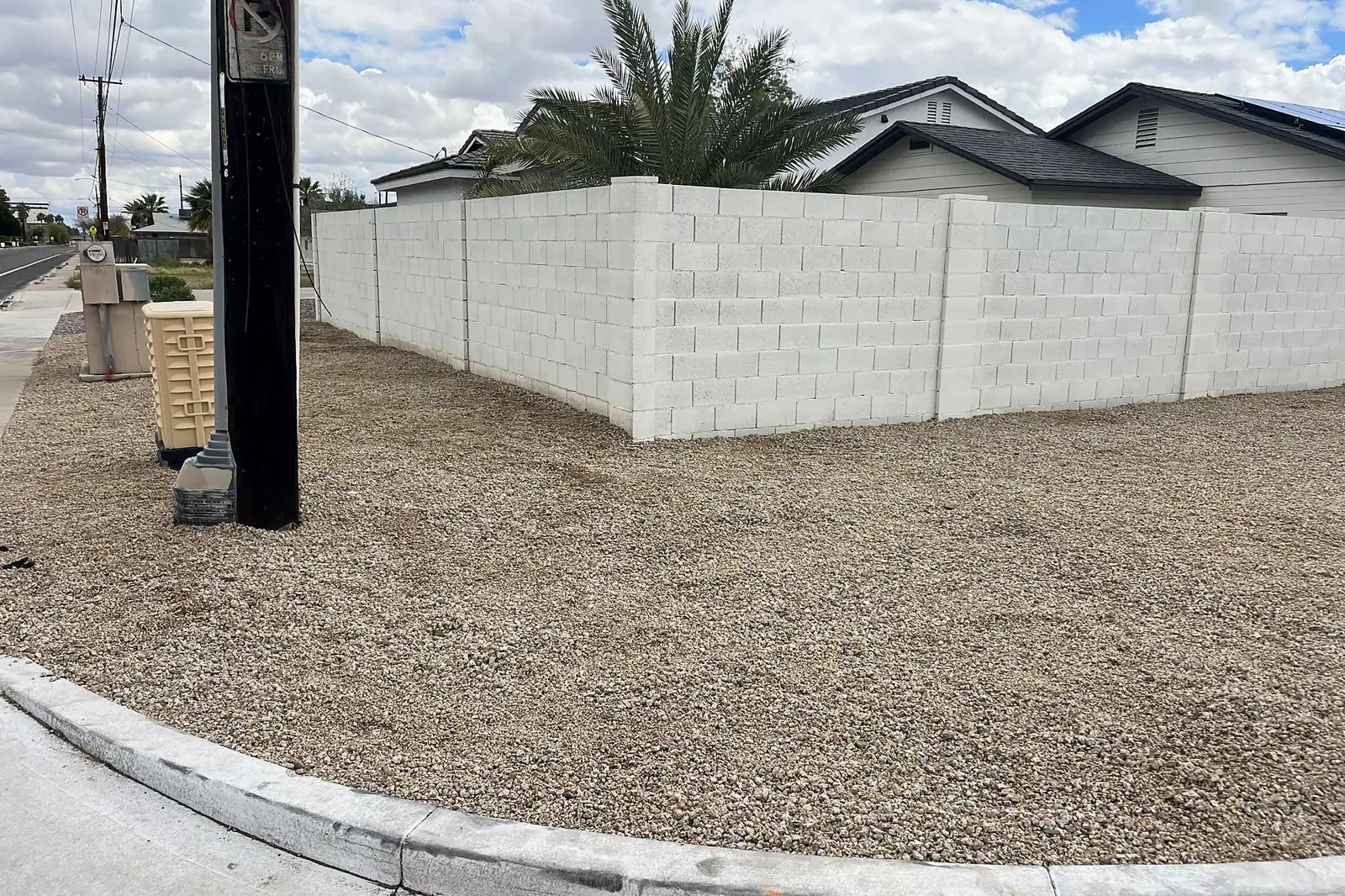
Queen Creek has gone from farmland to new neighborhoods, and it sees colder winter nights than central Phoenix. Many new backyards start as bare dirt, so trees and drip come first.
Plants we recommend in Queen Creek
- desert willow and sweet acacia for cold-hardy shade
- Texas mountain laurel for screening
- Texas sage and yellow bird of paradise for color
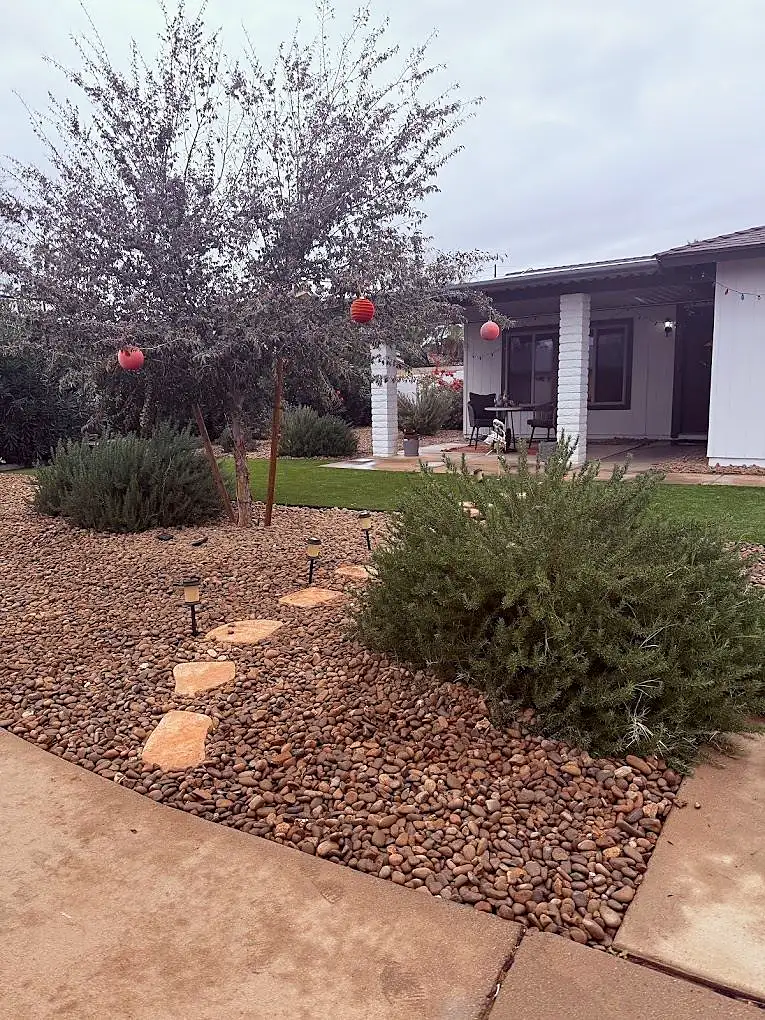
- trailing rosemary for groundcover
Helpful guides: Phoenix xeriscape cost guide, drought-tolerant plant list, Valley rebate guide.
How it works in Queen Creek
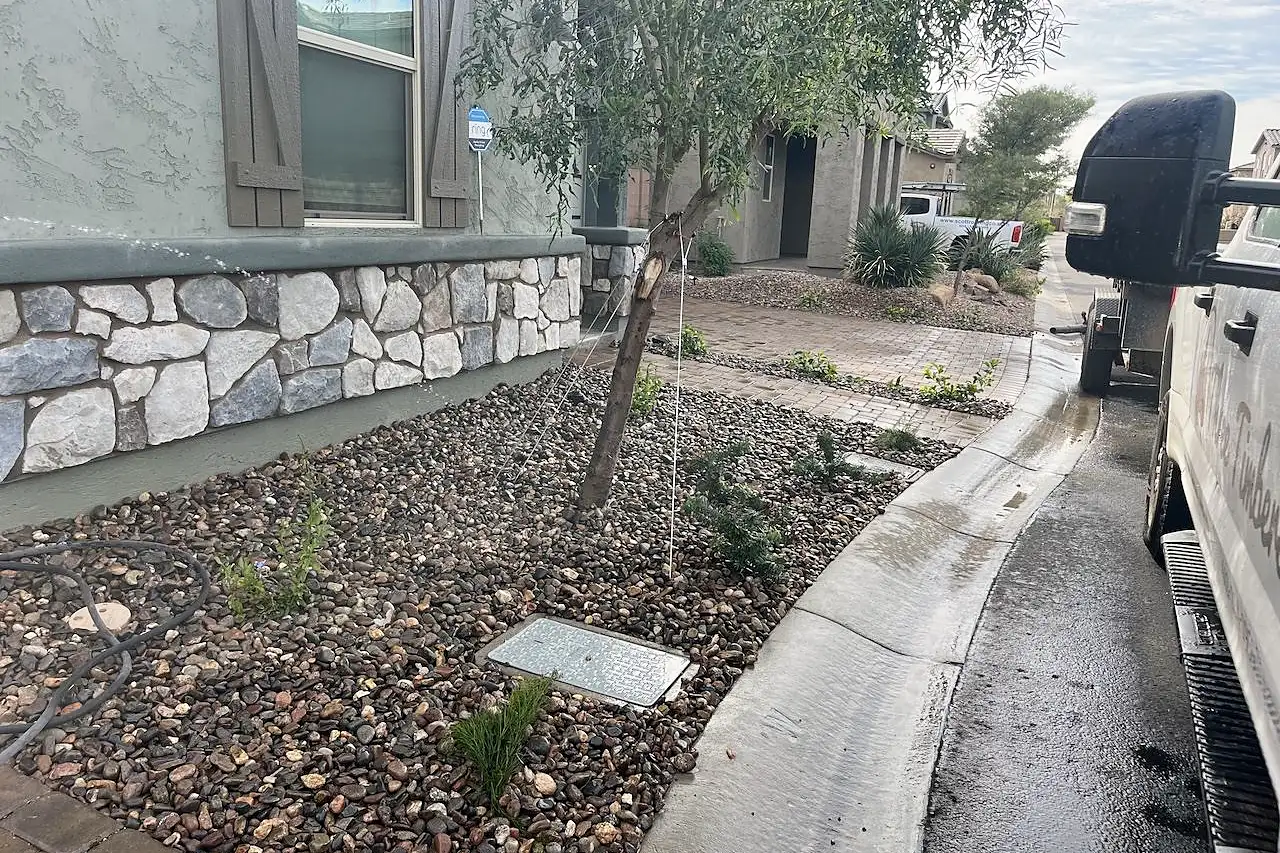
Order plants at threetimbersshop.com and add planting plus the plant survival warranty at checkout. Delivery is free across the Valley on orders over $150.
We make two trips. The delivery team drops plants on day one, and you do not need to be home. The planting crew comes back on day two to get everything in the ground. Plenty of Queen Creek communities are gated, so send the gate code before delivery day.
Xeriscape design and installs, booking now
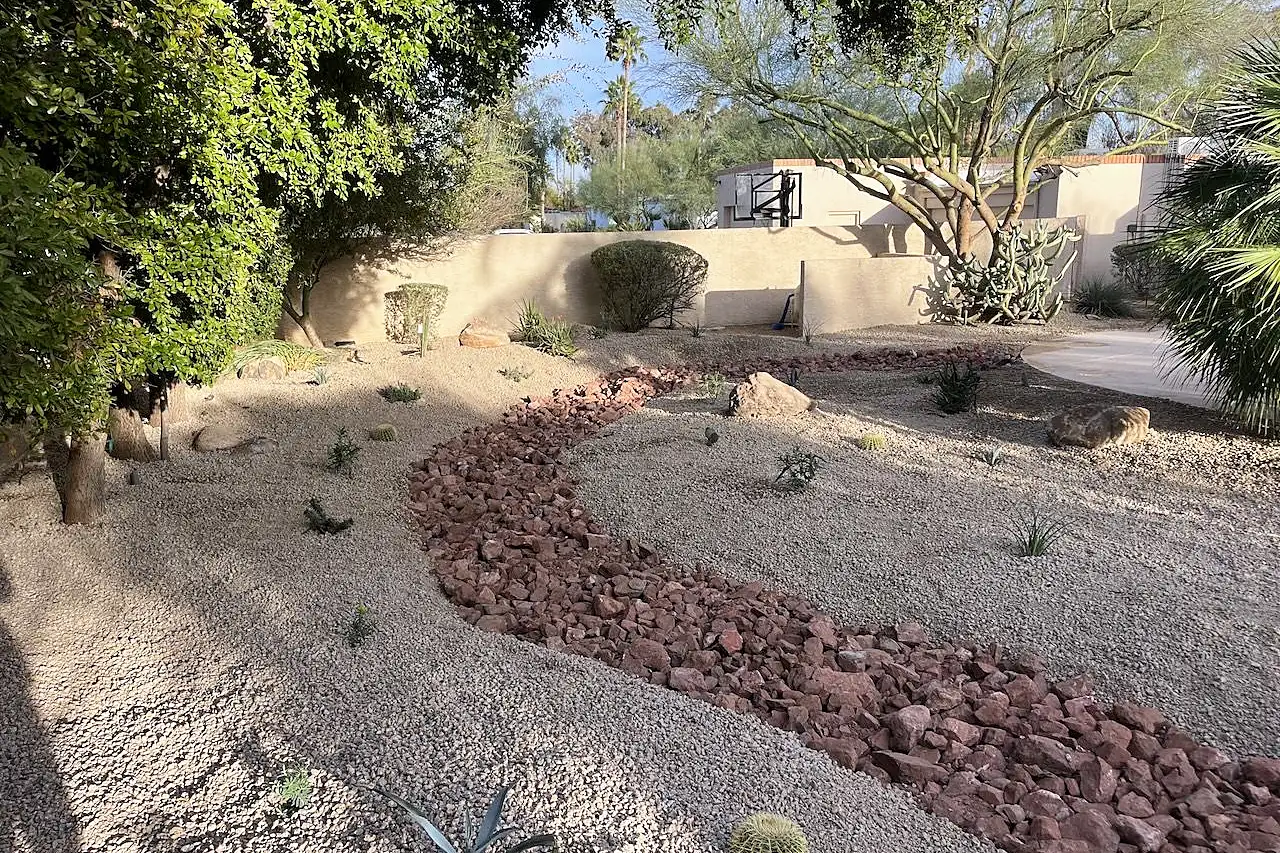
If you want the whole backyard designed and built, our xeriscape service is booking now with consultation, design and installation. We work with native plants, weed fabric, landscape rock, dry riverbeds and boulders, and we can advise on setting up efficient irrigation from the start.
Start filling in your Queen Creek yard
Shop at threetimbersshop.com, or call (612) 214-1955 to talk about your plans.
Frequently Asked Questions
Is the Queen Creek turf rebate open?
Not right now. The Town's program is closed to new applications. Check its page for a reopening.
Which plants handle Queen Creek frost?
Desert willow, sweet acacia, Texas mountain laurel, Texas sage and yellow bird of paradise all handle hard frost.
Where do I start with a new Queen Creek backyard?
Plant shade trees in fall, run drip, then add shrubs and rock.