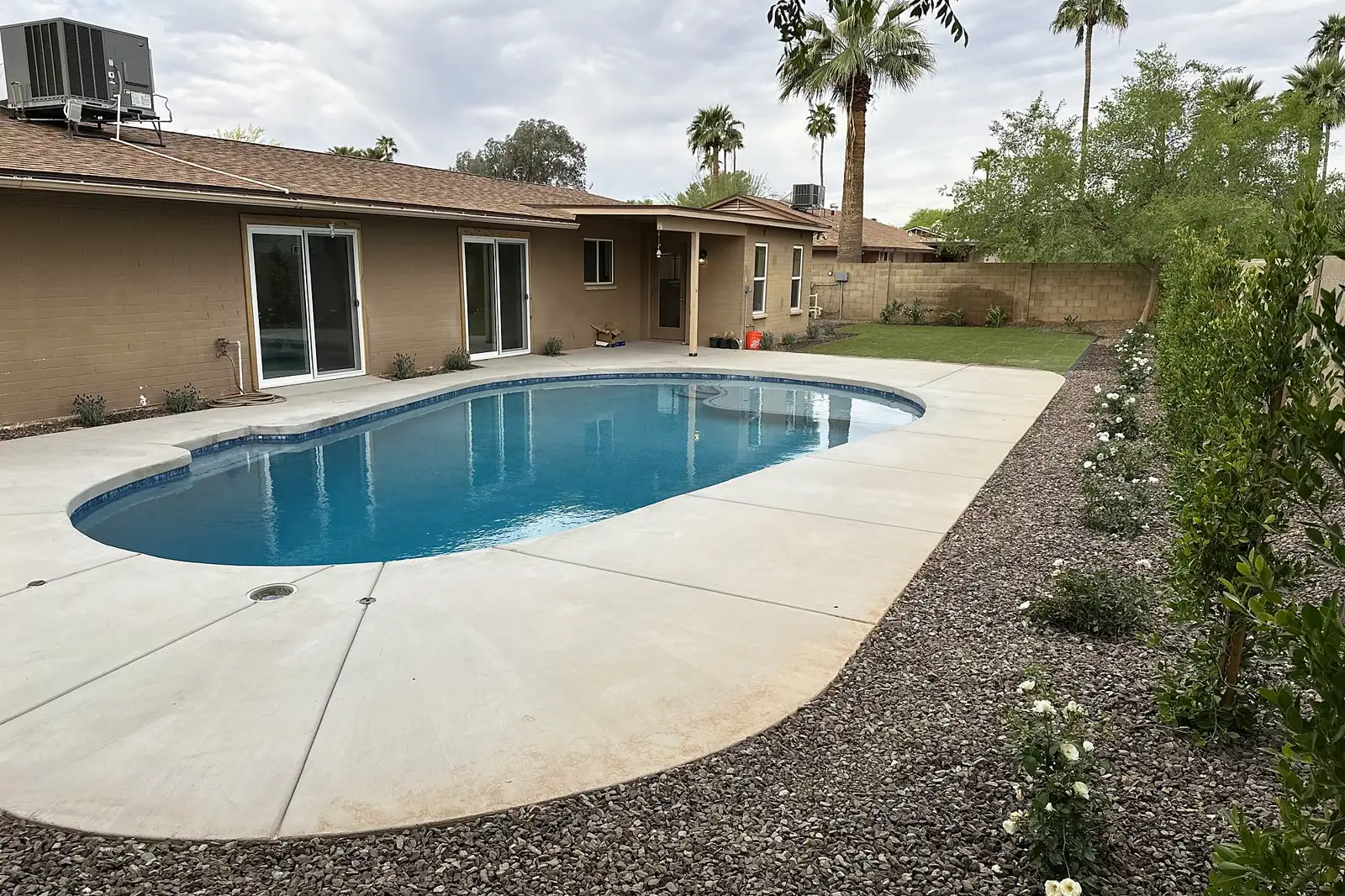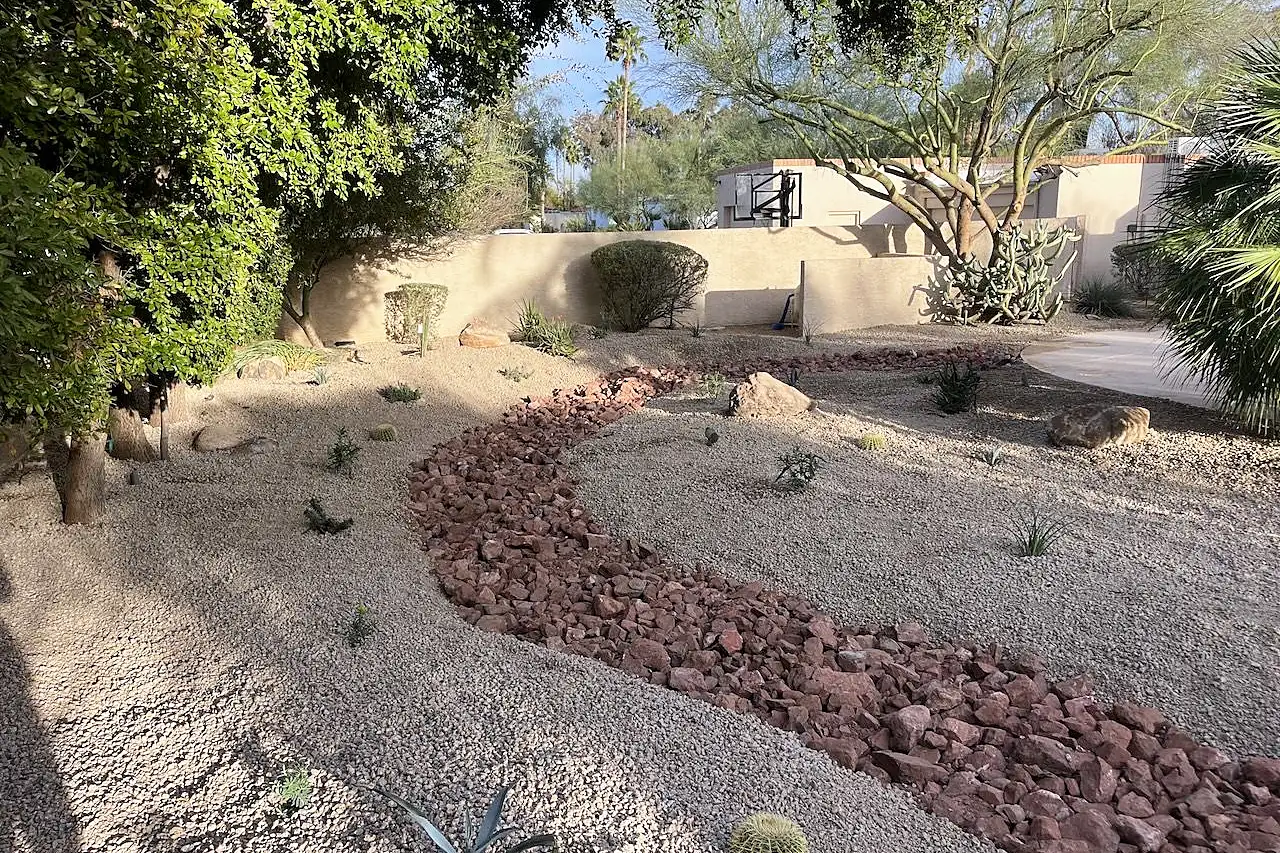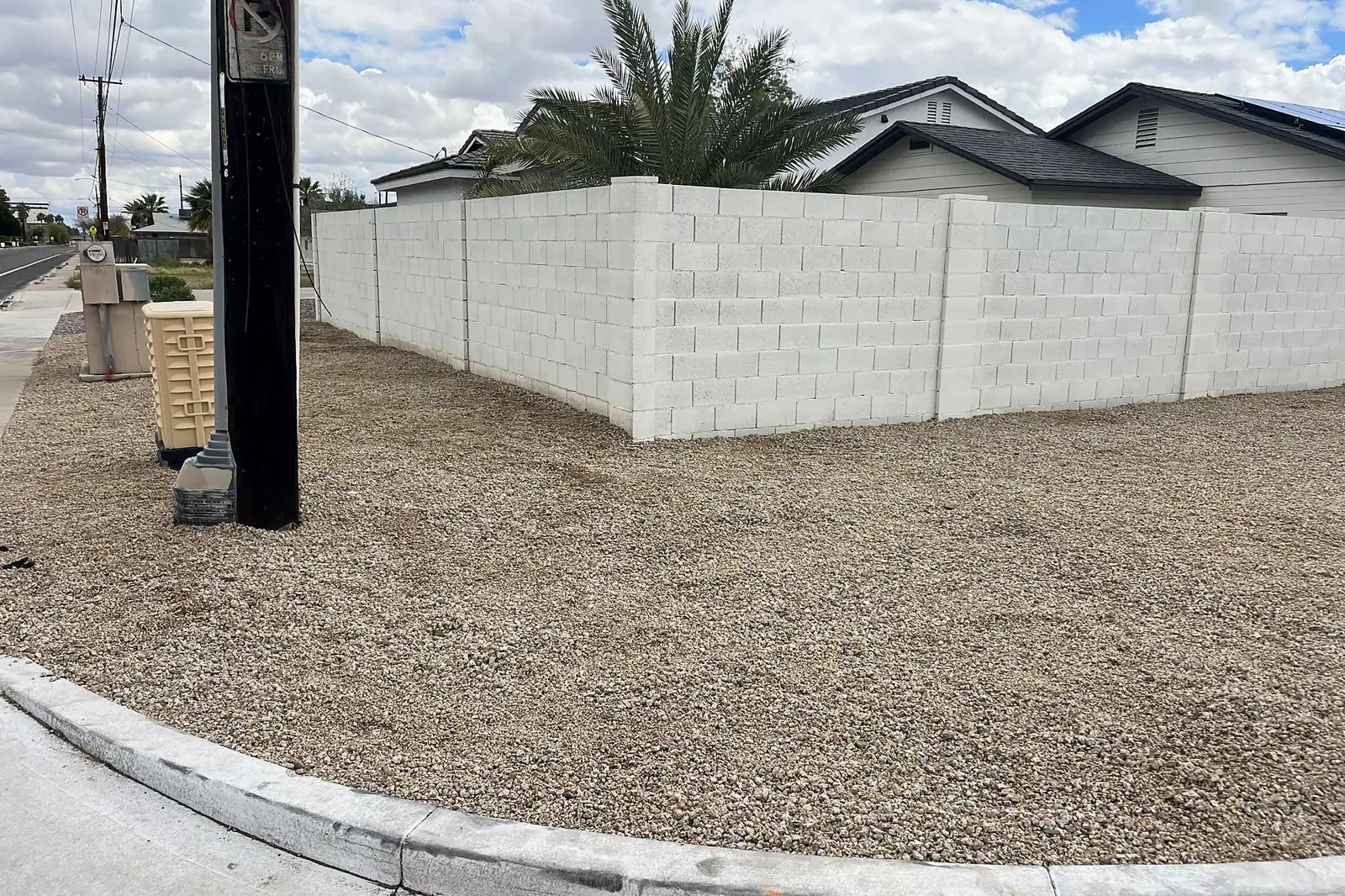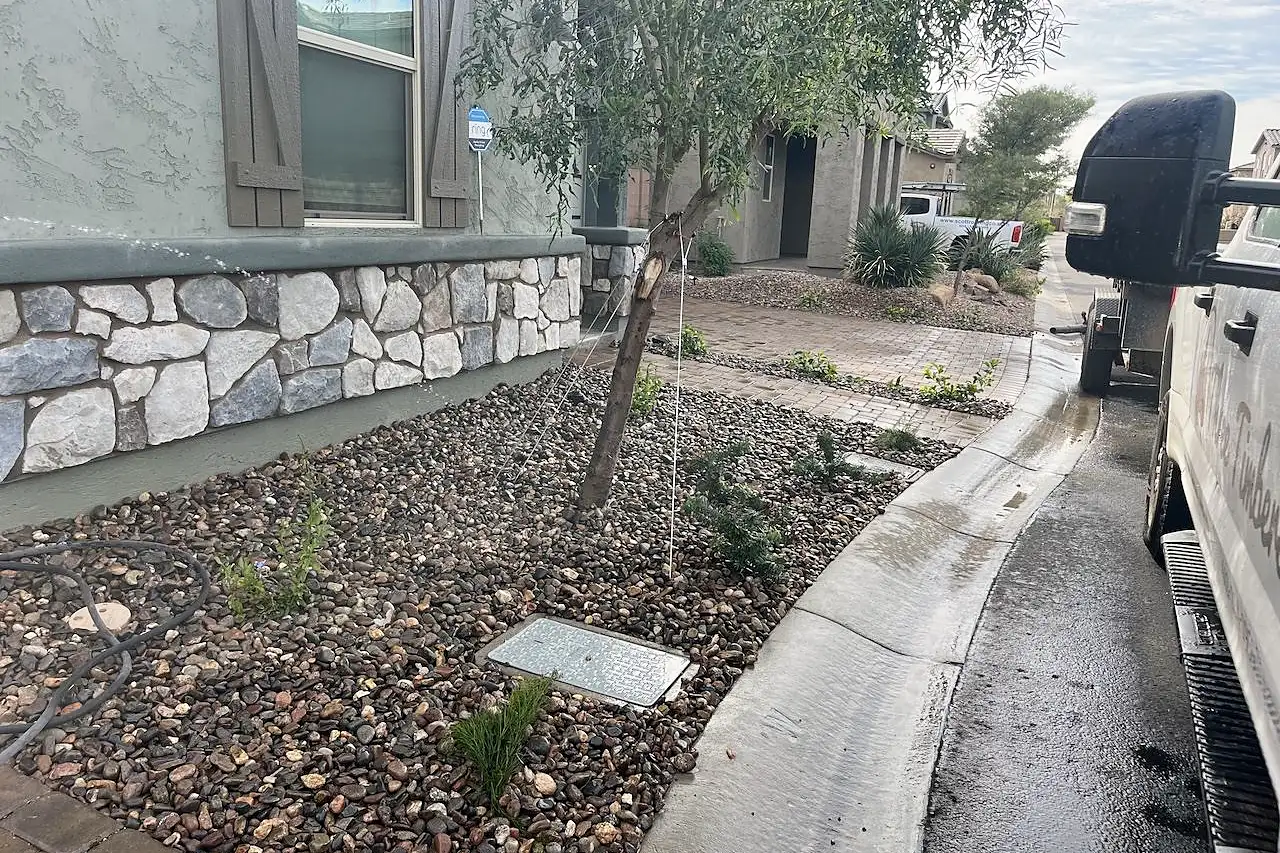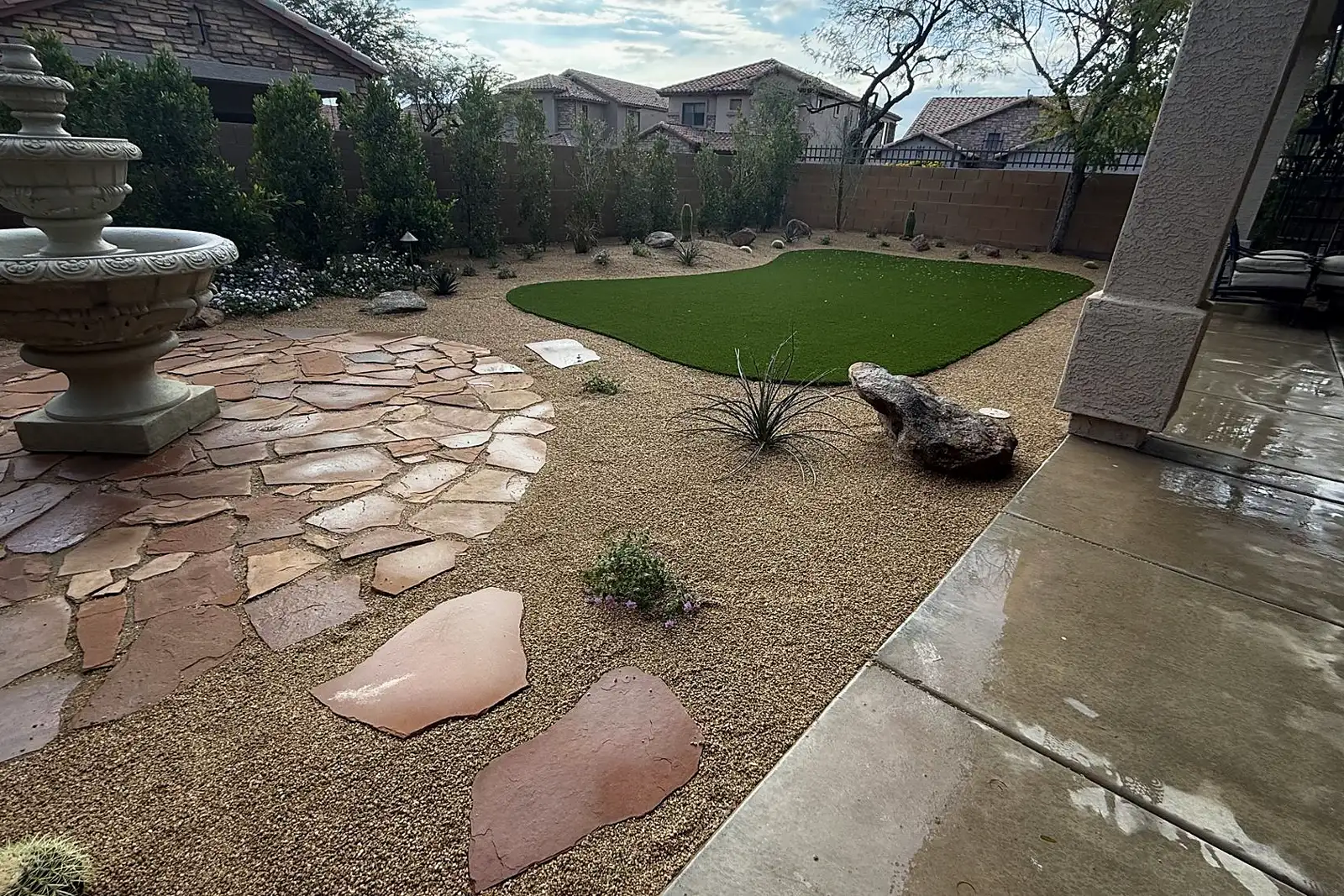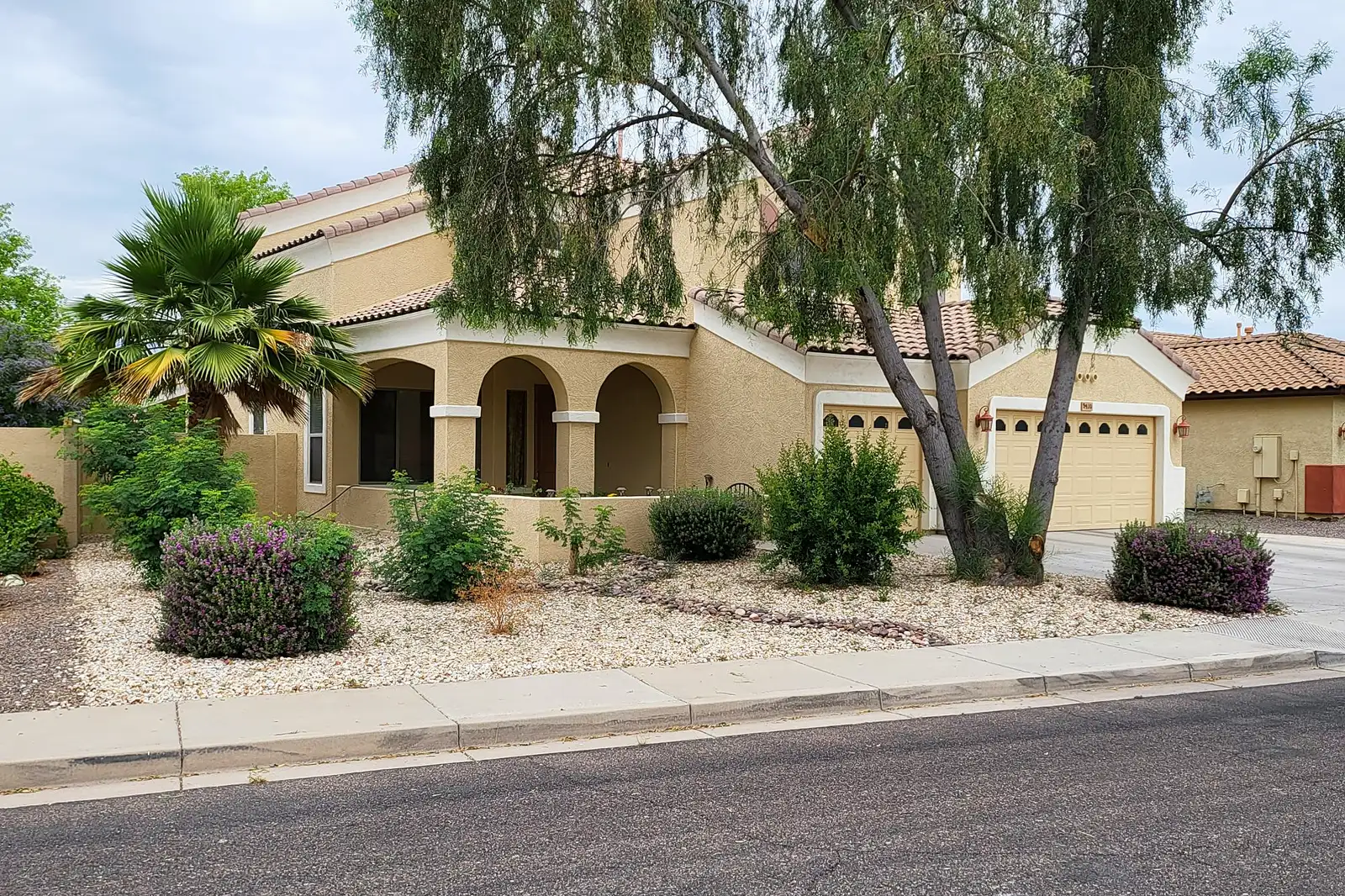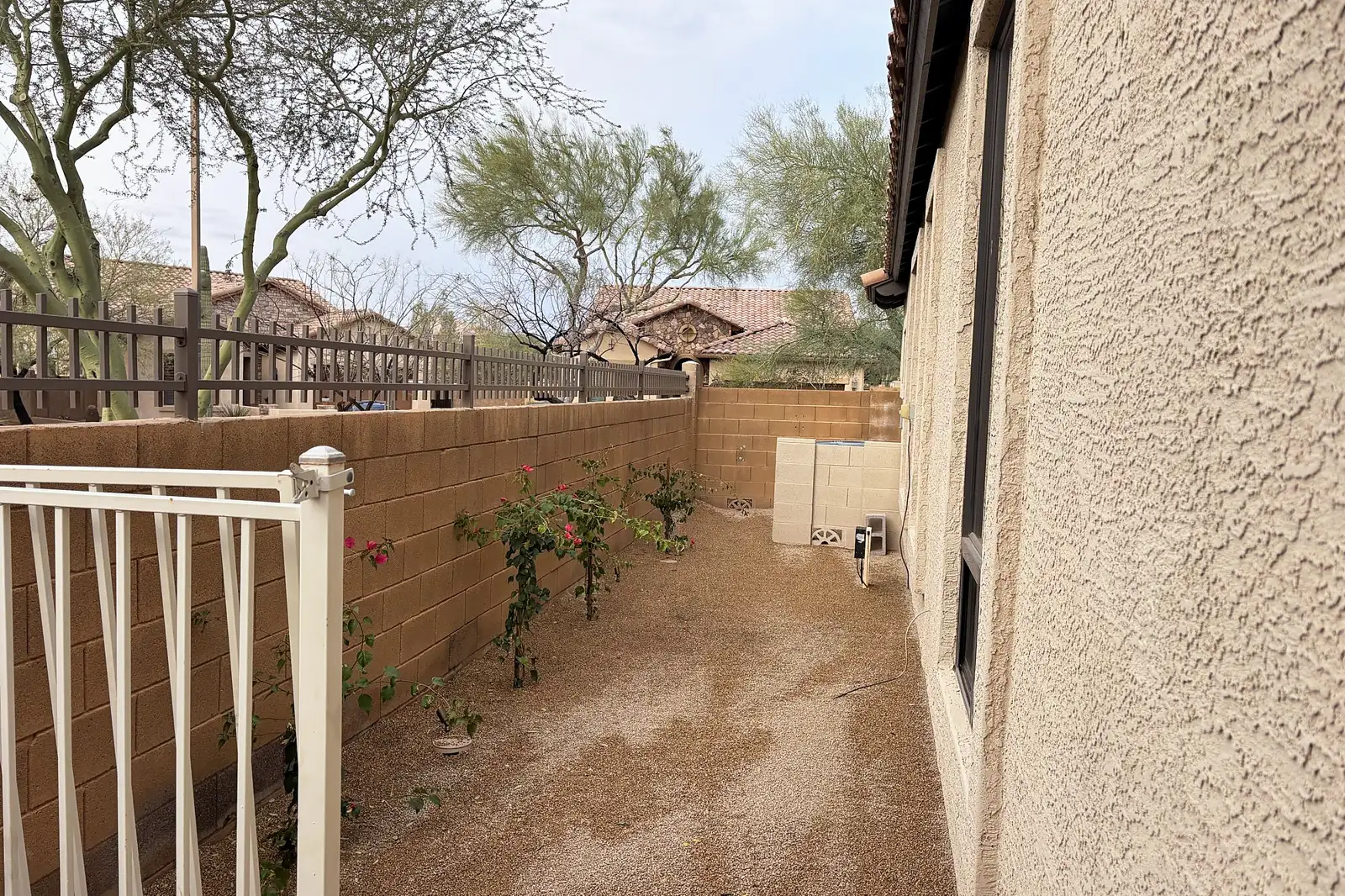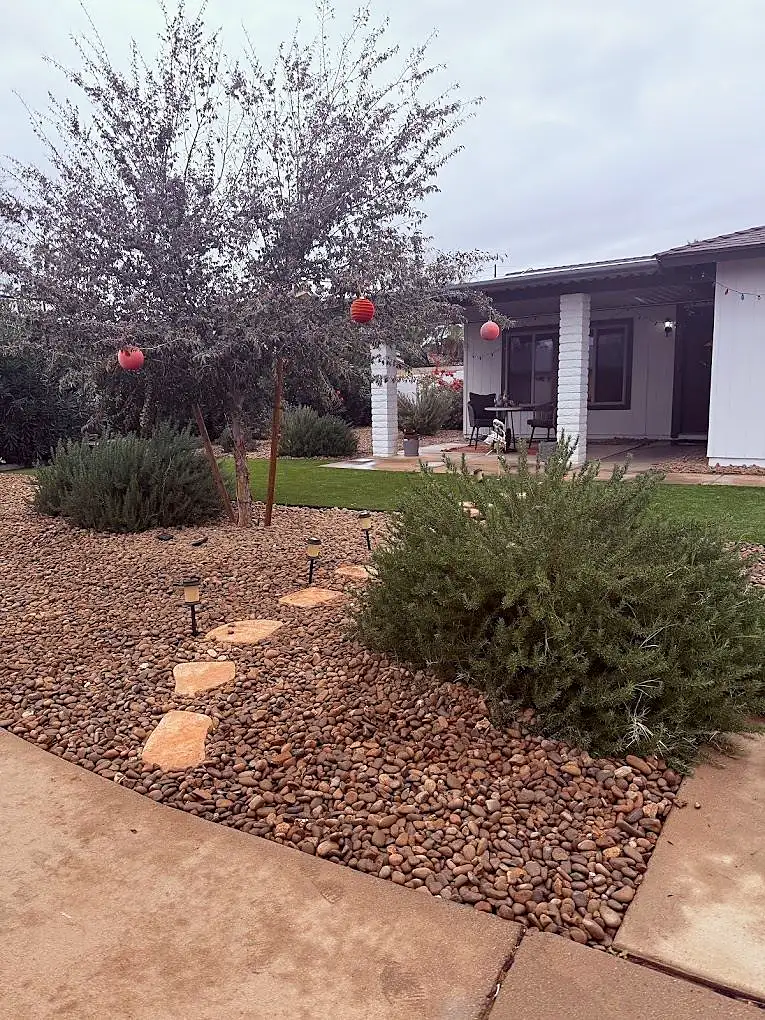
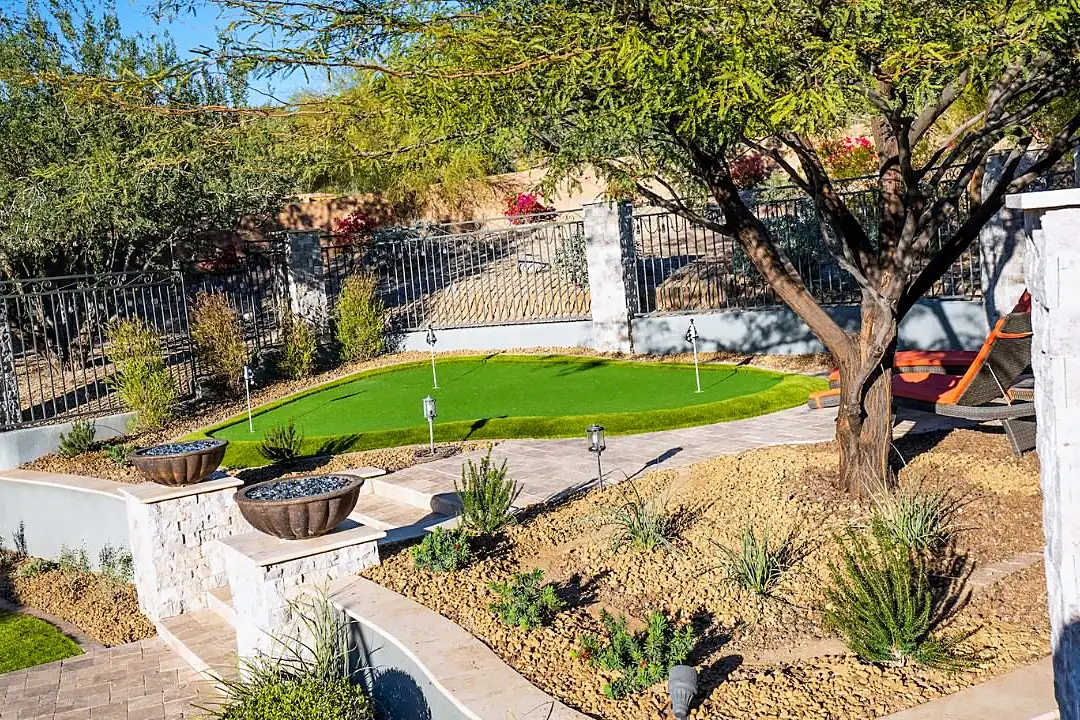
One city, a few different landscapes
Central Mesa grew up as a farm town along the canals, and some older neighborhoods still receive SRP flood irrigation. Those yards tend to have big shade trees, citrus and grass. Farther east, communities near Usery Mountain Regional Park and the Superstition foothills sit on rockier desert ground with more native vegetation, and many newer neighborhoods are governed by HOAs with their own landscape rules.
Local conditions and what grows well
East Valley soil commonly includes caliche, and summer heat off block walls and driveways can be brutal. Plants that hold up well in Mesa include:
- Trees: Desert Museum palo verde, velvet mesquite, sweet acacia and desert willow for filtered shade.
- Shrubs: Texas ranger, Baja fairy duster, cassia and red bird of paradise for summer color.
- Accents: Agaves, red yucca, desert spoon and golden barrel cactus.
- Natives for east Mesa: Brittlebush, globe mallow, creosote and ocotillo, which blend with the open desert near Usery and the Superstitions.
If you are converting a flood-irrigated lawn, plan for the change in water. Desert plants placed in a basin that still floods can struggle, so it helps to think about grading and where the water goes. Our grass to desert conversion page walks through the basics.
Mesa grass-to-xeriscape incentive
The City of Mesa offers a Residential Grass-to-Xeriscape incentive for qualifying water customers who replace grass with low-water plants. The city's page lists up to $1,100 from the City of Mesa, and incentives are for future conversion projects only, so you need approval before you remove anything. Funding is limited, so review the current program rules on mesaaz.gov before you start.
Choosing the right season
In Mesa, fall is prime planting time, because warm soil and cooler air give roots a head start before summer. Spring is a great time for cactus and succulents that like warm soil. If you are taking out a lawn, many homeowners do the removal in early fall and plant right after, so the new desert landscape has the whole cool season to settle in before the heat comes back.
Planting notes for Mesa
East Mesa sits higher and sees colder winter nights than the Valley floor, so frost-tender plants need a protected spot there. Older west Mesa yards often have mature shade trees to work around.
Plants we recommend in Mesa
- desert willow and sweet acacia for cold-hardy flowering shade
- Texas mountain laurel and Texas sage for east Mesa frost
- yellow bird of paradise for long-season color
- damianita and trailing rosemary as groundcover to hit 50% coverage
Helpful guides: Valley rebate guide, drought-tolerant plant list, Phoenix xeriscape cost guide.
For every rebate rule, amount and step, read our step-by-step rebate guide.
How it works in Mesa
Order plants at threetimbersshop.com, and add planting and our plant survival warranty at checkout. Valley-wide delivery is free on orders over $150.
The delivery team drops off your plants on day one, whether or not you are home. On day two, the planting crew comes back and plants them. If your neighborhood is gated, send the gate code ahead of delivery day. If you have an HOA, it is worth confirming any plant or rock requirements first; our HOA front yard landscaping guide can help.
Xeriscape projects are booking now
Our xeriscape design and install service is back on the schedule. That means a consultation, a design and the installation, with native plants, weed fabric, landscape rock, dry riverbeds and boulders, plus advice on optimizing your irrigation.
Let's get your Mesa yard planted
Shop at threetimbersshop.com or call (612) 214-1955 to ask about plants or a future xeriscape consultation.
Frequently Asked Questions
How much is the Mesa grass removal rebate?
$750 for 500 to 999 square feet converted and $1,000 for 1,000 square feet or more. The city lists up to $1,100 with its tree bonus.
What plants count toward Mesa's 50% coverage rule?
Low-water plants from the ADWR Phoenix AMA list. Spreading shrubs and groundcovers like damianita and trailing rosemary fill coverage quickly.
Which plants handle east Mesa frost?
Texas mountain laurel, Texas sage, desert willow and yellow bird of paradise all handle cold well below freezing.