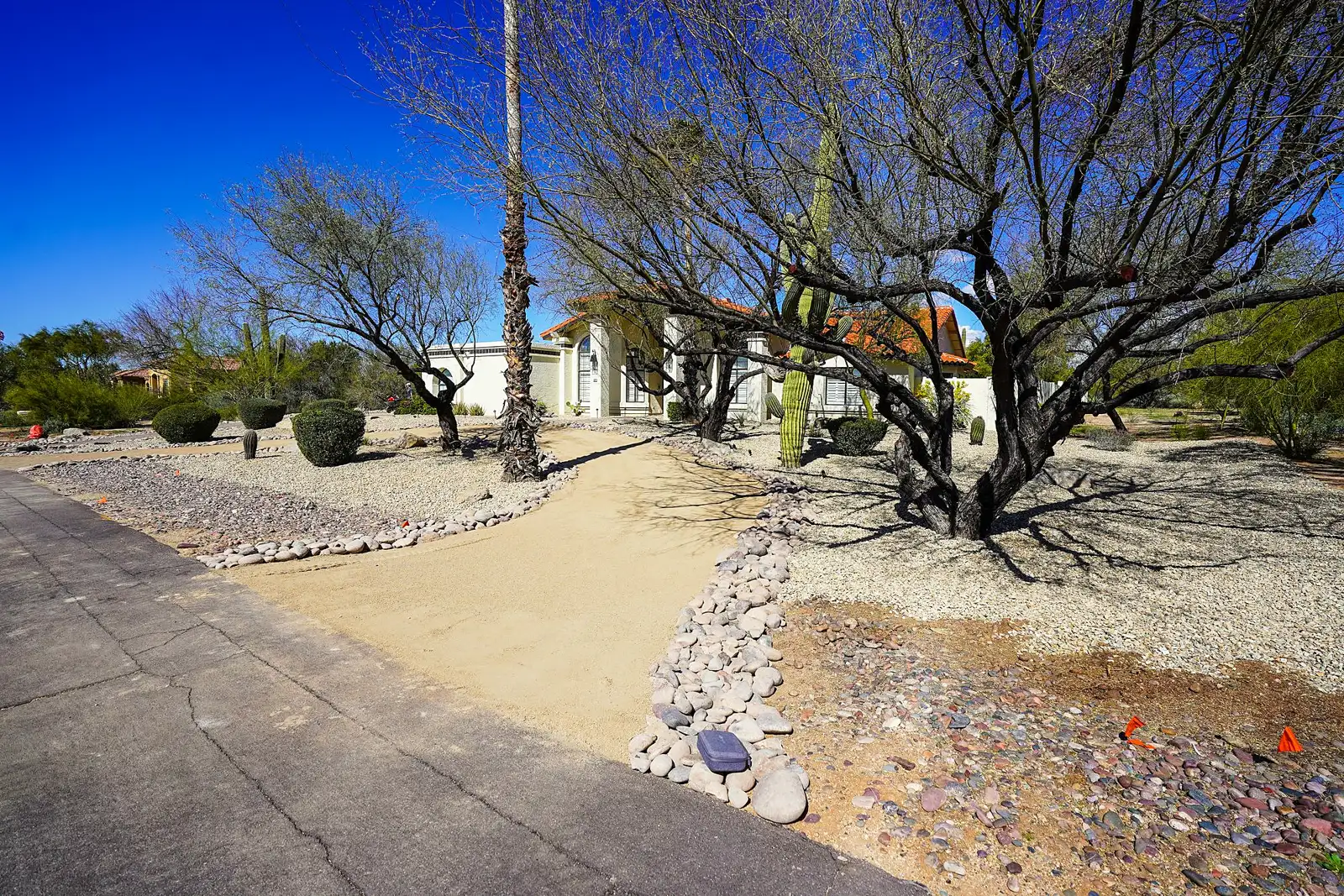
Choosing a desert shade tree
Each of the Valley's popular shade trees has its own personality. Match the tree to your space and expectations:
- Palo verde. Green trunks and bright yellow spring flowers. Fast growing and very heat tolerant. Hybrid varieties such as Desert Museum are popular for their thornless branches and long bloom. Browse palo verdes.
- Mesquite. Broad, filtered shade and a classic desert look. Native velvet and honey mesquites are tough and long lived. Thornless hybrid and South American types grow fast, but need proper structural pruning and deep watering to stay stable in monsoon winds.
- Ironwood. A slow-growing Sonoran native with dense gray-green foliage and lavender spring flowers. Patience pays off with an exceptionally durable tree.
- Acacia. Sweet acacia offers fragrant yellow puffball flowers and a spreading form. Other acacias offer upright or evergreen forms for narrower spaces.
- Desert willow. Deciduous, with orchid-like pink to purple flowers through the warm season. Great where you want winter sun.
- Texas ebony. Dark green, dense and thorny, with a tidy upright form. Slow to moderate growth, and young trees appreciate protection from hard frost.
See our full selection of classic Arizona shade trees and fast-growing trees.
Which box size should you buy?
Desert trees are sold by container: 15 gallon, 24 inch box, 36 inch box and larger. Bigger trees give you instant presence, but smaller trees often establish faster because a higher share of their roots is intact relative to the canopy. A 15 gallon or 24 inch box tree planted in fall can catch up to a larger tree within a few years. Larger boxes make sense when you need shade or screening right away, and they need more careful watering through their first summers.
How to plant a desert tree
- Dig wide, not deep. Make the hole at least two to three times as wide as the root ball, but no deeper. Most feeder roots grow outward in the top couple feet of soil.
- Test drainage. Phoenix soils often have a layer of caliche, a cement-like calcium carbonate hardpan. Fill the hole with water. If it is still standing the next day, break through the caliche or dig a narrow drainage chimney through it. Trees sitting in a water-logged pit can decline from root rot.
- Set the depth. The top of the root ball should sit at grade or slightly above. Never bury the trunk flare, where the trunk widens into the roots.
- Backfill with native soil. Desert trees do best in the soil they will live in. Heavy amendment in the hole can keep roots from growing out into surrounding soil.
- Water deeply at planting to settle the soil and remove air pockets.
- Build a basin. A low berm of soil around the tree holds water over the root zone. Expand it outward as the tree grows so water reaches the edge of the canopy, where roots are actively growing.
For more detail, see our guide to planting and how to plant a tree.
Staking: only as much as needed
Many nursery trees come tied to a single tall stake. That stake is for shipping, not for life in your yard. If a tree cannot stand on its own, use two stakes set outside the root ball with flexible ties placed loosely so the trunk can sway. Movement builds a stronger trunk. Check ties regularly so they do not girdle the bark, and remove the stakes once the tree can stand on its own, often after about a year.
First-summer care
The first summer is the real test for any newly planted tree in the low desert. A few practices make the biggest difference:
- Water deeply and infrequently. Aim to wet soil about two to three feet deep each time, then let the top few inches dry before watering again. Shallow daily sips produce shallow roots and wind-thrown trees.
- Increase frequency in heat, then taper in fall and winter. Our tree watering guide walks through it.
- Do not fertilize at planting. Let the tree focus on roots.
- Leave lower branches for now. They shade the trunk and help prevent sunburn. Structural pruning can come later.
- Keep rock away from the trunk so the base stays dry and visible.
- Prune for wind before monsoon on fast growers, thinning rather than topping, so storms pass through the canopy.
When to plant trees in Phoenix
Fall is the prime planting season. Warm soil encourages root growth while cooler air reduces stress, giving trees months to settle in before their first summer. Spring is the next best window. Desert natives are forgiving, but avoid planting non-native trees during peak summer heat.
Let Three Timbers plant it
Order your tree at threetimbersshop.com and add installation at checkout, along with an optional plant survival warranty. Delivery is free Valley-wide on orders over $150. Our delivery team drops the tree off one day, and the planting crew comes the next day to plant it. You do not need to be home for the drop-off; in a gated community, just send the gate code before delivery day. We stand behind a 100% satisfaction guarantee. If you're not absolutely satisfied with our service, simply let us know, and we will work tirelessly to make it right.
Get shade growing
Browse desert shade trees at threetimbersshop.com and add planting at checkout. Planning trees as part of a larger yard redesign? Call (612) 214-1955 to request a quote for xeriscape design and installation.
Frequently Asked Questions
How deep should I plant a desert tree?
Plant so the top of the root ball sits at grade or slightly above, never deeper. Dig the hole wide, at least two to three times the width of the root ball, but no deeper than the root ball itself.
What do I do if I hit caliche?
Test drainage by filling the hole with water. If water is still standing the next day, break through the caliche layer or dig a narrow drainage chimney so water can escape below the root zone.
Should I stake my new tree?
Only if it cannot stand on its own. Use two stakes outside the root ball with loose, flexible ties, and remove them once the tree can stand on its own, often after about a year.
Is a 15 gallon or 24 inch box tree better?
Smaller trees often establish faster and can catch up within a few years. Larger boxes give instant impact and are a good fit when you need shade or screening sooner.
How often should I water a newly planted tree in summer?
Water deeply so moisture reaches about two to three feet down, and let the top few inches dry between waterings. New trees need more frequent watering in their first summer than established ones.
When is the best time to plant trees in Phoenix?
Fall is the prime planting season, followed by spring. Avoid planting non-native trees during peak summer heat.
Recent Valley plantings