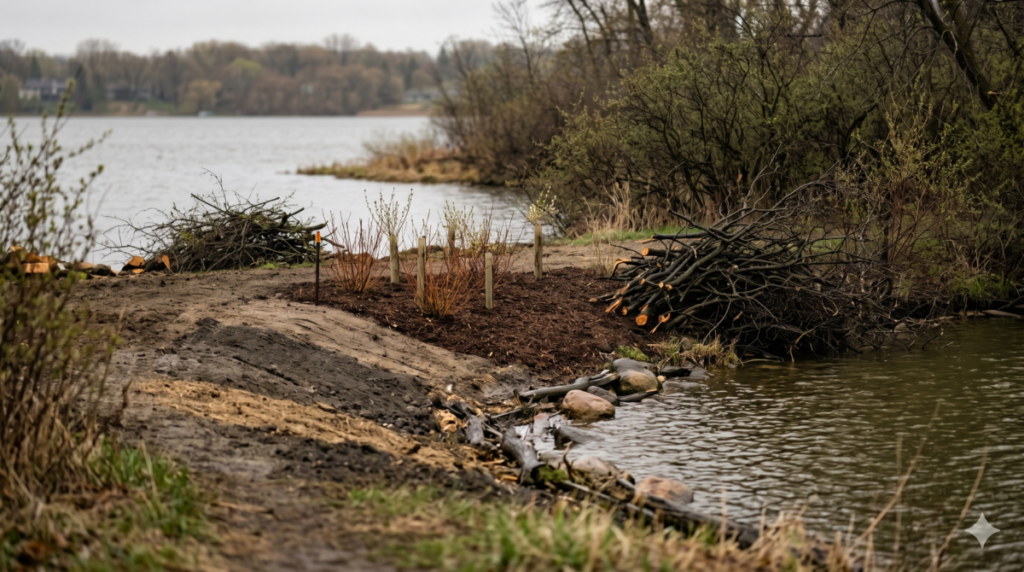
If you just bought a Mound lakeshore property and your view to Lake Minnetonka is mostly buckthorn and dead elm, welcome to the club. Overgrown lakeshores are one of the most common conditions on Lake Minnetonka’s western bays. Restoring them takes more than a chainsaw weekend. Here is the realistic playbook.
Table of Contents
- Start With an Inventory, Not a Chainsaw
- Buckthorn Removal Done Right
- Work At the Water Line
- Replanting to Lock In the Restoration
- FAQs
- Ready to Get Started?
Start With an Inventory, Not a Chainsaw
Before anything gets cut, walk the shoreline with someone who can identify plant species. You are looking for:
- Invasives to remove (common buckthorn, garlic mustard, reed canary grass)
- Natives to protect (oaks, maples, native shrubs, understory flowers)
- Structural banks that need root mass left in place
- Trees that are structurally safe vs hazards to remove
Mowing everything down is the number one mistake on Mound lakeshore restorations. You lose the native plants that were holding the bank, and the invasives come back stronger.
Buckthorn Removal Done Right
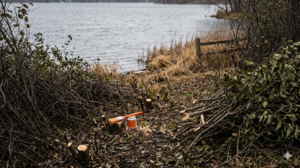
Common buckthorn is the dominant invasive on Lake Minnetonka shorelines. Effective removal requires more than cutting. Buckthorn will resprout from cut stumps, sometimes with three or more new shoots. Proper protocol:
- Cut stems as close to ground level as possible in late fall or winter
- Immediately paint cut stumps with a targeted herbicide (triclopyr or glyphosate) within 15 minutes of the cut
- Remove cut material from the site; do not burn if seeds are present
- Plan for 2 to 3 seasons of follow-up treatment on new seedlings from the soil seed bank
Work At the Water Line
Any work at or below the Ordinary High Water Level on Lake Minnetonka falls under DNR rules. For Mound specifically, that matters because many shorelines have eroding banks or failing old riprap that needs replacement.
Soft-armoring with native plantings, coir logs, and brush mattressing often does not require a DNR permit if reviewed by the local watershed district. Hard structures (riprap, retaining walls at water) almost always do. Budget time for permit work in your project timeline.
Replanting to Lock In the Restoration
The final phase is what makes or breaks the project. An inventory-stripped shoreline without replanting is back to invasives within two seasons. A well-designed native planting plan keeps buckthorn out for the long term.
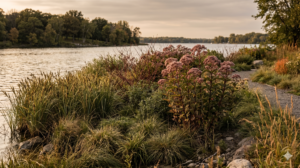
Good performers on a Mound shoreline include native sedges, Joe Pye Weed, Red Twig Dogwood, native serviceberry, and Prairie Cordgrass. The goal is layered coverage from ground to canopy that crowds out invasive seedlings.
Frequently Asked Questions
How long does a Mound lakeshore restoration take?
A one-acre lakeshore typically runs 3 to 6 months from first cut to finished replanting, with follow-up invasive treatment for 2 to 3 years. Plan for phased payments across seasons.
Do I need a permit to cut buckthorn on my own shoreline?
No permit is needed to remove invasive vegetation above the Ordinary High Water Level. Herbicide application by a licensed applicator is recommended for effectiveness. Work below the OHW may require DNR review.
Will buckthorn come back after I remove it?
Yes, from the existing soil seed bank. Plan for annual follow-up treatments for 2 to 3 years after initial removal. Aggressive replanting with native species dramatically reduces reinfestation.
Ready to Get Started?
Three Timbers serves Chanhassen, Eden Prairie, Minnetonka, Chaska, Victoria, Excelsior, Waconia, and Mound with full-service landscape and hardscape work. Call (612) 214-1955 or request a free estimate from our Mound landscaping team. You can also see our full Minnesota landscaping and hardscape services.
Related reading: