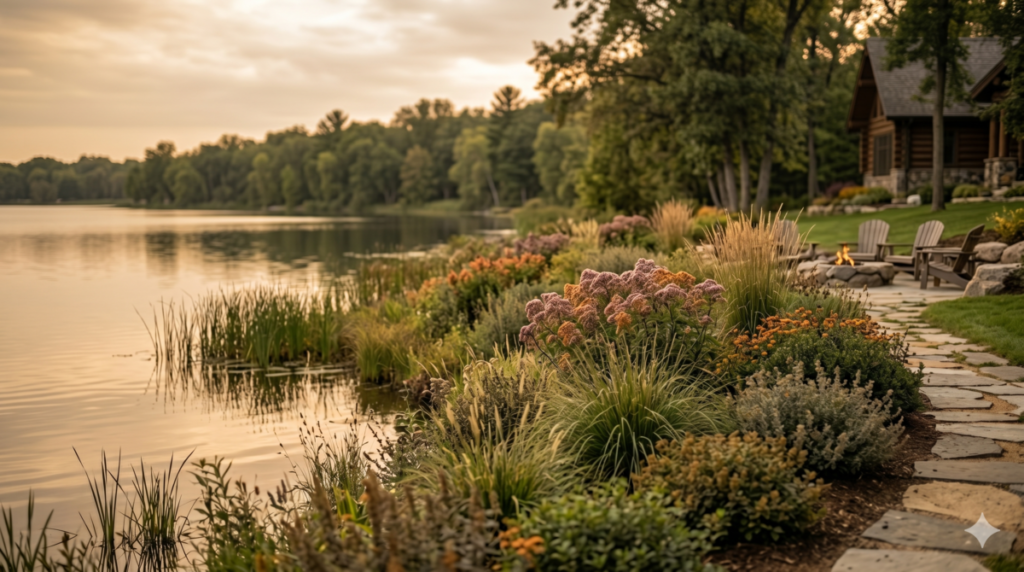
A Lake Minnetonka shoreline is equal parts asset and obligation. The view is priceless. The rules protecting that view are strict. If you own shoreline in Minnetonka and you are thinking about restoration, cleanup, or a new planting plan, this is the guide you need before calling anyone for a quote.
Table of Contents
- DNR Rules That Apply to Every Minnetonka Shoreline
- Designing a Native Buffer That Works
- Riprap vs. Soft-Armoring: Which Does Your Shoreline Need
- Common Minnetonka Shoreline Mistakes
- FAQs
- Ready to Get Started?
DNR Rules That Apply to Every Minnetonka Shoreline
Lake Minnetonka is a protected public water, which means the Minnesota DNR has permit authority over most work at or below the Ordinary High Water Level (OHW). For most shoreline restoration using native plants, willow wattles, brush mattressing, and other soft-armoring techniques, no DNR permit is required as long as the project is designed or reviewed by the local soil and water conservation district or watershed district, uses native plantings, and keeps waterward encroachment to a minimum.
For riprap, the DNR limits installations to no more than six feet waterward of the Ordinary High Water Level, with a finished slope no steeper than 3 to 1. Riprap is capped at 200 feet of continuous shoreline along lakes and wetlands. The MN DNR permit requirements page is the authoritative source.
Designing a Native Buffer That Works
A well-designed native buffer does four things at once: stabilizes the bank, filters runoff, provides habitat, and looks good from the dock. The buffer does not have to be wild. A 15 to 25 foot deep band of graduated plantings gives you the ecological function while keeping a groomed look near the house.
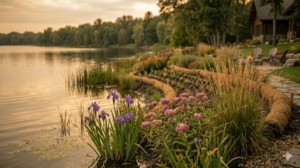
Good plant choices for a Minnetonka shoreline include Blue Flag Iris, Swamp Milkweed, Joe Pye Weed, Little Bluestem, and native sedges. Avoid turf grass within ten feet of the water line. Lawn roots are too shallow to hold a bank.
Riprap vs. Soft-Armoring: Which Does Your Shoreline Need
Riprap is durable and fast to install. It also creates a hard edge that reflects wave energy and does not filter runoff. On a quiet bay, riprap is overkill. On a wind-exposed point taking consistent wave action, riprap with native plantings above it is often the right call.
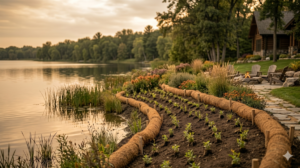
Soft-armoring (native plantings, coir logs, fiber rolls) works well on protected shorelines and costs less over the life of the project. The DNR actively recommends soft-armoring over hard structures wherever wave energy allows.
Common Minnetonka Shoreline Mistakes
We see the same handful of mistakes on Lake Minnetonka shorelines year after year:
- Mowing lawn right to the water line. Creates a runoff fast-track to the lake.
- Using non-native ornamentals that do not hold a bank in wave action.
- Over-riprapping a protected cove that would have done fine with plantings.
- Installing work without checking city, watershed district, and DNR rules first.
Frequently Asked Questions
Do I need a DNR permit to plant native plants on my Minnetonka shoreline?
Usually not, if the project is reviewed by your local watershed district or soil and water conservation district, uses native species, and keeps waterward encroachment minimal. Always confirm with your watershed district before starting.
How far back from the water line does my planting buffer need to start?
The DNR recommends a minimum 25-foot buffer of native vegetation from the Ordinary High Water Level for effective runoff filtering. Local watershed districts sometimes require more.
Can I put riprap along my entire shoreline?
Not without a DNR permit, and in many cases not at all. The DNR caps riprap at 200 feet of continuous shoreline and six feet waterward of the OHW. Exceeding those limits requires a Public Waters Work Permit.
Ready to Get Started?
Three Timbers serves Chanhassen, Eden Prairie, Minnetonka, Chaska, Victoria, Excelsior, Waconia, and Mound with full-service landscape and hardscape work. Call (612) 214-1955 or request a free estimate from our Minnetonka landscaping team. You can also see our full Minnesota landscaping and hardscape services.
Related reading: