
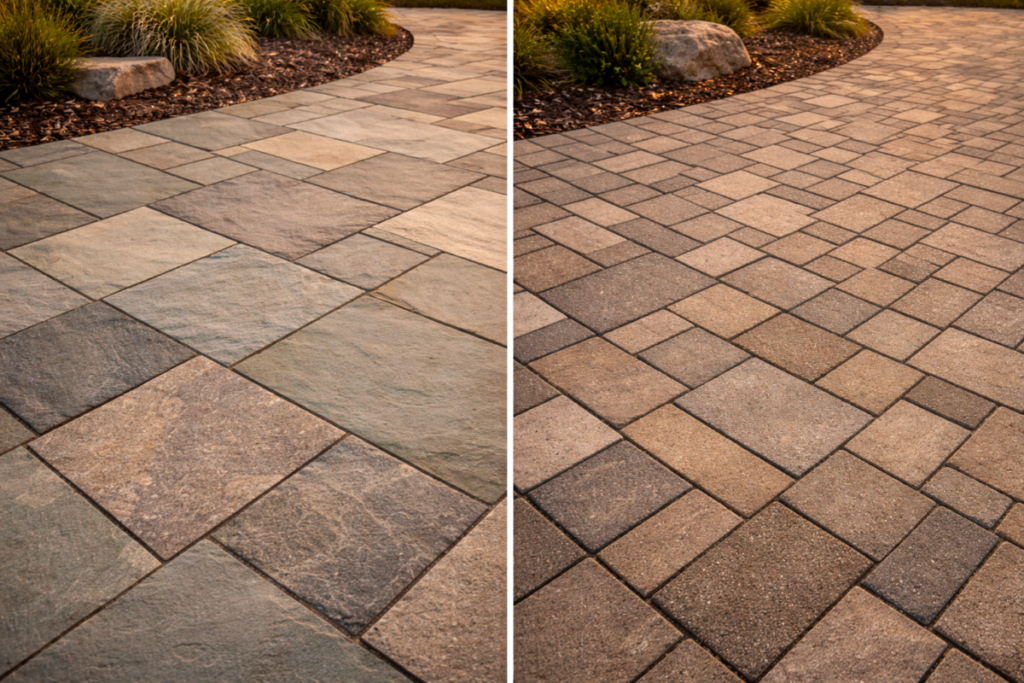
Minnesota winters are a brutal test of hardscape materials. The difference between a 30-year patio and a 10-year patio often comes down to whether the homeowner chose the right material for the climate. Here is how natural stone and concrete pavers actually compare in Minnesota.
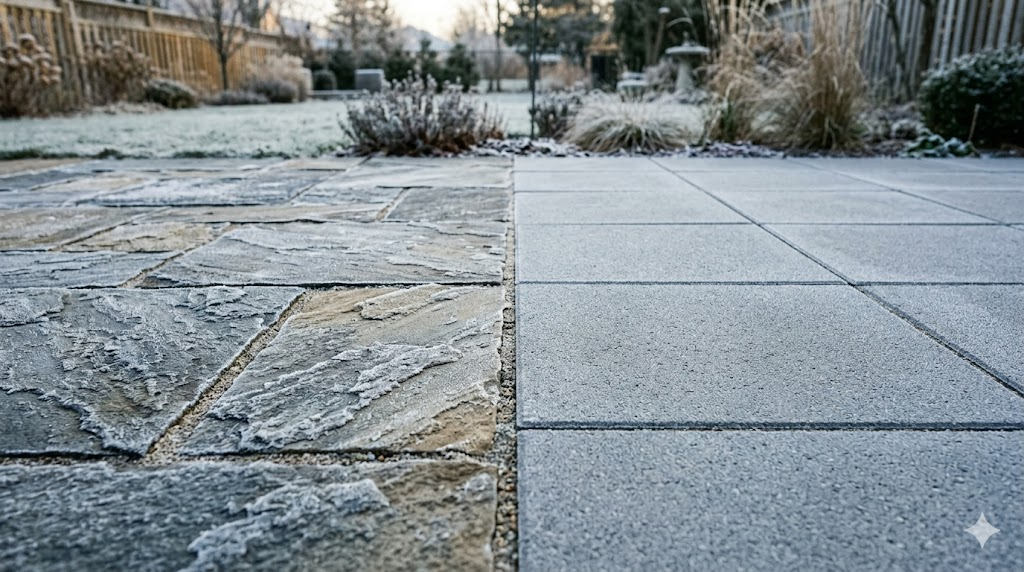
Table of Contents
- Freeze-Thaw Performance
- Cost Comparison
- Long-Term Maintenance
- Which to Choose for Minnesota
- FAQs
- Ready to Get Started?
Freeze-Thaw Performance
Both materials can survive Minnesota’s 70 to 100 annual freeze-thaw cycles when properly specified. The critical spec is water absorption.
- Concrete pavers rated for ASTM C936 freeze-thaw durability: excellent performance
- Dense natural stones (granite, hard bluestone, hard limestone): excellent performance
- Soft natural stones (sandstone, soft limestone, travertine): poor performance; edges spall after 5 to 10 winters
The mistake: installing a Mediterranean-style travertine patio in Minnesota. It looks great on day one and is a mess by year eight.
Cost Comparison
2026 Minnesota installed pricing:
- Standard concrete pavers: $35 to $55 per sq ft
- Premium large-format concrete pavers: $45 to $70 per sq ft
- Bluestone (thermaled finish): $60 to $95 per sq ft
- Granite: $80 to $130 per sq ft
- Flagstone (irregular): $55 to $85 per sq ft
Natural stone carries a 30 to 100 percent premium over concrete pavers in most scenarios.
Long-Term Maintenance
Concrete pavers: polymeric sand refill every 5 to 10 years, individual paver replacement is straightforward, optional sealing every 3 to 5 years. Color can fade 5 to 15 percent over 20 years.
Natural stone: polymeric sand also needed, replacement stones harder to color-match in 10 years, honing or re-thermalizing possible for worn surfaces. Color is permanent.
Which to Choose for Minnesota
Quick decision rules:
- Want clean symmetrical patterns: concrete pavers
- Want organic, unique character: natural stone (bluestone or granite, not softer stones)
- Budget-constrained: concrete pavers
- High-end custom build where every detail matters: natural stone
- Pool surround: large-format concrete pavers for slip resistance
Frequently Asked Questions
Which is more slippery in winter: pavers or natural stone?
Both can be slippery when iced. Thermaled bluestone and textured concrete pavers offer the best traction. Polished or honed natural stone is the most slippery.
Can I mix natural stone and concrete pavers?
Yes, commonly used as a design technique. Natural stone borders around a concrete paver field, or stone steps rising to a paver patio, are both popular.
Does natural stone really last longer than concrete pavers?
In Minnesota, properly specified dense natural stone (granite, hard bluestone) lasts 50+ years. Concrete pavers last 30 to 40 years before surface wear becomes visible. Both can outlast the house if installed right.
Ready to Get Started?
Three Timbers serves Chanhassen, Eden Prairie, Minnetonka, Chaska, Victoria, Excelsior, Waconia, and Mound with full-service landscape and hardscape work. Call (612) 214-1955 or request a free estimate from our Chanhassen landscaping team. You can also see our full Minnesota landscaping and hardscape services.
Related reading: