
A wet yard in the Twin Cities almost always traces to one of three problems: bad grade near the foundation, a low spot that collects water, or heavy clay soil that drains slowly. Different problems need different solutions. Here is how to diagnose and fix each.
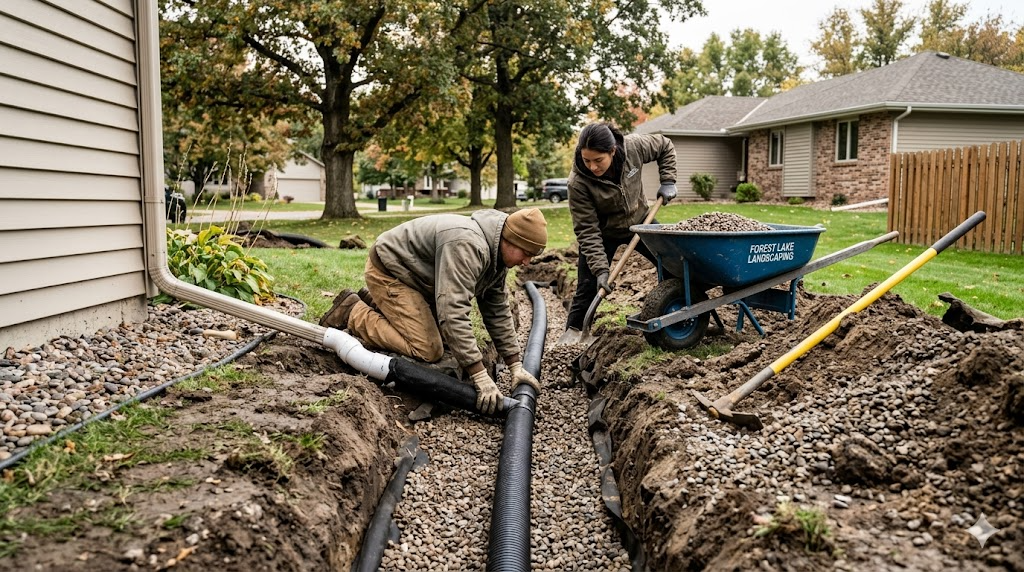
Table of Contents
- Grading: The First Line of Defense
- Swales: Moving Water Across the Yard
- French Drains: Intercepting Groundwater
- Minnesota Clay Soil and Drainage
- FAQs
- Ready to Get Started?
Grading: The First Line of Defense
Proper grade around the foundation sheds water before it ever becomes a drainage problem. The rule: soil should slope away from the foundation at least 1 inch per foot for the first 10 feet, then taper to a swale or outlet.
Symptoms of bad grade:
- Wet basements after heavy rain
- Saturated soil within 5 feet of the house
- Settled soil near downspouts
Fix: re-grade with clean fill, compact, and install or extend downspout extensions to carry water at least 10 feet from the foundation.
Swales: Moving Water Across the Yard
A swale is a shallow graded channel, usually 12 to 18 inches wide and 6 to 12 inches deep, that carries surface water to a positive outlet. Swales work best on:
- Large yards with multiple slopes
- Side yards between houses
- Properties that need to move water around a downslope structure
Minnesota swales need at least a 2 percent slope (a quarter inch per foot of drop) to drain reliably. Steeper is better, especially if snow melt will clog the swale in spring.
French Drains: Intercepting Groundwater
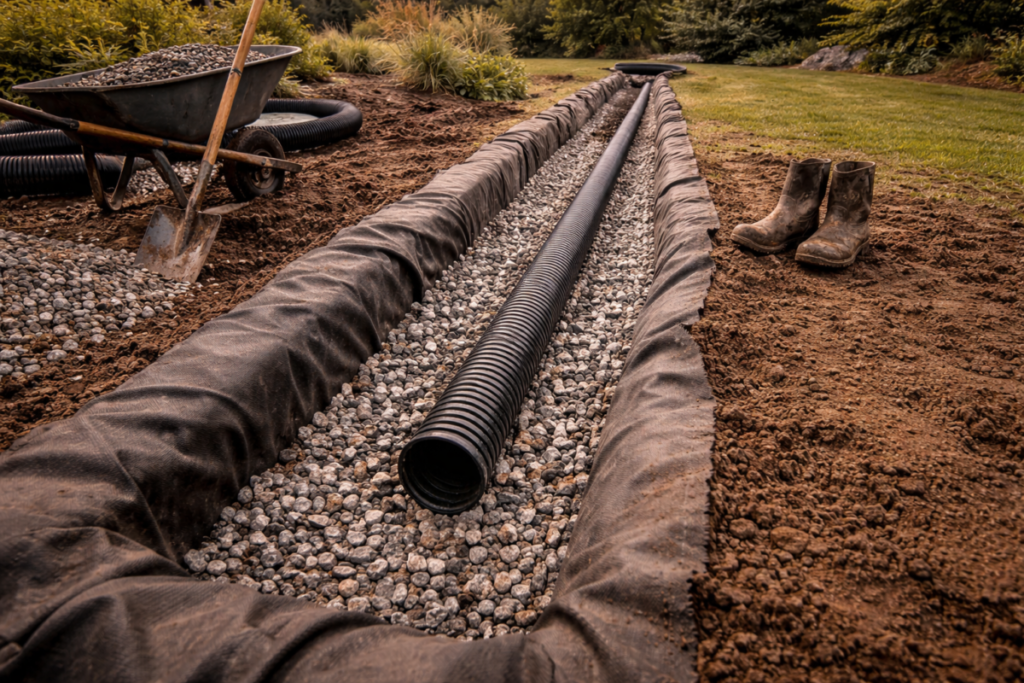
A French drain is a perforated pipe in a gravel-filled trench wrapped in filter fabric. It intercepts groundwater and carries it away from saturated areas. French drains work best for:
- Chronic wet spots that do not drain after rain
- Water infiltration against a foundation wall
- Saturated soil from high groundwater
A French drain needs a real outlet. Installing one that just dead-ends underground buys you a buried gravel trench that does not drain anywhere.
Minnesota Clay Soil and Drainage
Much of the southwest Twin Cities metro sits on heavy clay. Clay holds water for days after surface soil has dried. Deep clay complicates drainage because:
- Surface drainage alone cannot resolve deep saturation
- Dry wells fail in clay without engineered sub-base
- French drains need careful sizing for clay infiltration rates
Fixing clay drainage issues often requires a layered approach: grading, swale, French drain, and sometimes a sump pump outlet for the worst spots.
Frequently Asked Questions
What’s cheaper: regrading or a French drain?
Regrading is usually cheaper for surface water problems and solves the root cause. French drains fix different problems (saturated soil, groundwater) and cost more ($35 to $75 per linear foot installed).
Can I install a French drain myself?
The mechanics are DIY-friendly. Sizing, outlet selection, and filter fabric choice are where homeowners get in trouble. Professional install adds real value here.
Do I need a permit to regrade my yard?
In most Twin Cities cities, no, for minor regrading. Major regrading that changes water flow onto neighboring properties can trigger permits. Check with your city first if you are moving substantial soil.
Ready to Get Started?
Three Timbers serves Chanhassen, Eden Prairie, Minnetonka, Chaska, Victoria, Excelsior, Waconia, and Mound with full-service landscape and hardscape work. Call (612) 214-1955 or request a free estimate from our Chanhassen landscaping team. You can also see our full Minnesota landscaping and hardscape services.
Related reading: