What You Need to Know About Paver Patios
Design Consultation
Every patio project begins with an on-site consultation where we discuss how you want to use the space. A small dining patio has different requirements than a large entertainment area with a fire pit and seat walls. We measure the site, evaluate drainage and grade, and design a layout that fits your property and lifestyle. You will see a scaled plan with paver patterns, border details, and any integrated features before we break ground.
Paver Selection
We install pavers from Belgard, Techo-Bloc, Borgert, and other manufacturers proven in cold climates. Options include classic brick-style pavers, large-format slabs, tumbled stone looks, and permeable pavers for properties with drainage requirements. Thickness matters in Minnesota--we use 2 3/8″ or thicker pavers rated for vehicular traffic on driveways and standard thickness for patios. Colors range from warm earth tones to cool grays, with blended options that hide minor staining over time.
Pricing
Paver patio costs depend on square footage, paver material, pattern complexity, and site conditions. A straightforward rectangular patio with standard pavers is the most affordable option. Curved layouts, inlay patterns, step-ups, and integrated features like seat walls or fire pits add to the investment. We provide transparent, line-item estimates covering excavation, base material, edge restraint, pavers, polymeric sand, and labor so there are no surprises.
Installation
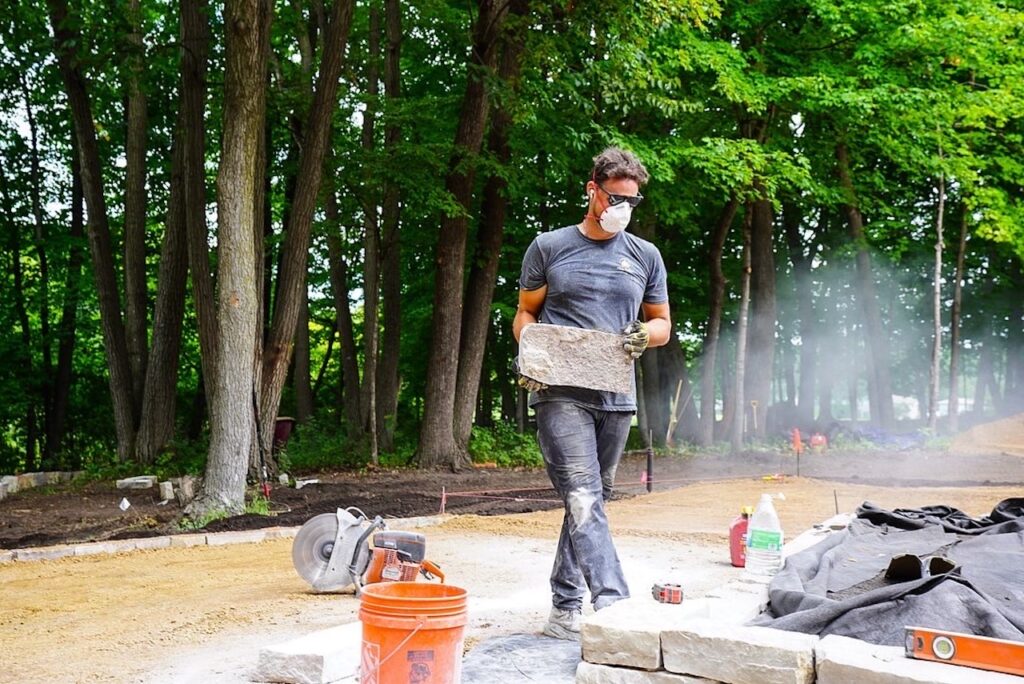
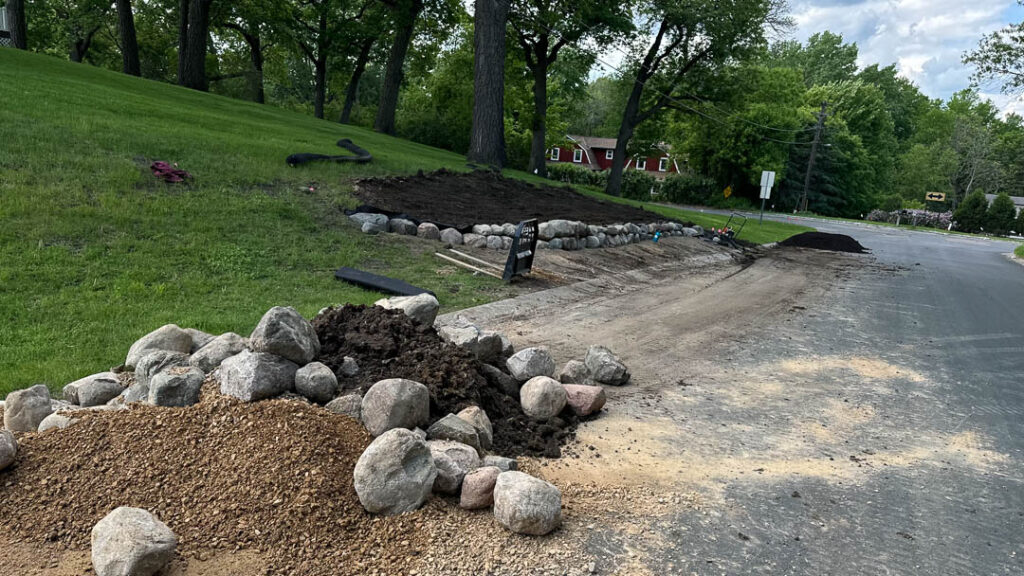
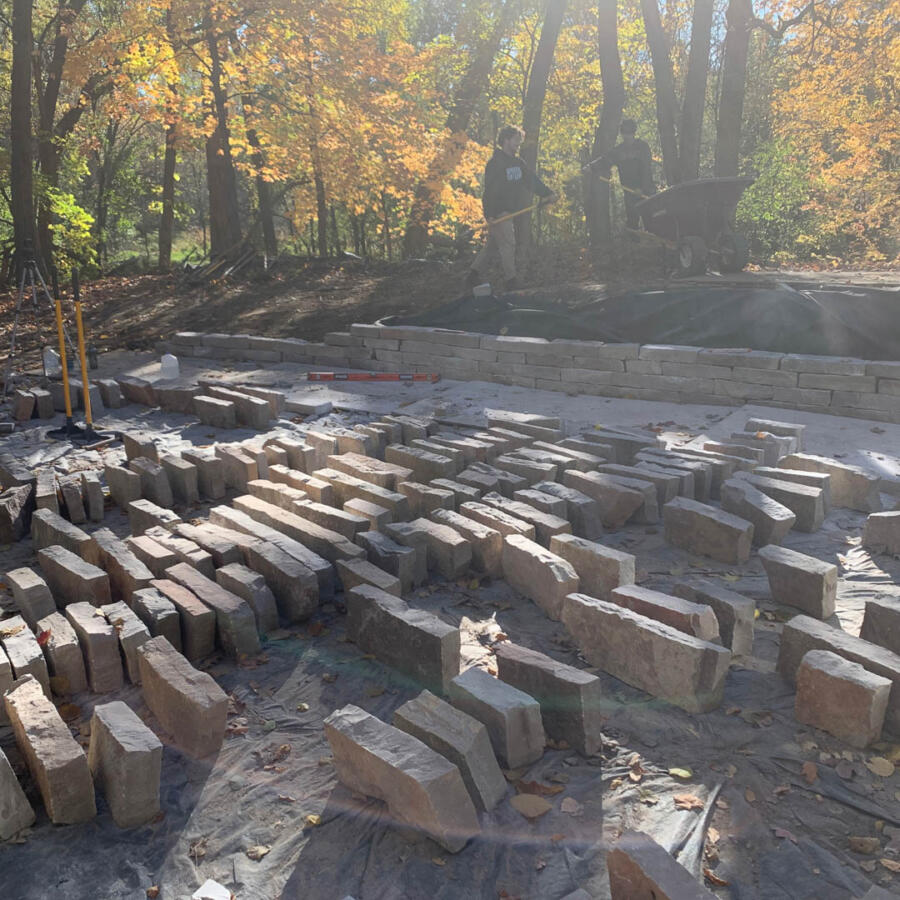
Our installation process is what makes the difference between a patio that lasts and one that settles and shifts. We excavate 8 to 12 inches deep depending on soil conditions, install geotextile fabric to prevent soil migration, and build up a compacted Class 5 gravel base in lifts. A 1-inch screeded sand layer provides the final setting bed. Pavers are laid in the chosen pattern with consistent joint spacing, cut precisely at edges with a wet saw, and locked in with a soldier course border and aluminum edge restraint. Polymeric sand fills the joints to prevent weed growth and ant intrusion.