
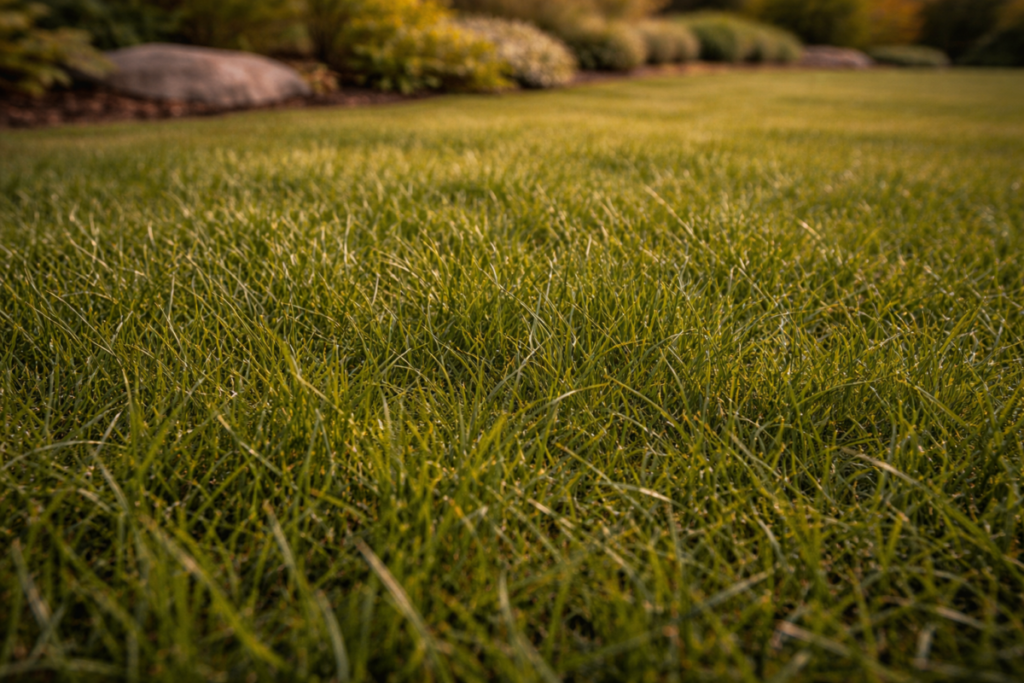
Minnesota is a cool-season grass state. The four species that work here are Kentucky bluegrass, fine fescue, tall fescue, and perennial ryegrass. Choosing the right blend for your yard is the difference between a lawn that cruises through summer and one that fights the climate every week.
Table of Contents
- Kentucky Bluegrass: The Classic Minnesota Lawn
- Fine Fescue: The Low-Maintenance Option
- Tall Fescue: The Modern Compromise
- Blends That Work in Minnesota
- FAQs
- Ready to Get Started?
Kentucky Bluegrass: The Classic Minnesota Lawn
Kentucky bluegrass is the most popular lawn grass in Minnesota for good reason. It is cold-tolerant, self-repairs from rhizomes, and gives the dark green appearance most homeowners want.
Tradeoffs: it is the highest-maintenance option (needs more water and fertilizer), it goes dormant in July heat without irrigation, and it does not handle deep shade well.
Best for: sunny to partly sunny yards with reliable irrigation and homeowners willing to invest in lawn care.
Fine Fescue: The Low-Maintenance Option
Fine fescue (creeping red, chewings, hard fescue) is the lowest-maintenance real grass option for Minnesota. It tolerates shade, drought, and low fertility.
Tradeoffs: does not repair from rhizomes as well as KBG, lower foot-traffic tolerance, finer blade that some homeowners prefer and others do not.
Best for: shaded yards, low-input homeowners, and properties where full watering and fertilizer programs are not practical.
Tall Fescue: The Modern Compromise
Modern “turf-type” tall fescue varieties are dramatically improved over older generations. Deep roots, good heat tolerance, and improving cold hardiness.
Tradeoffs: coarser blade than KBG or fine fescue, does not self-repair as well in bare spots, some older varieties still have winter kill in severe Minnesota winters.
Best for: mid-traffic lawns, homeowners who want lower maintenance than KBG without going full fine fescue.
Blends That Work in Minnesota
Most quality Minnesota lawn seed products are blends. Common winning combinations:
- KBG + fine fescue (70/30): sun-adapted lawns with some shade
- KBG + perennial rye (80/20): quick establishment over all-KBG
- Shade blend (fine fescue dominant): 70+ percent shade yards
- TTTF (turf-type tall fescue) + KBG: modern low-input lawns
Check the University of Minnesota Extension seed recommendations for your specific region and sun exposure.
Frequently Asked Questions
Is it too late to seed a Minnesota lawn in fall?
Mid-September is the last reliable window for cool-season grass germination in the Twin Cities. After October 1, seed may not establish before winter dormancy, though it can germinate the following spring (“dormant seeding”).
Can I overseed Kentucky bluegrass into a fine fescue lawn?
Yes, and it is a common strategy. Over time, KBG may dominate sunnier areas while fescue holds shadier spots. The blend stabilizes around year 3 based on conditions.
Why does my KBG lawn turn brown in July?
Summer dormancy. Kentucky bluegrass naturally goes dormant in heat if not irrigated. It greens up in September and October. Irrigation keeps it green year-round; letting it dormant is fine too.
Ready to Get Started?
Three Timbers serves Chanhassen, Eden Prairie, Minnetonka, Chaska, Victoria, Excelsior, Waconia, and Mound with full-service landscape and hardscape work. Call (612) 214-1955 or request a free estimate from our Chanhassen landscaping team. You can also see our full Minnesota landscaping and hardscape services.
Related reading: