The southwest Twin Cities metro has more hardscape contractors than almost any other market in Minnesota. That is good news for choice and bad news for homeowners trying to sort real pros from fly-by-night crews. Here is how to separate the two before you sign a contract.
Table of Contents
- ICPI Certification Is the First Filter
- Insurance and Licensing Minimums
- What a Quality Bid Looks Like
- Red Flags to Walk Away From
- FAQs
- Ready to Get Started?
ICPI Certification Is the First Filter
The Interlocking Concrete Pavement Institute (ICPI) is the national authority on concrete paver installation. ICPI-certified installers have documented at least 10,000 square feet of installations and completed the two-day training on base preparation, paver patterns, edge restraint, and joint sand. It is not the only credential that matters, but it is the baseline.
Any contractor with a serious paver business has at least one ICPI-certified installer on staff. If they do not know what ICPI is, walk away.
Insurance and Licensing Minimums
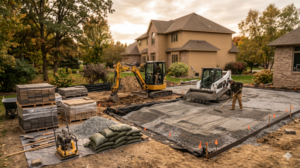
In Minnesota, a contractor doing work over $15,000 should hold a state residential building contractor license. Specific to hardscape work, verify:
- General liability insurance of at least $1 million per occurrence
- Workers’ compensation insurance (not optional; homeowner liability if a worker is injured without coverage)
- Vehicle insurance for any equipment working on site
Ask for current certificates of insurance, not just a verbal confirmation. Real contractors can email these within an hour.
What a Quality Bid Looks Like
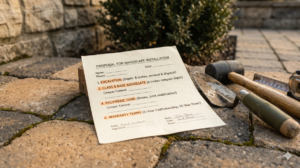
A quality hardscape bid for a southwest Twin Cities project runs 3 to 5 pages and specifies:
- Excavation depth and fill disposal plan
- Base material type and compacted depth (Class 5, depth, lifts)
- Geotextile fabric location
- Bedding sand type and depth
- Paver product, color, pattern, and manufacturer
- Edge restraint type
- Polymeric sand brand
- Warranty terms in writing
A one-page bid with a lump-sum number and no specs is a red flag. You cannot compare bids fairly without spec detail.
Red Flags to Walk Away From
Over years of watching this market, a few patterns predict bad outcomes:
- Unusually low bids (30 percent below the median quote for the same scope)
- Door-to-door solicitation offering to use “leftover materials from a nearby job”
- No physical business address
- Demand for a large deposit (over 30 percent) before work starts
- Refusal to provide a written contract
- No references from the last 12 months
Frequently Asked Questions
How many bids should I get for a hardscape project?
ICPI recommends at least three. Compare spec details, not just totals. A $25,000 bid with inadequate base may cost more over its lifetime than a $30,000 bid with the right spec.
What deposit is normal for a hardscape project?
10 to 20 percent at contract signing, with progress payments tied to milestones (excavation complete, base installed, pavers laid, final walkthrough). Avoid any contractor asking for more than 30 percent upfront.
Should I hire a contractor without ICPI certification?
It is possible to find competent non-certified installers, but you lose the easy credential check. If you go that route, verify at least 10 years of exclusive hardscape experience and visit three completed projects over 5 years old.
Ready to Get Started?
Three Timbers serves Chanhassen, Eden Prairie, Minnetonka, Chaska, Victoria, Excelsior, Waconia, and Mound with full-service landscape and hardscape work. Call (612) 214-1955 or request a free estimate from our Chanhassen landscaping team. You can also see our full Minnesota landscaping and hardscape services.
Related reading: