
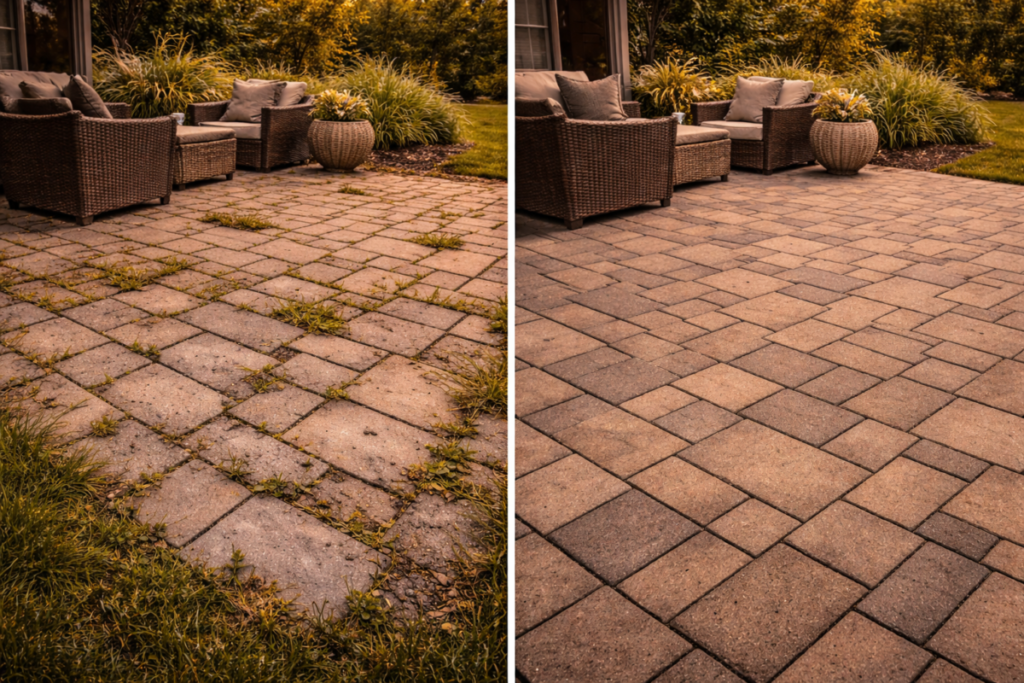
Paver patios do not fail overnight. They give warnings, small at first, bigger with each winter, until replacement is cheaper than continuing to patch. Knowing which warning signs are cosmetic and which are structural is how Minnesota homeowners avoid wasting money on repairs that will not hold.
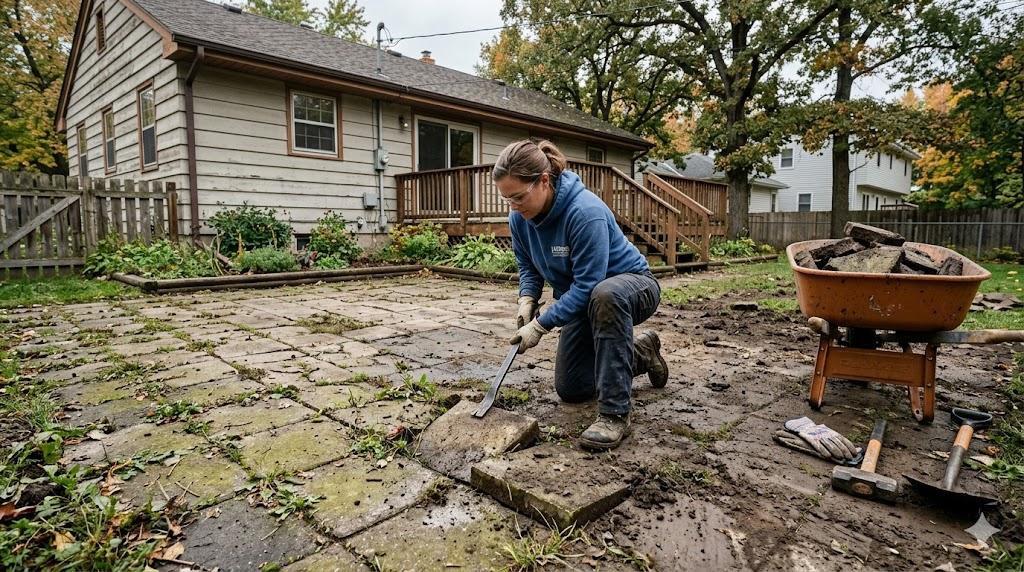
Table of Contents
- Cosmetic Issues: Repair, Do Not Replace
- Structural Issues: Start Planning Replacement
- Age as a Factor
- Cost of Replacement vs Repair
- FAQs
- Ready to Get Started?
Cosmetic Issues: Repair, Do Not Replace
These are surface-level issues that can be fixed without touching the base:
- Polymeric sand missing from joints
- Minor color fade (5 to 10 percent over 15 years)
- Individual chipped or cracked pavers (can be replaced unit by unit)
- Moss or staining in shaded areas
- Light efflorescence (white mineral deposits)
These issues do not indicate base failure. Addressing them keeps a solid patio looking good for another decade.
Structural Issues: Start Planning Replacement
These signs indicate base or drainage failure, and no amount of surface repair will hold:
- Multiple pavers have lifted above or sunk below the surface more than half an inch
- Drainage has changed and water now pools on the patio after rain
- Pavers have separated from the house or retaining wall by more than 1 inch
- Patterns have shifted out of alignment across the full field
- Paver edges are consistently chipping along joints (infill failure)
Once base failure starts, it accelerates. Each winter makes it worse.
Age as a Factor
Quality concrete pavers last 30 to 40 years. Natural stone can last much longer. If your patio is approaching 25 to 30 years old and showing multiple warning signs, replacement usually makes more sense than repeated repairs.
Patios installed before 2000 often used older base specs that do not hold up as well in Minnesota freeze-thaw. If yours is in that category and showing settlement, a full rebuild to modern specs buys decades of additional life.
Cost of Replacement vs Repair
Rough 2026 numbers for a 400 square foot patio:
- Polymeric sand refill and spot releveling: $500 to $1,500
- Partial base repair (20 percent of surface): $3,000 to $6,000
- Full tear-out and rebuild: $16,000 to $22,000
If repairs will exceed 40 to 50 percent of replacement cost, replacement is almost always the better long-term decision.
Frequently Asked Questions
Can I reuse my existing pavers in a rebuild?
Sometimes. If the pavers are in good shape and you want to keep the same color and pattern, they can be lifted, the base rebuilt, and the same units re-laid. About 10 to 15 percent of pavers typically break during lift and need replacement.
How do I tell if my patio has a base problem or just a joint problem?
Joints are surface-only; lift a paver and the base below looks solid. Base problems show as sinking, heaving, and settlement that affects multiple pavers across an area. A contractor can usually tell within 10 minutes on site.
Is it worth sealing an old paver patio?
Only if the base and pavers themselves are in good shape. Sealer on a failing patio is money down the drain. Sealer on a solid 10 to 15 year old patio extends color life and reduces staining.
Ready to Get Started?
Three Timbers serves Chanhassen, Eden Prairie, Minnetonka, Chaska, Victoria, Excelsior, Waconia, and Mound with full-service landscape and hardscape work. Call (612) 214-1955 or request a free estimate from our Chanhassen landscaping team. You can also see our full Minnesota landscaping and hardscape services.
Related reading: