
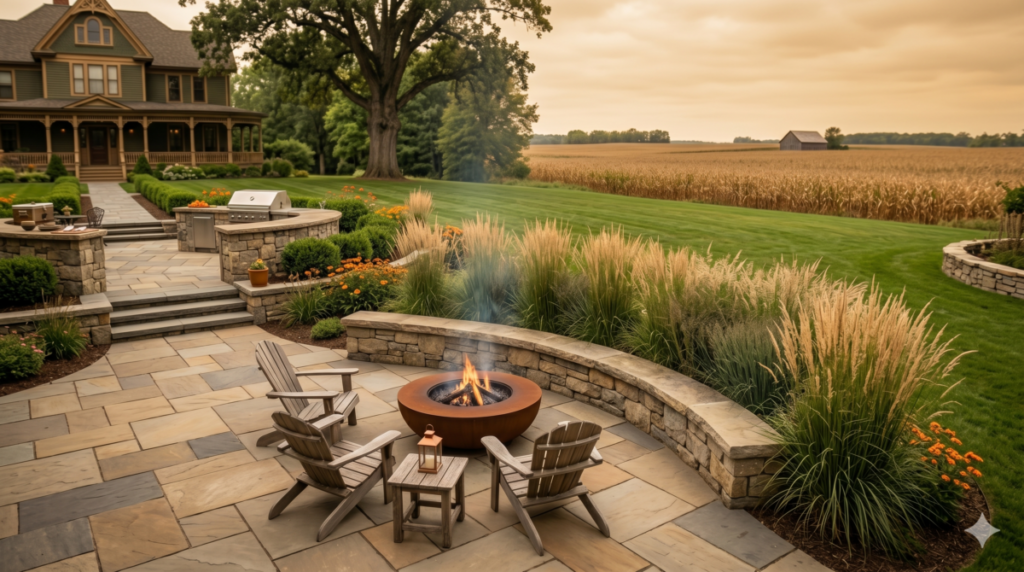
Many Waconia backyards sit on soil that was a corn field ten or fifteen years ago. That history matters. Former ag soil behaves differently than urban fill or native prairie loam, and the landscape contractors who win in Waconia are the ones who understand what is happening three feet under the surface.
Table of Contents
- Understanding Waconia Ag Soil
- Soil Amendments That Actually Work
- Outdoor Living Zones That Fit Waconia Lots
- Lawn Establishment on Ex-Ag Soil
- FAQs
- Ready to Get Started?
Understanding Waconia Ag Soil
Decades of row crop production leave soil that is compacted from heavy equipment, depleted of organic matter, often acidic from fertilizer runoff, and heavy in clay at depth. Plants put into untouched ex-ag soil struggle. Patios installed without base correction shift within a few winters.
The Carver Soil and Water Conservation District runs cost-share programs that can help with soil testing and amendment planning for larger residential projects.
Soil Amendments That Actually Work
For a Waconia backyard transformation, we typically specify:
- A soil test before design, identifying pH, organic matter percentage, and compaction
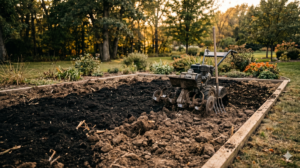
- Deep tilling to 12 to 18 inches in planting beds to break the compacted plow layer
- 2 to 4 inches of composted organic matter worked in
- Targeted gypsum or sulfur amendments if clay or pH is out of range
Skipping this step is the number one reason new Waconia landscapes look tired by year three. The plants are fighting the soil instead of growing in it.
Outdoor Living Zones That Fit Waconia Lots
Waconia lots are often generous. That opens up design options a smaller Chanhassen or Eden Prairie lot cannot support:
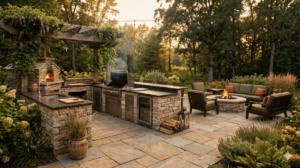
- Full outdoor kitchens with built-in grills, prep counter, and storage
- Fire feature lounges sized for 8 to 12 people
- Pergola-covered dining terraces with heaters for three-season use
- Separate play zones or sports courts for families
The design mistake we see most often is spreading too thin. A 600 square foot patio used daily beats a 1,400 square foot patio that feels empty.
Lawn Establishment on Ex-Ag Soil
New sod on untreated ag soil usually fails within two seasons. The amendment regime above applies to lawn areas too. A quality Kentucky bluegrass and fine fescue blend laid over amended topsoil, irrigated for the first 30 days, will establish a deep root system that survives Minnesota summers.
Frequently Asked Questions
How do I know if my Waconia backyard has former ag soil?
Check the Carver County soil survey or have a soil test done. Most of Waconia outside the original downtown was farmland within living memory. If you are in a newer subdivision built since 1995, you likely have former ag soil with builder topsoil laid on top.
How long does a Waconia backyard transformation take?
Medium-complexity projects (patio, plantings, minor grading) typically run three to five weeks from dig to final walkthrough. Larger scopes with outdoor kitchens or pergolas can run eight to twelve weeks.
Can I start a Waconia landscape project in June?
Yes, though late spring and fall are easier on plant material. Peak summer installs work well for hardscape; plant installation does better when temperatures are cooler.
Ready to Get Started?
Three Timbers serves Chanhassen, Eden Prairie, Minnetonka, Chaska, Victoria, Excelsior, Waconia, and Mound with full-service landscape and hardscape work. Call (612) 214-1955 or request a free estimate from our Waconia landscaping team. You can also see our full Minnesota landscaping and hardscape services.
Related reading: